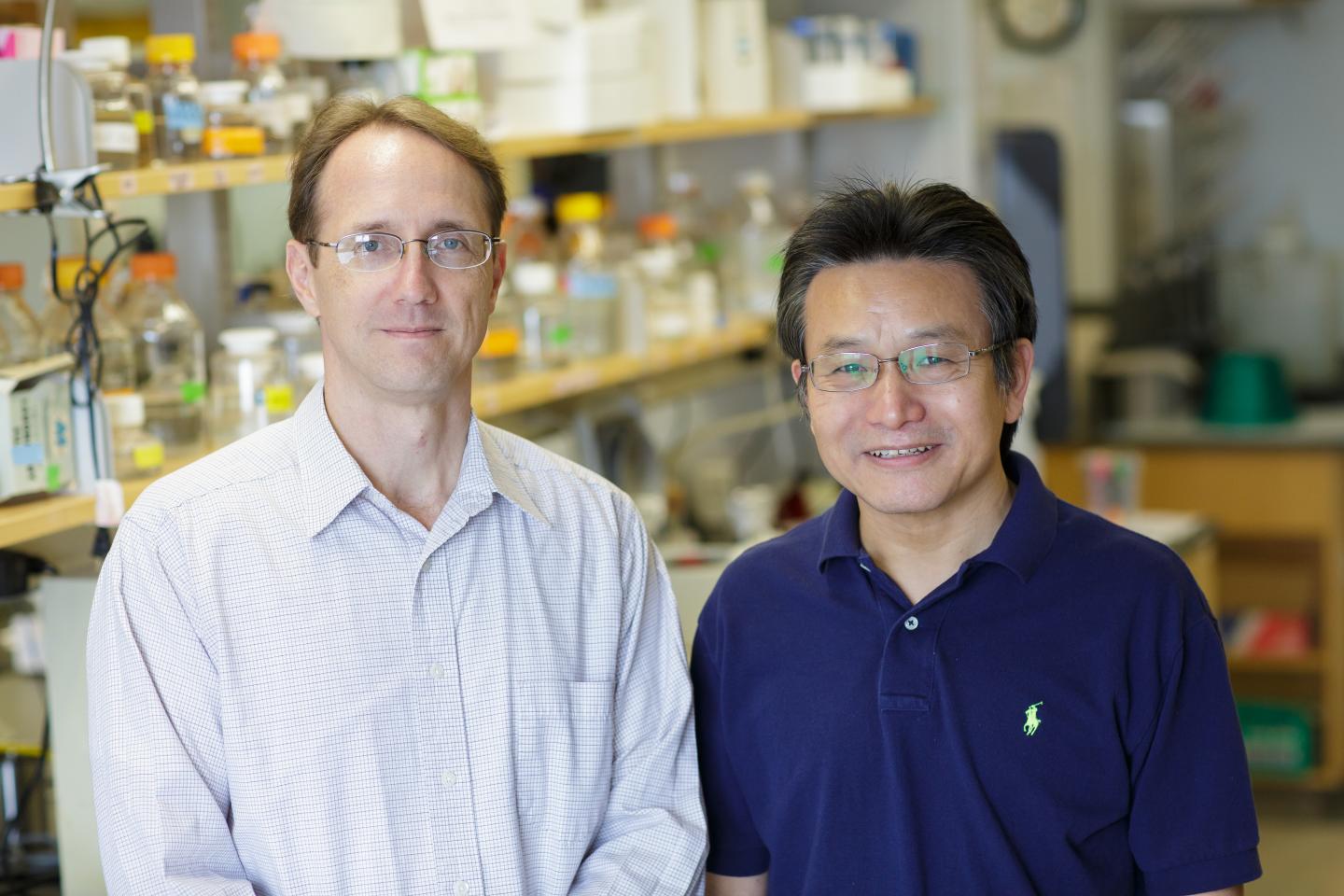
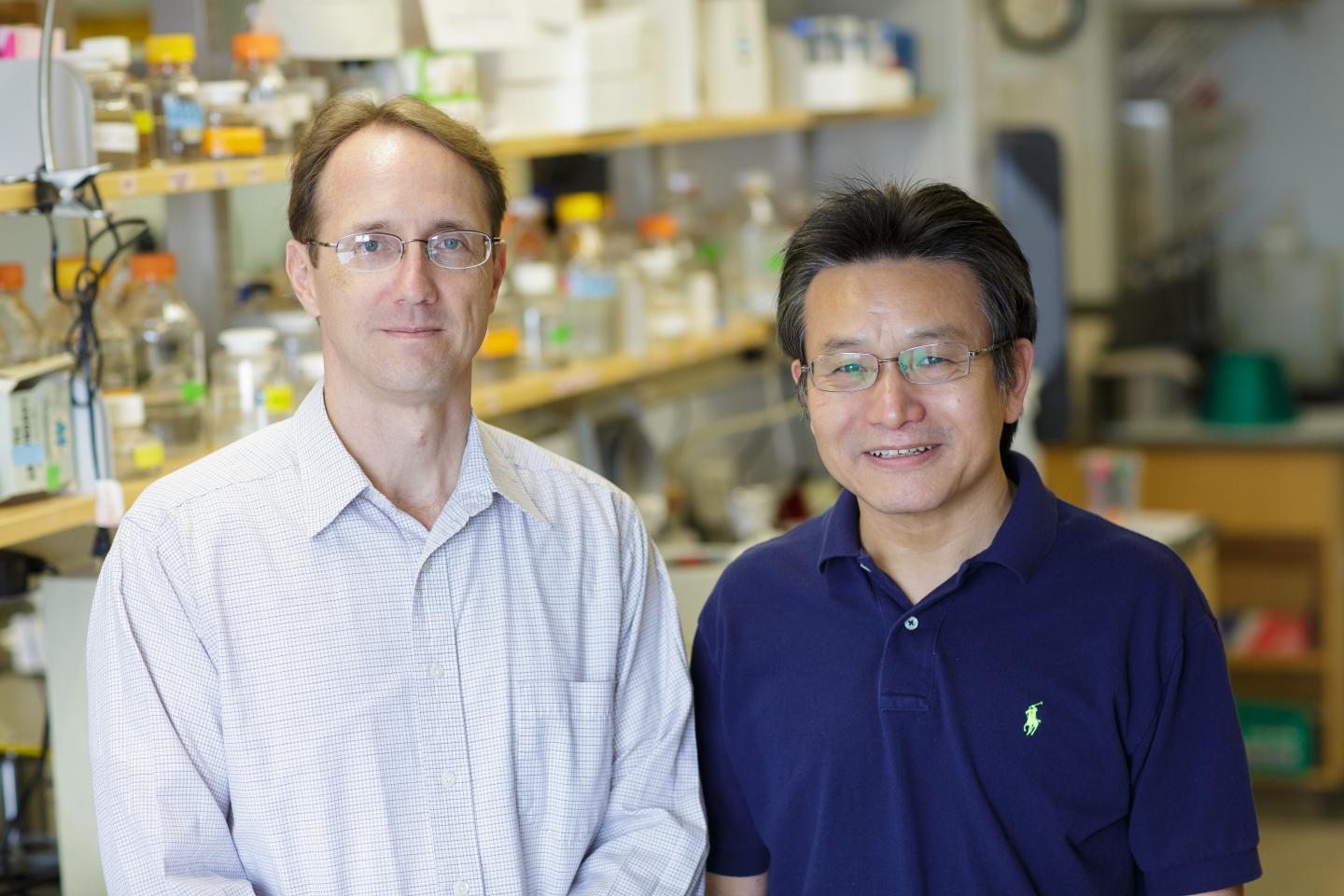
Credit: Mindy C. Miller/UF Health
GAINESVILLE, Fla. — As cancerous tumors fester in the body, they need an ever-increasing blood supply to deliver the oxygen and nutrients that fuel their growth. Now, a team led by University of Florida Health researchers has established how some tumors bolster their own blood supply.
Certain cancer cells can convert into blood vessel-supporting cells that drive tumor growth, according to the researchers' findings. The results were published recently in the Journal of Clinical Investigation.
The findings shed new light on how tumors are able to maintain themselves and grow: A subset of cancer cells get reprogrammed into more mobile cells that are essential to a tumor's steady blood supply. That process — known as epithelial-to-mesenchymal transition, or EMT — was first recognized in the 1980s. The UF Health-led study is the first to elucidate how that process sustains blood vessels.
"Our study shows that through the EMT process, cancer cells are virtually converted into blood vessel-supporting cells and support tumor growth. This is certainly a novel discovery and may change our thinking and therapy in this field," said Jianrong Lu, Ph.D., an associate professor in the UF College of Medicine's department of biochemistry and molecular biology and a member of the UF Health Cancer Center.
Using human and mouse breast cancer cells in mouse models, the researchers found that a small number of cancer cells undergo EMT. Lu said this allows them to associate with cells that constitute the inner layer of the blood vessel wall and begin stabilizing vessels that nourish tumor growth.
"Our work shows that this mechanism supports tumor growth. Because this small number of tumor cells become blood vessel-supporting cells, they allow the majority of tumor cells to grow faster," Lu said.
Now that the researchers understand more about how tumors develop a blood supply, they can begin the challenging work of assessing new treatments to block that process. Cells that have undergone EMT are expected to be harder to kill because they are associated with blood vessels, said Brian K. Law, Ph.D., a co-author of the research paper, an associate professor in the department of pharmacology and therapeutics and a UF Health Cancer Center member.
One possibility is someday designing a treatment that inhibits the transition of cancer cells into blood vessel-supporting cells and providing it as a supplement to traditional chemotherapy, Lu said.
Next, Lu wants to learn more about why transformed EMT cells have a much higher chance of surviving anti-cancer treatments and how that may lead to relapses. Inhibiting the EMT process may be one way to overcome or delay the emergence of treatment-resistant cancer cells, and he plans to test that idea during future research.
###
The research was supported by grants from the Florida Department of Health and the National Institutes of Health. Researchers from the California Health Sciences University and the University of Massachusetts collaborated on the work.
Media Contact
Doug Bennett
[email protected]
352-273-5706
@uflorida
http://www.ufl.edu
############
Story Source: Materials provided by Scienmag