• HOME
  • NEWS
  • EXPLORE
    • CAREER
      • Companies
      • Jobs
    • EVENTS
    • iGEM
      • News
      • Team
    • PHOTOS
    • VIDEO
    • WIKI
  • BLOG
  • COMMUNITY
    • FACEBOOK
    • INSTAGRAM
    • TWITTER
Friday, December 5, 2025
BIOENGINEER.ORG
No Result
View All Result
  • Login
  • HOME
  • NEWS
  • EXPLORE
    • CAREER
      • Companies
      • Jobs
        • Lecturer
        • PhD Studentship
        • Postdoc
        • Research Assistant
    • EVENTS
    • iGEM
      • News
      • Team
    • PHOTOS
    • VIDEO
    • WIKI
  • BLOG
  • COMMUNITY
    • FACEBOOK
    • INSTAGRAM
    • TWITTER
  • HOME
  • NEWS
  • EXPLORE
    • CAREER
      • Companies
      • Jobs
        • Lecturer
        • PhD Studentship
        • Postdoc
        • Research Assistant
    • EVENTS
    • iGEM
      • News
      • Team
    • PHOTOS
    • VIDEO
    • WIKI
  • BLOG
  • COMMUNITY
    • FACEBOOK
    • INSTAGRAM
    • TWITTER
No Result
View All Result
Bioengineer.org
No Result
View All Result
Home NEWS Science News

Using waste heat to power an environmentally sustainable future

Bioengineer by Bioengineer
May 24, 2021
in Science News
Reading Time: 2 mins read
0
IMAGE
Share on FacebookShare on TwitterShare on LinkedinShare on RedditShare on Telegram

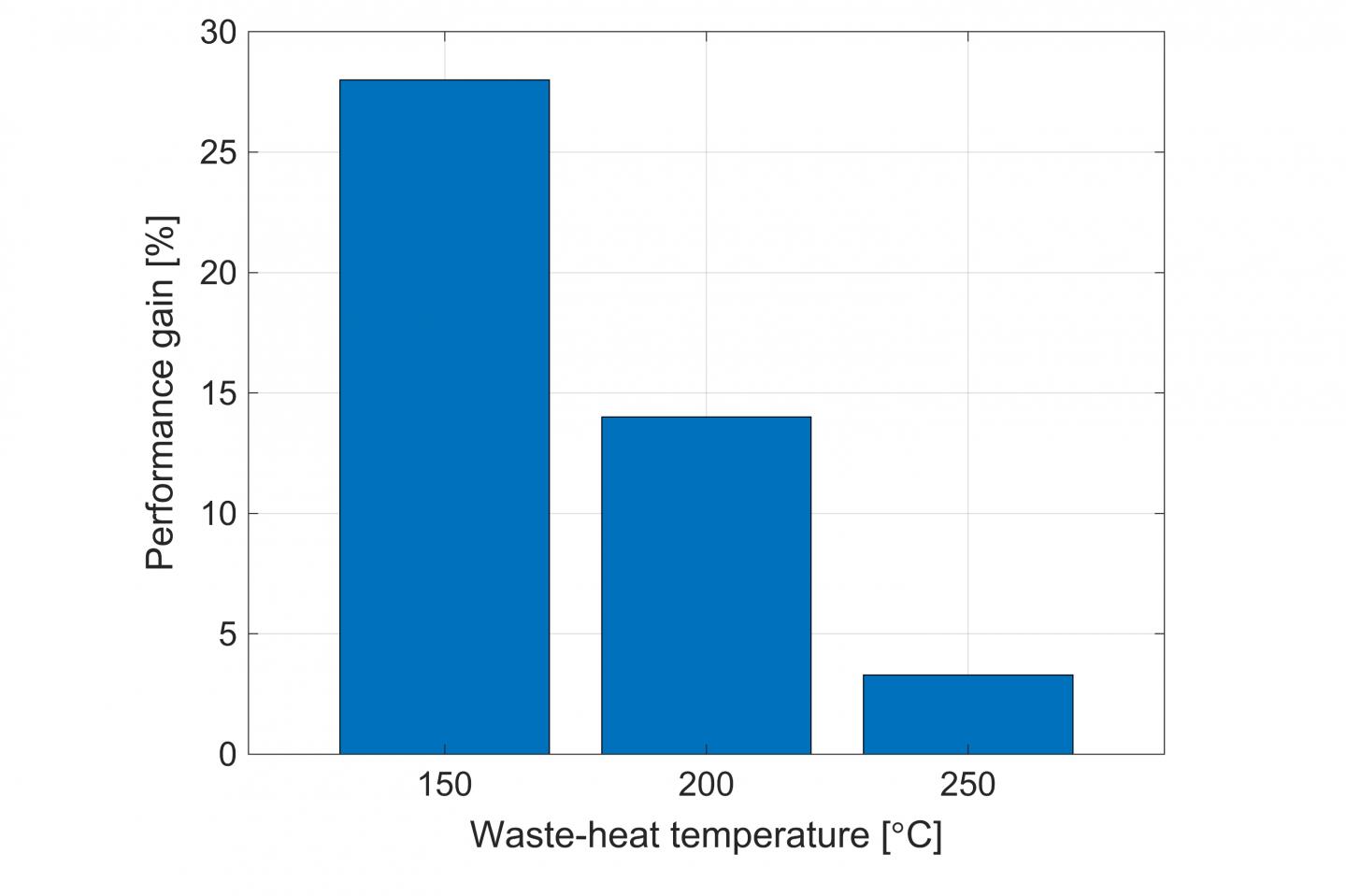
City, University of London’s Dr Martin White, explores a novel organic Rankine system for converting waste heat into electricity.
IMAGE

Credit: Dr Martin White

In his most recent published research, appearing in Applied Thermal Engineering, City, University of London’s Dr Martin White explores a novel organic Rankine cycle system, based on a two-phase expansion through numerical simulations of the system.

His paper, Cycle and turbine optimisation for an ORC operating with two-phase expansion, considers the use of modern fluids whose properties could help to mitigate concerns around turbine damage, whilst allowing the benefits of two-phase expansion to be realised.

Waste heat from a range of industries, ranging from iron and steel to food and drink, is currently ejected into the environment. Thus, the recovery of this wasted energy could have a significant role in reducing the environmental footprint of the manufacturing sector and help to ensure future manufacturing practices are sustainable.

Dr White, a Lecturer in Thermal Power in the School of Mathematics, Computer Science and Engineering, says:

“One of the most promising groups of waste-heat recovery technologies are those that are able to convert this waste heat into electricity. However, current technologies, typically based on the organic Rankine cycle (ORC) – which is similar to a steam cycle but operates with a different fluid rather than water – typically have relatively poor thermodynamic performance and are associated with high costs.”

In a conventional ORC system, power is produced by the turbine which is designed to operate completely with a fluid that is in a gaseous state. This is done to avoid the presence of liquid droplets within the turbine that could damage or erode the machine. However, previous investigations have suggested that the admission of a two-phase fluid, which is a combination of liquid and vapour, could enhance the power output from these systems.

Dr White believes that if a suitable turbine design intended for two-phase operation can be designed, the performance of ORC systems could be enhanced.

The simulations he has carried out indicate that for waste heat temperatures up to 250 degrees centigrade, the introduction of two-phase expansion could generate up to 28% more power than conventional single-phase systems. Moreover, candidate designs for the turbine are proposed which require further investigation in later studies.

The work was conducted by Dr White as part of his Research Fellowship, funded by the Royal Academy of Engineering.

Through his Fellowship, Dr White is investigating next-generation waste-heat recovery technologies based on two-phase expansion.

###

Media Contact
John Stevenson
[email protected]

Original Source

https://www.city.ac.uk/news-and-events/news/2021/05/using-waste-heat-to-power-an-environmentally-sustainable-future

Related Journal Article

http://dx.doi.org/10.1016/j.applthermaleng.2021.116852

Tags: Biomedical/Environmental/Chemical EngineeringMechanical EngineeringResearch/DevelopmentTechnology TransferTechnology/Engineering/Computer Science
Share12Tweet8Share2ShareShareShare2

Related Posts

Boosting Cancer Immunotherapy by Targeting DNA Repair

December 3, 2025
blank

Evaluating eGFR Equations in Chinese Children

December 3, 2025

Metformin-Alogliptin Combo vs. Monotherapy in Diabetes

December 3, 2025

Botanical Extracts’ Antibacterial Activity Boosted by Enhancers

December 3, 2025
Please login to join discussion

POPULAR NEWS

  • New Research Unveils the Pathway for CEOs to Achieve Social Media Stardom

    New Research Unveils the Pathway for CEOs to Achieve Social Media Stardom

    204 shares
    Share 82 Tweet 51
  • Scientists Uncover Chameleon’s Telephone-Cord-Like Optic Nerves, A Feature Missed by Aristotle and Newton

    121 shares
    Share 48 Tweet 30
  • Neurological Impacts of COVID and MIS-C in Children

    107 shares
    Share 43 Tweet 27
  • MoCK2 Kinase Shapes Mitochondrial Dynamics in Rice Fungal Pathogen

    69 shares
    Share 28 Tweet 17

About

We bring you the latest biotechnology news from best research centers and universities around the world. Check our website.

Follow us

Recent News

Boosting Cancer Immunotherapy by Targeting DNA Repair

Evaluating eGFR Equations in Chinese Children

Metformin-Alogliptin Combo vs. Monotherapy in Diabetes

Subscribe to Blog via Email

Enter your email address to subscribe to this blog and receive notifications of new posts by email.

Join 69 other subscribers
  • Contact Us

Bioengineer.org © Copyright 2023 All Rights Reserved.

Welcome Back!

Login to your account below

Forgotten Password?

Retrieve your password

Please enter your username or email address to reset your password.

Log In
No Result
View All Result
  • Homepages
    • Home Page 1
    • Home Page 2
  • News
  • National
  • Business
  • Health
  • Lifestyle
  • Science

Bioengineer.org © Copyright 2023 All Rights Reserved.