• HOME
  • NEWS
  • EXPLORE
    • CAREER
      • Companies
      • Jobs
    • EVENTS
    • iGEM
      • News
      • Team
    • PHOTOS
    • VIDEO
    • WIKI
  • BLOG
  • COMMUNITY
    • FACEBOOK
    • INSTAGRAM
    • TWITTER
Friday, August 28, 2026
BIOENGINEER.ORG
No Result
View All Result
  • Login
  • HOME
  • NEWS
  • EXPLORE
    • CAREER
      • Companies
      • Jobs
        • Lecturer
        • PhD Studentship
        • Postdoc
        • Research Assistant
    • EVENTS
    • iGEM
      • News
      • Team
    • PHOTOS
    • VIDEO
    • WIKI
  • BLOG
  • COMMUNITY
    • FACEBOOK
    • INSTAGRAM
    • TWITTER
  • HOME
  • NEWS
  • EXPLORE
    • CAREER
      • Companies
      • Jobs
        • Lecturer
        • PhD Studentship
        • Postdoc
        • Research Assistant
    • EVENTS
    • iGEM
      • News
      • Team
    • PHOTOS
    • VIDEO
    • WIKI
  • BLOG
  • COMMUNITY
    • FACEBOOK
    • INSTAGRAM
    • TWITTER
No Result
View All Result
Bioengineer.org
No Result
View All Result
Home NEWS Science News

The dirt on packaged rhino beetles

Bioengineer by Bioengineer
December 21, 2016
in Science News
Reading Time: 2 mins read
0
Share on FacebookShare on TwitterShare on LinkedinShare on RedditShare on Telegram
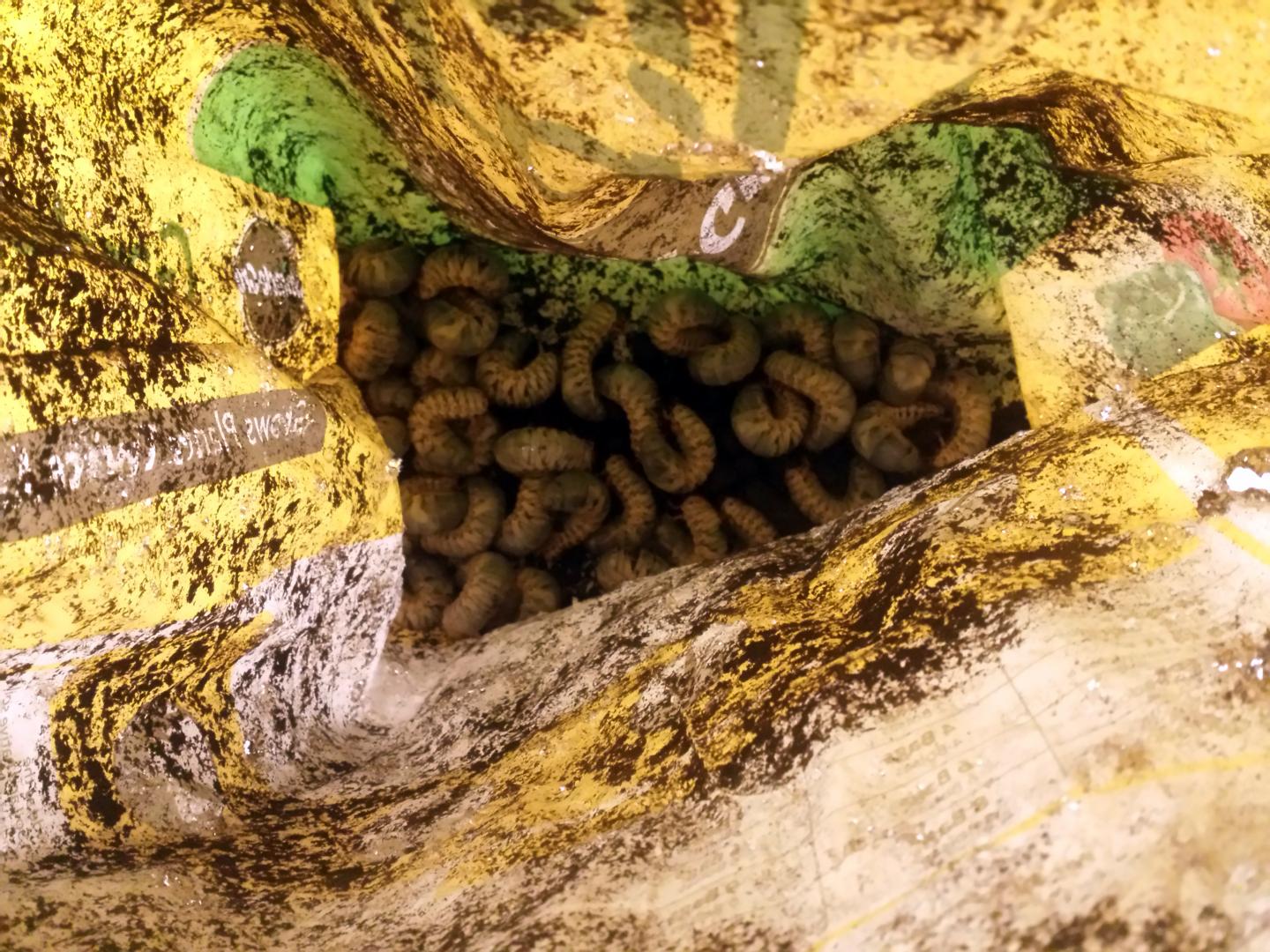
IMAGE

Credit: Aubrey Moore

Bags of potting soil have become love hotels and nurseries for the highly invasive coconut rhinoceros beetle on the island of Guam.

Extension and Outreach personnel at the College of Natural and Applied Sciences, University of Guam had received numerous complaints from clients finding beetle grubs in bags of potting soil purchased at local stores. "These complaints prompted us to investigate by visiting the garden center of a local hardware store franchise that imports soil from the US mainland," said Dr. Aubrey Moore, UOG extension entomologist. "We noticed several unopened bags of potting soil with multiple holes in the plastic. After selecting one and opening it we discovered five large coconut rhinoceros beetle (CRB) grubs. Unfortunately for Guam's coconut trees, this is a really good way to spread rhino beetles around the island."

Garden centers very often keep bags of potting soil stacked outdoors making them easily accessible to customers and interested insects. Coconut rhinoceros beetles seek out high-density organic material, as decaying organic matter is the preferred place to find a mate and lay their eggs. With the alluring high organic matter content of packaged potting soil, coconut rhinoceros beetles make holes in the thin plastic bags and deposit their eggs. When unsuspecting gardeners buy potting soil for use in their home gardens they are getting more than they paid for and are helping the invasive rhino beetles move around the island.

"Rhino beetle larvae are excellent decomposers, which is why dead standing coconut trees and fallen logs are a hotbed of rhino beetle breeding activity. There is plenty of food to support development from egg to adult," warned extension agent Roland Quituqua. Banning the outdoor storage of bags of potting soil would be one way to help curtail the spread of coconut rhinoceros beetles throughout the island.

###

A scientific note on these observations has been published in the December 2016 issue of the Proceedings of the Hawaiian Entomological Society.

For more information on coconut rhinoceros beetles and the work UOG researchers are doing to control this invasive insect, please visit, http://cnas-re.uog.edu/crb/.

Media Contact

Olympia Terral
[email protected]

http://www.uog.edu

############

Story Source: Materials provided by Scienmag

Share12Tweet8Share2ShareShareShare2

Related Posts

How Linear and Nonlinear Time Warping Affect Time-Series Classification Robustness

How Linear and Nonlinear Time Warping Affect Time-Series Classification Robustness

August 28, 2026
AGI-Powered Affective Computing Across Cyber-Physical-Social-Intelligent Systems: Framework, Methods, Applications and Outlook

AGI-Powered Affective Computing Across Cyber-Physical-Social-Intelligent Systems: Framework, Methods, Applications and Outlook

August 28, 2026

Multi-Sensor Time Series Enable Big Data Pavement Monitoring and Anomaly Detection

August 28, 2026

Targeting METTL3/m6A/SOCS3 Reprograms Macrophages, Boosting Anti-PD-1 Therapy in Multiple Myeloma

August 28, 2026
Please login to join discussion

POPULAR NEWS

  • How Linear and Nonlinear Time Warping Affect Time-Series Classification Robustness

    29 shares
    Share 12 Tweet 7
  • AGI-Powered Affective Computing Across Cyber-Physical-Social-Intelligent Systems: Framework, Methods, Applications and Outlook

    29 shares
    Share 12 Tweet 7
  • Multi-Sensor Time Series Enable Big Data Pavement Monitoring and Anomaly Detection

    29 shares
    Share 12 Tweet 7
  • Targeting METTL3/m6A/SOCS3 Reprograms Macrophages, Boosting Anti-PD-1 Therapy in Multiple Myeloma

    29 shares
    Share 12 Tweet 7

About

We bring you the latest biotechnology news from best research centers and universities around the world. Check our website.

Follow us

Recent News

How Linear and Nonlinear Time Warping Affect Time-Series Classification Robustness

AGI-Powered Affective Computing Across Cyber-Physical-Social-Intelligent Systems: Framework, Methods, Applications and Outlook

Multi-Sensor Time Series Enable Big Data Pavement Monitoring and Anomaly Detection

Subscribe to Blog via Email

Enter your email address to subscribe to this blog and receive notifications of new posts by email.

Join 85 other subscribers
  • Contact Us

Bioengineer.org © Copyright 2023 All Rights Reserved.

Welcome Back!

Login to your account below

Forgotten Password?

Retrieve your password

Please enter your username or email address to reset your password.

Log In
No Result
View All Result
  • Homepages
    • Home Page 1
    • Home Page 2
  • News
  • National
  • Business
  • Health
  • Lifestyle
  • Science

Bioengineer.org © Copyright 2023 All Rights Reserved.