• HOME
  • NEWS
  • EXPLORE
    • CAREER
      • Companies
      • Jobs
    • EVENTS
    • iGEM
      • News
      • Team
    • PHOTOS
    • VIDEO
    • WIKI
  • BLOG
  • COMMUNITY
    • FACEBOOK
    • INSTAGRAM
    • TWITTER
Sunday, May 10, 2026
BIOENGINEER.ORG
No Result
View All Result
  • Login
  • HOME
  • NEWS
  • EXPLORE
    • CAREER
      • Companies
      • Jobs
        • Lecturer
        • PhD Studentship
        • Postdoc
        • Research Assistant
    • EVENTS
    • iGEM
      • News
      • Team
    • PHOTOS
    • VIDEO
    • WIKI
  • BLOG
  • COMMUNITY
    • FACEBOOK
    • INSTAGRAM
    • TWITTER
  • HOME
  • NEWS
  • EXPLORE
    • CAREER
      • Companies
      • Jobs
        • Lecturer
        • PhD Studentship
        • Postdoc
        • Research Assistant
    • EVENTS
    • iGEM
      • News
      • Team
    • PHOTOS
    • VIDEO
    • WIKI
  • BLOG
  • COMMUNITY
    • FACEBOOK
    • INSTAGRAM
    • TWITTER
No Result
View All Result
Bioengineer.org
No Result
View All Result
Home NEWS Science News Chemistry

New research shows: Antoni van Leeuwenhoek led rivals astray

Bioengineer by Bioengineer
May 14, 2021
in Chemistry
Reading Time: 2 mins read
0
IMAGE
Share on FacebookShare on TwitterShare on LinkedinShare on RedditShare on Telegram

IMAGE

Credit: Rijksmuseum Boerhaave/TU Delft

A microscope used by Antoni van Leeuwenhoek to conduct pioneering research contains a surprisingly ordinary lens, as new research by Rijksmuseum Boerhaave Leiden and TU Delft shows. It is a remarkable finding, because Van Leeuwenhoek (1632-1723) led other scientists to believe that his instruments were exceptional. Consequently, there has been speculation about his method for making lenses for more than three centuries. The results of this study were published in Science Advances on May 14.

Previous research carried out in 2018 already indicated that some of Van Leeuwenhoek’s microscopes contained common ground lenses. Researchers have now examined a particularly highly magnifying specimen, from the collection of the University Museum Utrecht. Although it did contain a different type of lens, the great surprise was that the lens-making method used was a common one.

Pioneering but secretive

With his microscopes, Antoni van Leeuwenhoek saw a whole new world full of minute life which nobody had ever suspected could exist. He was the first to observe unicellular organisms, which is why he is called the father of microbiology. The detail of his observations was unprecedented and was only superseded over a century after his death.

His contemporaries were very curious about the lenses with which Van Leeuwenhoek managed to achieve such astounding feats. Van Leeuwenhoek, however, was very secretive about it, suggesting he had found a new way of making lenses. It now proves to have been an empty boast, at least as far as the Utrecht lens is concerned. This became clear when the researchers from Rijksmuseum Boerhaave Leiden and TU Delft subjected the Utrecht microscope to neutron tomography. It enabled them to examine the lens without opening the valuable microscope and destroy it in the process. The instrument was placed in a neutron beam at the Reactor Institute Delft, yielding a three-dimensional image of the lens.

Small globule

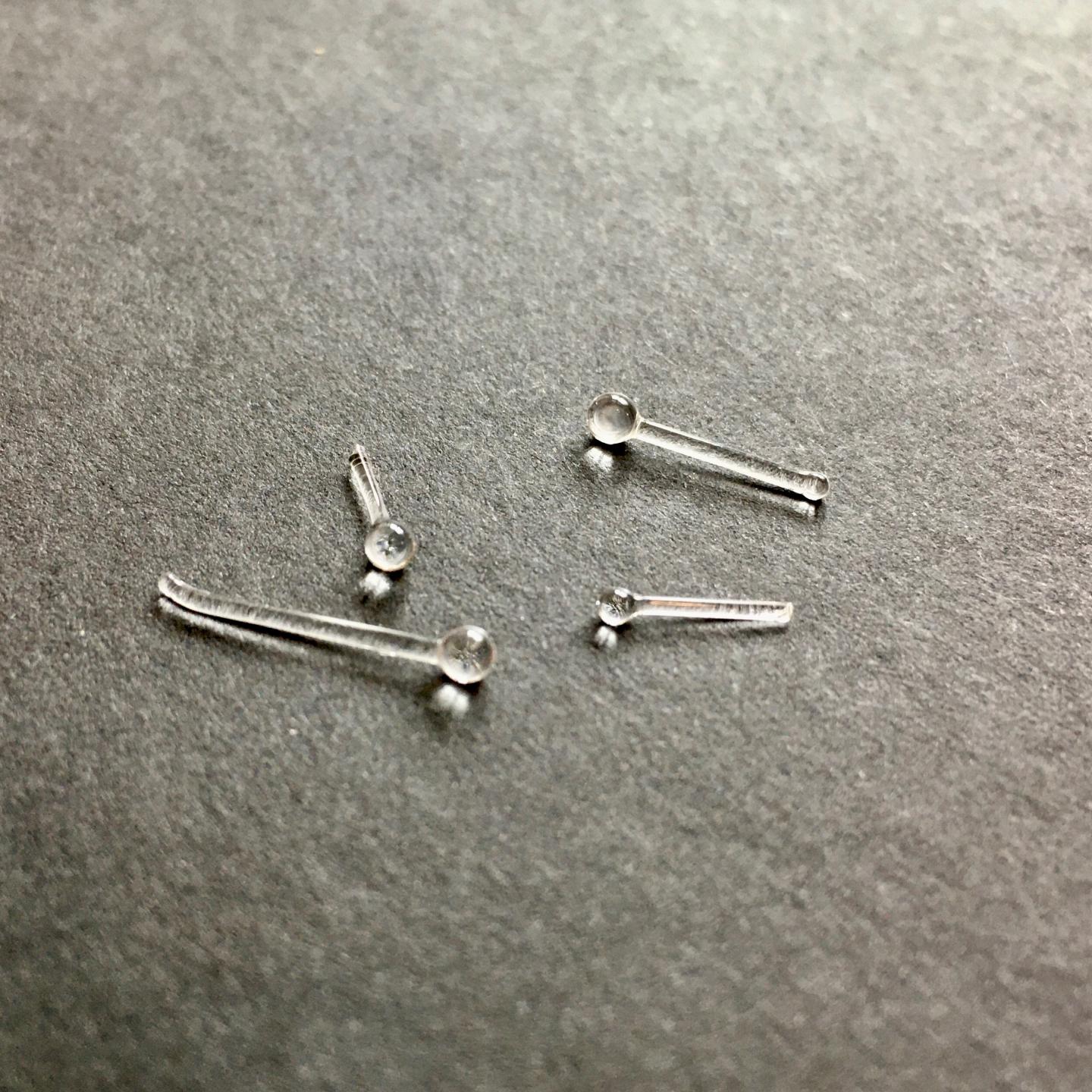
This lens turned out to be a small globule, and its appearance was consistent with a known production method used in Van Leeuwenhoek’s time. The lens was very probably made by holding a thin glass rod in the fire, so that the end curled up into a small ball, which was then broken off the glass rod.

This method was described in 1678 by another influential microscopist, the Englishman Robert Hooke, which inspired other scientists to do the same. Van Leeuwenhoek, too, may have taken his lead from Hooke. The new discovery is ironical, because it was in fact Hooke who was very curious to learn more about Van Leeuwenhoek’s ‘secret’ method.

The new study shows that Van Leeuwenhoek obtained extraordinary results with strikingly ordinary lens production methods.

###

Media Contact
Lambert van Eijck
[email protected]

Tags: Chemistry/Physics/Materials SciencesHistoryNuclear Physics
Share12Tweet8Share2ShareShareShare2

Related Posts

Miniature Sensor Uses Light to Detect Touch — Chemistry

Miniature Sensor Uses Light to Detect Touch

May 8, 2026
Iron Minerals Determine Whether Dissolved Organic Matter Fuels Microbes or Becomes Long-Term Carbon Storage — Chemistry

Iron Minerals Determine Whether Dissolved Organic Matter Fuels Microbes or Becomes Long-Term Carbon Storage

May 8, 2026

Kate Evans Appointed Associate Lab Director for Biological and Environmental Systems Science at ORNL

May 8, 2026

Advancing Multiscale Modeling and Overcoming Operational Challenges in Autothermal COâ‚‚-to-Methanol Reactors

May 8, 2026
Please login to join discussion

POPULAR NEWS

  • Research Indicates Potential Connection Between Prenatal Medication Exposure and Elevated Autism Risk

    840 shares
    Share 336 Tweet 210
  • New Study Reveals Plants Can Detect the Sound of Rain

    727 shares
    Share 290 Tweet 181
  • Scientists Investigate Possible Connection Between COVID-19 and Increased Lung Cancer Risk

    68 shares
    Share 27 Tweet 17
  • Salmonella Haem Blocks Macrophages, Boosts Infection

    61 shares
    Share 24 Tweet 15

About

We bring you the latest biotechnology news from best research centers and universities around the world. Check our website.

Follow us

Recent News

Evaluating Digoxin Use in Patients with Symptomatic Rheumatic Heart Disease

Evaluating the Effectiveness and Safety of Digitalis Glycosides in Treating Heart Failure

Urdu Fall Risk Questionnaire Adapted for Elderly

Subscribe to Blog via Email

Enter your email address to subscribe to this blog and receive notifications of new posts by email.

Join 82 other subscribers
  • Contact Us

Bioengineer.org © Copyright 2023 All Rights Reserved.

Welcome Back!

Login to your account below

Forgotten Password?

Retrieve your password

Please enter your username or email address to reset your password.

Log In
No Result
View All Result
  • Homepages
    • Home Page 1
    • Home Page 2
  • News
  • National
  • Business
  • Health
  • Lifestyle
  • Science

Bioengineer.org © Copyright 2023 All Rights Reserved.