• HOME
  • NEWS
  • EXPLORE
    • CAREER
      • Companies
      • Jobs
    • EVENTS
    • iGEM
      • News
      • Team
    • PHOTOS
    • VIDEO
    • WIKI
  • BLOG
  • COMMUNITY
    • FACEBOOK
    • INSTAGRAM
    • TWITTER
Saturday, February 7, 2026
BIOENGINEER.ORG
No Result
View All Result
  • Login
  • HOME
  • NEWS
  • EXPLORE
    • CAREER
      • Companies
      • Jobs
        • Lecturer
        • PhD Studentship
        • Postdoc
        • Research Assistant
    • EVENTS
    • iGEM
      • News
      • Team
    • PHOTOS
    • VIDEO
    • WIKI
  • BLOG
  • COMMUNITY
    • FACEBOOK
    • INSTAGRAM
    • TWITTER
  • HOME
  • NEWS
  • EXPLORE
    • CAREER
      • Companies
      • Jobs
        • Lecturer
        • PhD Studentship
        • Postdoc
        • Research Assistant
    • EVENTS
    • iGEM
      • News
      • Team
    • PHOTOS
    • VIDEO
    • WIKI
  • BLOG
  • COMMUNITY
    • FACEBOOK
    • INSTAGRAM
    • TWITTER
No Result
View All Result
Bioengineer.org
No Result
View All Result
Home NEWS Science News Biology

Sex cells in parasites are doing their own thing

Bioengineer by Bioengineer
May 11, 2021
in Biology
Reading Time: 2 mins read
0
IMAGE
Share on FacebookShare on TwitterShare on LinkedinShare on RedditShare on Telegram

IMAGE

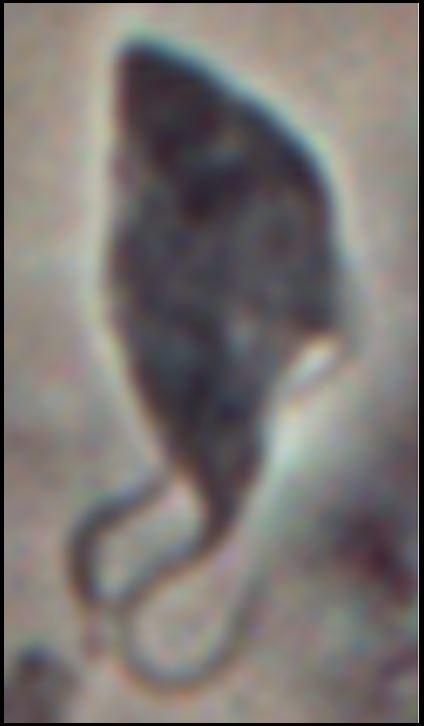
Credit: Dr Lori Peacock

Researchers at the University of Bristol have discovered how microbes responsible for human African sleeping sickness produce sex cells.

In these single-celled parasites, known as trypanosomes, each reproductive cell splits off in turn from the parental germline cell, which is responsible for passing on genes. Conventional germline cells divide twice to produce all four sex cells – or gametes – simultaneously. In humans four sperms are produced from a single germline cell. So, these strange parasite cells are doing their own thing rather than sticking to the biology rulebook.

Trypanosome cell biology has already revealed several curious features. They have two unique intracellular structures – the kinetoplast, a network of circular DNA and the glycosome, a membrane-enclosed organelle that contains the glycolytic enzymes. They don’t follow the central dogma that DNA is faithfully transcribed into RNA, but will go back and edit some of the RNA transcripts after they’ve been made.

Professor Wendy Gibson of the University of Bristol’s School of Biological Sciences led the study. She said “We’ve got used to trypanosomes doing things their own way, but of course what we think of as normal cell biology is based on very few so-called model organisms like yeast and mice. There’s a whole world of weird and wonderful single-celled organisms – protozoa – out there that we don’t know much about! Trypanosomes have got more attention because they’re such important pathogens – both of humans and their livestock.”

Biologists think that sexual reproduction evolved very early on, after the first complex cells appeared a couple of billion years ago. The sex cells are produced by a special form of cell division called meiosis that reduces the number of chromosomes by half, so that gametes have only one complete set of chromosomes instead of two. The chromosome sets from two gametes combine during sexual reproduction, producing new combinations of genes in the offspring. In the case of disease-causing microbes like the trypanosome, sex can potentially lead to a lot of harmful genes being combined in one strain. Thus, research on sexual reproduction helps scientists understand how new strains of disease-causing microbes arise and how characteristics such as drug resistance get spread between different strains.

###

The study, carried out by researchers from Bristol’s School of Biological Sciences and School of Veterinary Sciences in collaboration with the University of Cambridge, is published this week in Communications Biology.

Paper:

‘Sequential production of gametes during meiosis in trypanosomes ‘ by Lori Peacock, Chris Kay, Chloe Farren, Mick Bailey, Mark Carrington and Wendy Gibson published in Communications Biology.

Media Contact
Laura Thomas
[email protected]
Tags: BiologyCell BiologyGenesGeneticsMicrobiology
Share12Tweet8Share2ShareShareShare2

Related Posts

Florida Cane Toad: Complex Spread and Selective Evolution

Florida Cane Toad: Complex Spread and Selective Evolution

February 7, 2026
New Study Uncovers Mechanism Behind Burn Pit Particulate Matter–Induced Lung Inflammation

New Study Uncovers Mechanism Behind Burn Pit Particulate Matter–Induced Lung Inflammation

February 6, 2026

DeepBlastoid: Advancing Automated and Efficient Evaluation of Human Blastoids with Deep Learning

February 6, 2026

Navigating the Gut: The Role of Formic Acid in the Microbiome

February 6, 2026
Please login to join discussion

POPULAR NEWS

  • Robotic Ureteral Reconstruction: A Novel Approach

    Robotic Ureteral Reconstruction: A Novel Approach

    82 shares
    Share 33 Tweet 21
  • Digital Privacy: Health Data Control in Incarceration

    63 shares
    Share 25 Tweet 16
  • Study Reveals Lipid Accumulation in ME/CFS Cells

    57 shares
    Share 23 Tweet 14
  • Breakthrough in RNA Research Accelerates Medical Innovations Timeline

    53 shares
    Share 21 Tweet 13

About

We bring you the latest biotechnology news from best research centers and universities around the world. Check our website.

Follow us

Recent News

TPMT Expression Predictions Linked to Azathioprine Side Effects

Improving Dementia Care with Enhanced Activity Kits

Decoding Prostate Cancer Origins via snFLARE-seq, mxFRIZNGRND

Subscribe to Blog via Email

Enter your email address to subscribe to this blog and receive notifications of new posts by email.

Join 73 other subscribers
  • Contact Us

Bioengineer.org © Copyright 2023 All Rights Reserved.

Welcome Back!

Login to your account below

Forgotten Password?

Retrieve your password

Please enter your username or email address to reset your password.

Log In
No Result
View All Result
  • Homepages
    • Home Page 1
    • Home Page 2
  • News
  • National
  • Business
  • Health
  • Lifestyle
  • Science

Bioengineer.org © Copyright 2023 All Rights Reserved.