• HOME
  • NEWS
  • EXPLORE
    • CAREER
      • Companies
      • Jobs
    • EVENTS
    • iGEM
      • News
      • Team
    • PHOTOS
    • VIDEO
    • WIKI
  • BLOG
  • COMMUNITY
    • FACEBOOK
    • INSTAGRAM
    • TWITTER
Saturday, February 7, 2026
BIOENGINEER.ORG
No Result
View All Result
  • Login
  • HOME
  • NEWS
  • EXPLORE
    • CAREER
      • Companies
      • Jobs
        • Lecturer
        • PhD Studentship
        • Postdoc
        • Research Assistant
    • EVENTS
    • iGEM
      • News
      • Team
    • PHOTOS
    • VIDEO
    • WIKI
  • BLOG
  • COMMUNITY
    • FACEBOOK
    • INSTAGRAM
    • TWITTER
  • HOME
  • NEWS
  • EXPLORE
    • CAREER
      • Companies
      • Jobs
        • Lecturer
        • PhD Studentship
        • Postdoc
        • Research Assistant
    • EVENTS
    • iGEM
      • News
      • Team
    • PHOTOS
    • VIDEO
    • WIKI
  • BLOG
  • COMMUNITY
    • FACEBOOK
    • INSTAGRAM
    • TWITTER
No Result
View All Result
Bioengineer.org
No Result
View All Result
Home NEWS Science News

Scientists zero in on biological diversity in ‘poor man’s rainforest’

Bioengineer by Bioengineer
December 20, 2016
in Science News
Reading Time: 2 mins read
0
Share on FacebookShare on TwitterShare on LinkedinShare on RedditShare on Telegram
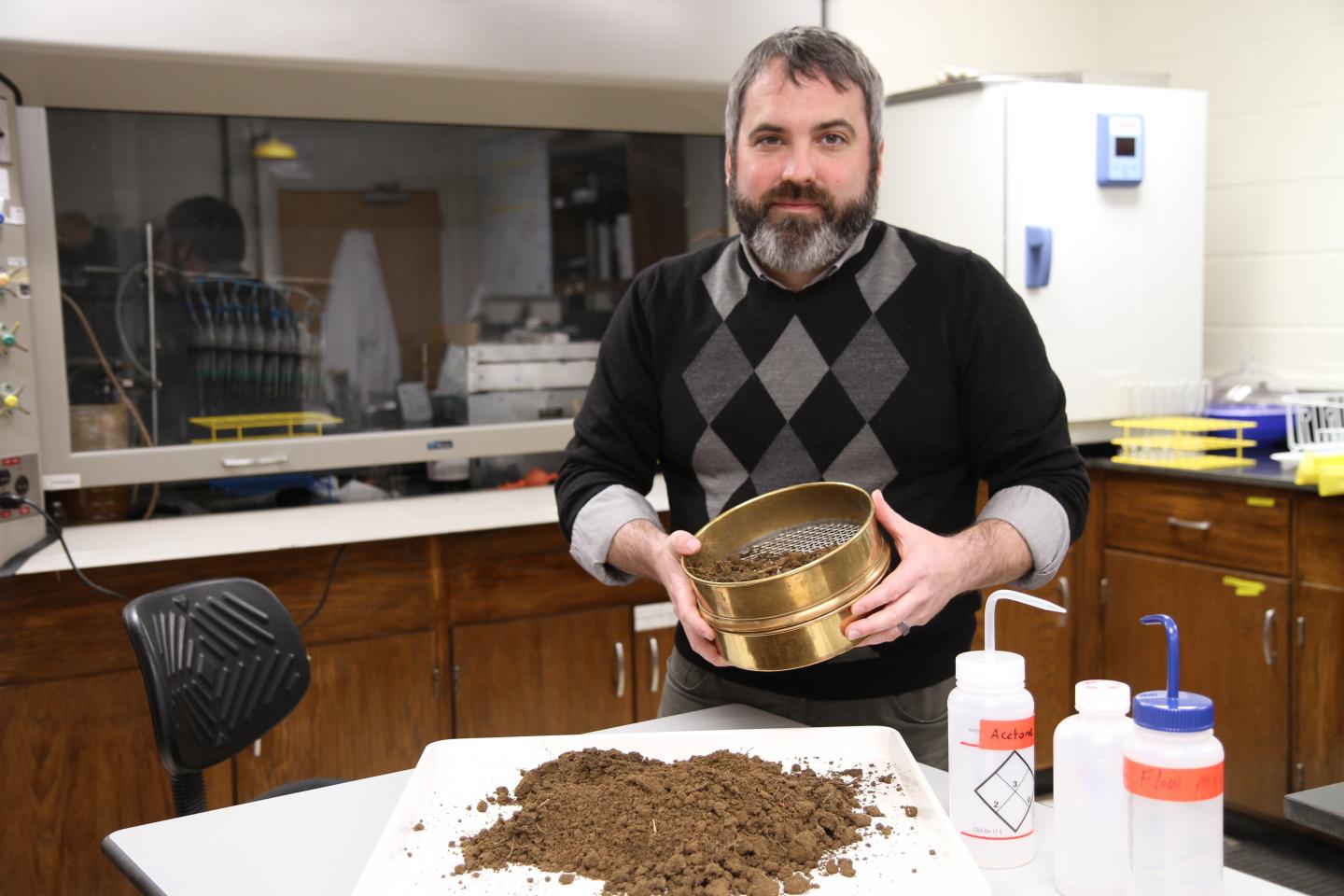
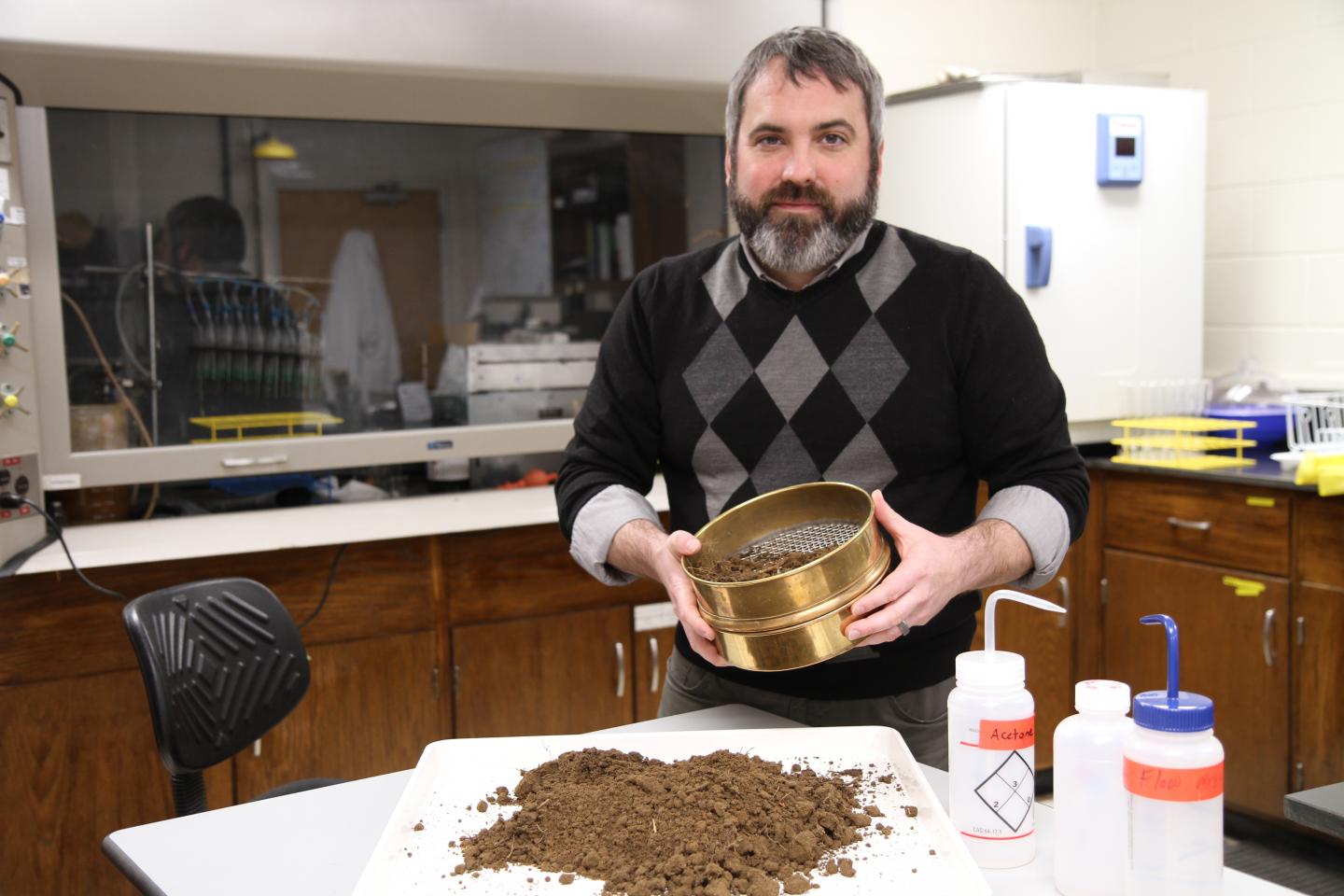
IMAGE

Credit: Lindsay Key

The soil beneath our feet is not as biologically diverse as scientists previously thought, according to a research team that includes a Virginia Tech soil microbial ecologist.

Leftover DNA from dead organisms — known as "relic DNA" — has historically thrown a wrench into estimates, causing scientists to overestimate microbial diversity by as much as 55 percent. Understanding microbial diversity in soil is crucial for understanding how environmental processes like atmospheric nitrogen fixation and climate change occur.

But a team that includes Michael Strickland, an assistant professor of biological sciences in the College of Science, used a high throughput sequencing technique to determine the exact make-up of 31 soil samples from varying climates and ecosystems.

The results were published in Nature Microbiology this week.

"When we started to realize that our numbers could be off, we knew we had to find a way to take a closer look at how many species are actually there," said Strickland, who is also affiliated with the university's Global Change Center and the Fralin Life Science Institute.

Information about populations of microbes in soil is important because these organisms play critical roles in the terrestrial ecosystem and they help maintain soil fertility.

But linking the activities of microbes to soil processes is difficult. Scientists need to measure living microbes — a challenging task because DNA from dead microbes can persist in soil for years, obscuring the analysis of microbial diversity.

"This research suggests that a significant proportion of the microorganisms detected in soil using DNA based techniques are no longer living," said Ember Morrissey, an assistant professor of plant and soil sciences at West Virginia University who was not involved in the research project. "As a consequence we may need to use tools that distinguish the genetic material of living cells from the relic DNA of dead microbes in order to understand the influence of microbial 'species' on important ecosystem processes."

Paul Carini, a microbial ecophysiologist at the University of Colorado Boulder and first author of the paper, used PMA, a photoreactive dye that binds to relic DNA but does not adhere well to living cells, to distinguish viable cells from DNA debris in soil.

"Accounting for relic DNA in our analyses will help us understand the important ebb and flow of the soil microbiome and help us better understand how microbes help regulate soil fertility and make earth habitable in the face of a changing climate," said Carini.

Although soil microbial communities were found to be less diverse than previously thought, they are still pretty diverse, according to Strickland. In one gram of soil, thousands of species of microbes live, causing Strickland to deem soil as "the poor man's rainforest."

###

Media Contact

Lindsay Key
[email protected]
540-231-6594
@VTresearch

http://www.vtnews.vt.edu

############

Story Source: Materials provided by Scienmag

Share12Tweet8Share2ShareShareShare2

Related Posts

Phage-Antibiotic Combo Beats Resistant Peritoneal Infection

February 7, 2026

Boosting Remote Healthcare: Stepped-Wedge Trial Insights

February 7, 2026

Barriers and Boosters of Seniors’ Physical Activity in Karachi

February 7, 2026

Evaluating Pediatric Emergency Care Quality in Ethiopia

February 7, 2026
Please login to join discussion

POPULAR NEWS

  • Robotic Ureteral Reconstruction: A Novel Approach

    Robotic Ureteral Reconstruction: A Novel Approach

    82 shares
    Share 33 Tweet 21
  • Digital Privacy: Health Data Control in Incarceration

    63 shares
    Share 25 Tweet 16
  • Study Reveals Lipid Accumulation in ME/CFS Cells

    57 shares
    Share 23 Tweet 14
  • Breakthrough in RNA Research Accelerates Medical Innovations Timeline

    53 shares
    Share 21 Tweet 13

About

We bring you the latest biotechnology news from best research centers and universities around the world. Check our website.

Follow us

Recent News

Phage-Antibiotic Combo Beats Resistant Peritoneal Infection

Boosting Remote Healthcare: Stepped-Wedge Trial Insights

Barriers and Boosters of Seniors’ Physical Activity in Karachi

Subscribe to Blog via Email

Enter your email address to subscribe to this blog and receive notifications of new posts by email.

Join 73 other subscribers
  • Contact Us

Bioengineer.org © Copyright 2023 All Rights Reserved.

Welcome Back!

Login to your account below

Forgotten Password?

Retrieve your password

Please enter your username or email address to reset your password.

Log In
No Result
View All Result
  • Homepages
    • Home Page 1
    • Home Page 2
  • News
  • National
  • Business
  • Health
  • Lifestyle
  • Science

Bioengineer.org © Copyright 2023 All Rights Reserved.