• HOME
  • NEWS
  • EXPLORE
    • CAREER
      • Companies
      • Jobs
    • EVENTS
    • iGEM
      • News
      • Team
    • PHOTOS
    • VIDEO
    • WIKI
  • BLOG
  • COMMUNITY
    • FACEBOOK
    • INSTAGRAM
    • TWITTER
Wednesday, August 12, 2026
BIOENGINEER.ORG
No Result
View All Result
  • Login
  • HOME
  • NEWS
  • EXPLORE
    • CAREER
      • Companies
      • Jobs
        • Lecturer
        • PhD Studentship
        • Postdoc
        • Research Assistant
    • EVENTS
    • iGEM
      • News
      • Team
    • PHOTOS
    • VIDEO
    • WIKI
  • BLOG
  • COMMUNITY
    • FACEBOOK
    • INSTAGRAM
    • TWITTER
  • HOME
  • NEWS
  • EXPLORE
    • CAREER
      • Companies
      • Jobs
        • Lecturer
        • PhD Studentship
        • Postdoc
        • Research Assistant
    • EVENTS
    • iGEM
      • News
      • Team
    • PHOTOS
    • VIDEO
    • WIKI
  • BLOG
  • COMMUNITY
    • FACEBOOK
    • INSTAGRAM
    • TWITTER
No Result
View All Result
Bioengineer.org
No Result
View All Result
Home NEWS Science News Health

Newly discovered immune cell function vital to healing

Bioengineer by Bioengineer
April 23, 2021
in Health
Reading Time: 2 mins read
0
IMAGE
Share on FacebookShare on TwitterShare on LinkedinShare on RedditShare on Telegram

IMAGE

Credit: David Ahl

Cardiovascular disease, the most common cause of death, is the result of oxygen deprivation as blood perfusion to affected tissue is prevented. To halt the development of the disease and to promote healing, re-establishment of blood flow is crucial. Researchers at Uppsala University have now discovered that one of the most common immune cells in the human body, macrophages, play an important role in re-establishing and controlling blood flow, something that can be used to develop new drugs.

The classic function of immune cells is to defend the body against attacks from microorganisms and tumour cells. Macrophages are immune cells specialised in killing and consuming microorganisms but they have also been shown to be involved in wound healing and building blood vessels.

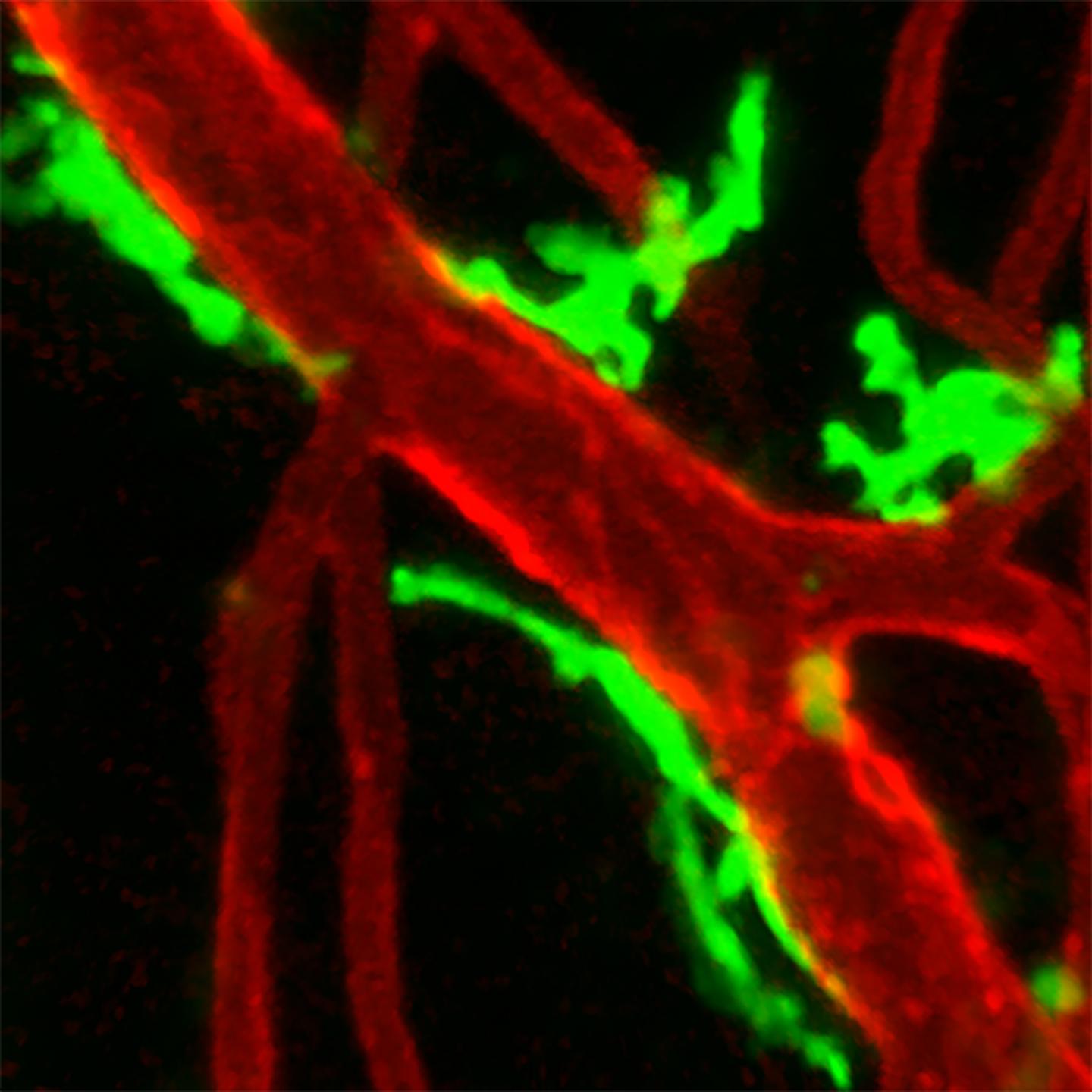
A new study published by researchers at Uppsala University demonstrates that macrophages accumulate around blood vessels in damaged tissue in mice, but also in humans after a myocardial infarction or peripheral ischemia. In mice, these macrophages could be seen to regulate blood flow, performing a necessary damage-control function. In healthy tissue, this task is carried out by blood vessel cells.

This discovery led the research group to investigate whether their findings could be developed into a new treatment to increase blood flow to damaged leg muscles, thus stimulating healing and improving function. By increasing the local concentration of certain signal substances that bind to macrophages in the damaged muscle, the research group was able to demonstrate that more macrophages accumulated around the blood vessels, improving their ability to regulate blood flow. This in turn resulted in improved healing and that the mice were able use the injured leg to a far greater extent.

“This is an entirely new function for the cells in our immune system and might mean that in future we can use immunotherapies to treat not only cancer but also cardiovascular diseases,” says Mia Phillipson, leader of the research group behind the discovery.

###

Media Contact
Mia Phillipson
[email protected]

Original Source

https://www.uu.se/en/press/press-release/?id=5488&typ=pm&lang=en

Related Journal Article

http://dx.doi.org/10.1161/CIRCRESAHA.120.318380

Tags: BiologyCardiologyCell BiologyImmunology/Allergies/AsthmaTrauma/Injury
Share13Tweet8Share2ShareShareShare2

Related Posts

How Cellular Senescence and Immunity Drive Cancer, With Insights for Glioblastoma

August 12, 2026

Ovarian Cancer Grows in Omentum Independently of Mature Fat Cells

August 12, 2026

Nearly All Tested Personal Care and Cleaning Products Contain Unlabeled Chemicals

August 12, 2026

Molecular Clues Reveal Why Neuromas Cause Pain

August 12, 2026
Please login to join discussion

POPULAR NEWS

  • How Cellular Senescence and Immunity Drive Cancer, With Insights for Glioblastoma

    29 shares
    Share 12 Tweet 7
  • Bifidobacterium Synbiotic Found Safe and Well-Tolerated, May Improve Digestion in Young Children

    29 shares
    Share 12 Tweet 7
  • Ovarian Cancer Grows in Omentum Independently of Mature Fat Cells

    29 shares
    Share 12 Tweet 7
  • Cement Plants Could Help Remove COâ‚‚ From the Atmosphere

    29 shares
    Share 12 Tweet 7

About

We bring you the latest biotechnology news from best research centers and universities around the world. Check our website.

Follow us

Recent News

How Cellular Senescence and Immunity Drive Cancer, With Insights for Glioblastoma

Bifidobacterium Synbiotic Found Safe and Well-Tolerated, May Improve Digestion in Young Children

Ovarian Cancer Grows in Omentum Independently of Mature Fat Cells

Subscribe to Blog via Email

Enter your email address to subscribe to this blog and receive notifications of new posts by email.

Join 86 other subscribers
  • Contact Us

Bioengineer.org © Copyright 2023 All Rights Reserved.

Welcome Back!

Login to your account below

Forgotten Password?

Retrieve your password

Please enter your username or email address to reset your password.

Log In
No Result
View All Result
  • Homepages
    • Home Page 1
    • Home Page 2
  • News
  • National
  • Business
  • Health
  • Lifestyle
  • Science

Bioengineer.org © Copyright 2023 All Rights Reserved.