• HOME
  • NEWS
  • EXPLORE
    • CAREER
      • Companies
      • Jobs
    • EVENTS
    • iGEM
      • News
      • Team
    • PHOTOS
    • VIDEO
    • WIKI
  • BLOG
  • COMMUNITY
    • FACEBOOK
    • INSTAGRAM
    • TWITTER
Friday, January 2, 2026
BIOENGINEER.ORG
No Result
View All Result
  • Login
  • HOME
  • NEWS
  • EXPLORE
    • CAREER
      • Companies
      • Jobs
        • Lecturer
        • PhD Studentship
        • Postdoc
        • Research Assistant
    • EVENTS
    • iGEM
      • News
      • Team
    • PHOTOS
    • VIDEO
    • WIKI
  • BLOG
  • COMMUNITY
    • FACEBOOK
    • INSTAGRAM
    • TWITTER
  • HOME
  • NEWS
  • EXPLORE
    • CAREER
      • Companies
      • Jobs
        • Lecturer
        • PhD Studentship
        • Postdoc
        • Research Assistant
    • EVENTS
    • iGEM
      • News
      • Team
    • PHOTOS
    • VIDEO
    • WIKI
  • BLOG
  • COMMUNITY
    • FACEBOOK
    • INSTAGRAM
    • TWITTER
No Result
View All Result
Bioengineer.org
No Result
View All Result
Home NEWS Science News

Cool and COVID-safe: How radiant cooling could keep our cities comfortable and healthy

Bioengineer by Bioengineer
April 20, 2021
in Science News
Reading Time: 3 mins read
0
IMAGE
Share on FacebookShare on TwitterShare on LinkedinShare on RedditShare on Telegram

Combination of special cooling panels and natural ventilation can minimize disease transmission while saving energy
IMAGE

Credit: Credit: Lea Ruefenacht

A novel system of chilled panels that can replace air conditioning can also help reduce the risk of indoor disease transmission, suggests new analysis from the University of British Columbia, University of Pennsylvania and Princeton University.

The researchers computed air conditioning requirements in 60 of the world’s most populous cities–with the additional ventilation required due to COVID-19. Then, they compared the energy costs with their cooling method, using the chilled panels and natural ventilation.

The results, published in the COVID-19 edition of Applied Energy, showed that the alternative solution can save up to 45 per cent of the required energy, while ensuring building occupants are comfortable and rooms are adequately refreshed.

Dr. Adam Rysanek, a professor in the school of architecture and landscape architecture at UBC and co-author of the paper, notes that many public health guidelines, as well as building industry bodies, recommend increasing the flow of fresh, outdoor air into buildings in order to reduce the risk of spreading COVID-19 and other diseases.

“However, if we continue to rely on conventional HVAC systems to increase indoor fresh air rates, we may actually double energy consumption. That’s the nature of conventional HVAC.”

“Alternatively, we can encourage people to install new types of radiant cooling systems, which allow them to keep their windows open even when it’s hot outside. These alternative systems can provide a sufficient level of thermal comfort, increase protection against disease while lessening the impact on the environment,” noted Rysanek, director of the Building Decisions Research Group at UBC’s faculty of applied science.

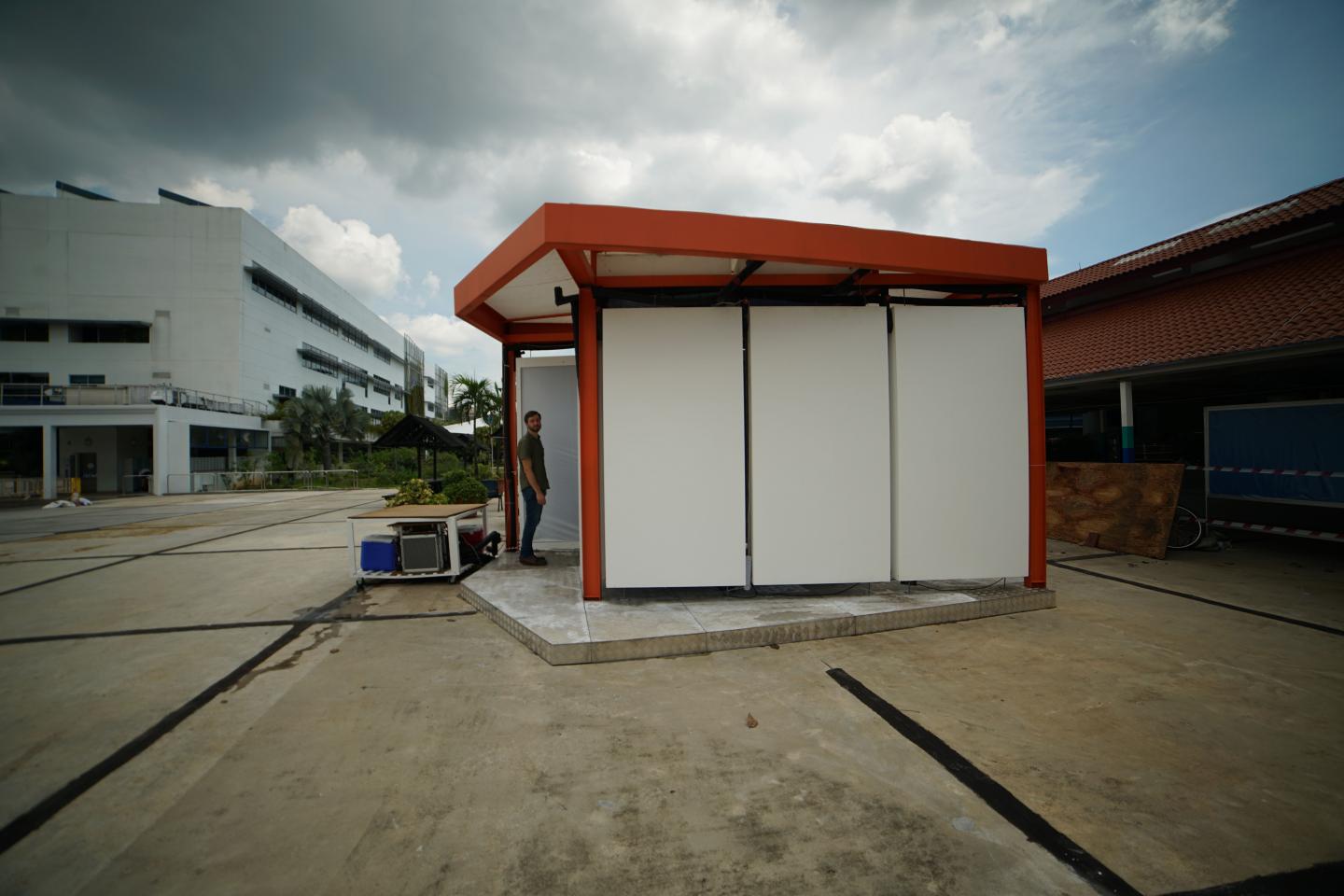
Rysanek and his colleagues earlier demonstrated their cooling system in the hot and humid climate of Singapore. They built a public pavilion featuring a system of chilled tubes enclosed within a condensation-preventing membrane. This allowed occupants to feel comfortable, and even cold, without changing the air temperature surrounding the human body.

“You can think of it as lean A/C–or, even better, as a green alternative to energy-guzzling air conditioning,” said Rysanek.

Toronto is one of the cities included in the latest analysis, as are Beijing, Miami, Mumbai, New York and Paris. In all these regions, peak summer temperatures can soar past 35 degrees Celsius (95 degrees Fahrenheit).

“A key impact of climate change is the accelerating rise in average and peak temperatures, particularly in urban areas. We are expecting the appetite for indoor cooling will ramp up in the years ahead. Yet, if we want to mitigate urban heat and ensure people are healthy and comfortable while reducing our energy use, we need to seriously consider revolutionising our historical approach to air-conditioning,” adds Rysanek.

Rysanek notes that, though chilled panel systems have been around for decades, adding the special membrane devised by the research team could be the key to making it a commercially viable alternative to traditional HVAC systems in all climates.

Interview languages: English

###

Media Contact
Lou Corpuz-Bosshart
[email protected]

Original Source

https://news.ubc.ca/2021/04/20/cool-and-covid-safe-how-radiant-cooling-could-keep-our-cities-comfortable-and-healthy/

Related Journal Article

http://dx.doi.org/10.1016/j.apenergy.2021.116848

Tags: Mechanical EngineeringTechnology/Engineering/Computer Science
Share12Tweet8Share2ShareShareShare2

Related Posts

Reprogrammable Nonlinear Optics with Ferroelectric Liquid Crystals

Reprogrammable Nonlinear Optics with Ferroelectric Liquid Crystals

January 2, 2026

Advancements in Droplet Microfluidics for Biomaterials

January 2, 2026

Topological Vertical Cavity Lasers from Soft Matter

January 2, 2026

Advancements in cGAS-STING Signaling and Immune Cell Infiltration

January 2, 2026
Please login to join discussion

POPULAR NEWS

  • blank

    PTSD, Depression, Anxiety in Childhood Cancer Survivors, Parents

    113 shares
    Share 45 Tweet 28
  • NSF funds machine-learning research at UNO and UNL to study energy requirements of walking in older adults

    71 shares
    Share 28 Tweet 18
  • Exploring Audiology Accessibility in Johannesburg, South Africa

    52 shares
    Share 21 Tweet 13
  • SARS-CoV-2 Subvariants Affect Outcomes in Elderly Hip Fractures

    44 shares
    Share 18 Tweet 11

About

We bring you the latest biotechnology news from best research centers and universities around the world. Check our website.

Follow us

Recent News

Reprogrammable Nonlinear Optics with Ferroelectric Liquid Crystals

Advancements in Droplet Microfluidics for Biomaterials

Topological Vertical Cavity Lasers from Soft Matter

Subscribe to Blog via Email

Enter your email address to subscribe to this blog and receive notifications of new posts by email.

Join 71 other subscribers
  • Contact Us

Bioengineer.org © Copyright 2023 All Rights Reserved.

Welcome Back!

Login to your account below

Forgotten Password?

Retrieve your password

Please enter your username or email address to reset your password.

Log In
No Result
View All Result
  • Homepages
    • Home Page 1
    • Home Page 2
  • News
  • National
  • Business
  • Health
  • Lifestyle
  • Science

Bioengineer.org © Copyright 2023 All Rights Reserved.