• HOME
  • NEWS
  • EXPLORE
    • CAREER
      • Companies
      • Jobs
    • EVENTS
    • iGEM
      • News
      • Team
    • PHOTOS
    • VIDEO
    • WIKI
  • BLOG
  • COMMUNITY
    • FACEBOOK
    • INSTAGRAM
    • TWITTER
Monday, May 11, 2026
BIOENGINEER.ORG
No Result
View All Result
  • Login
  • HOME
  • NEWS
  • EXPLORE
    • CAREER
      • Companies
      • Jobs
        • Lecturer
        • PhD Studentship
        • Postdoc
        • Research Assistant
    • EVENTS
    • iGEM
      • News
      • Team
    • PHOTOS
    • VIDEO
    • WIKI
  • BLOG
  • COMMUNITY
    • FACEBOOK
    • INSTAGRAM
    • TWITTER
  • HOME
  • NEWS
  • EXPLORE
    • CAREER
      • Companies
      • Jobs
        • Lecturer
        • PhD Studentship
        • Postdoc
        • Research Assistant
    • EVENTS
    • iGEM
      • News
      • Team
    • PHOTOS
    • VIDEO
    • WIKI
  • BLOG
  • COMMUNITY
    • FACEBOOK
    • INSTAGRAM
    • TWITTER
No Result
View All Result
Bioengineer.org
No Result
View All Result
Home NEWS Science News

Discovery is key to creating heat-tolerant crops

Bioengineer by Bioengineer
April 6, 2021
in Science News
Reading Time: 2 mins read
0
IMAGE
Share on FacebookShare on TwitterShare on LinkedinShare on RedditShare on Telegram

Researchers identify gene that helps plants sense heat
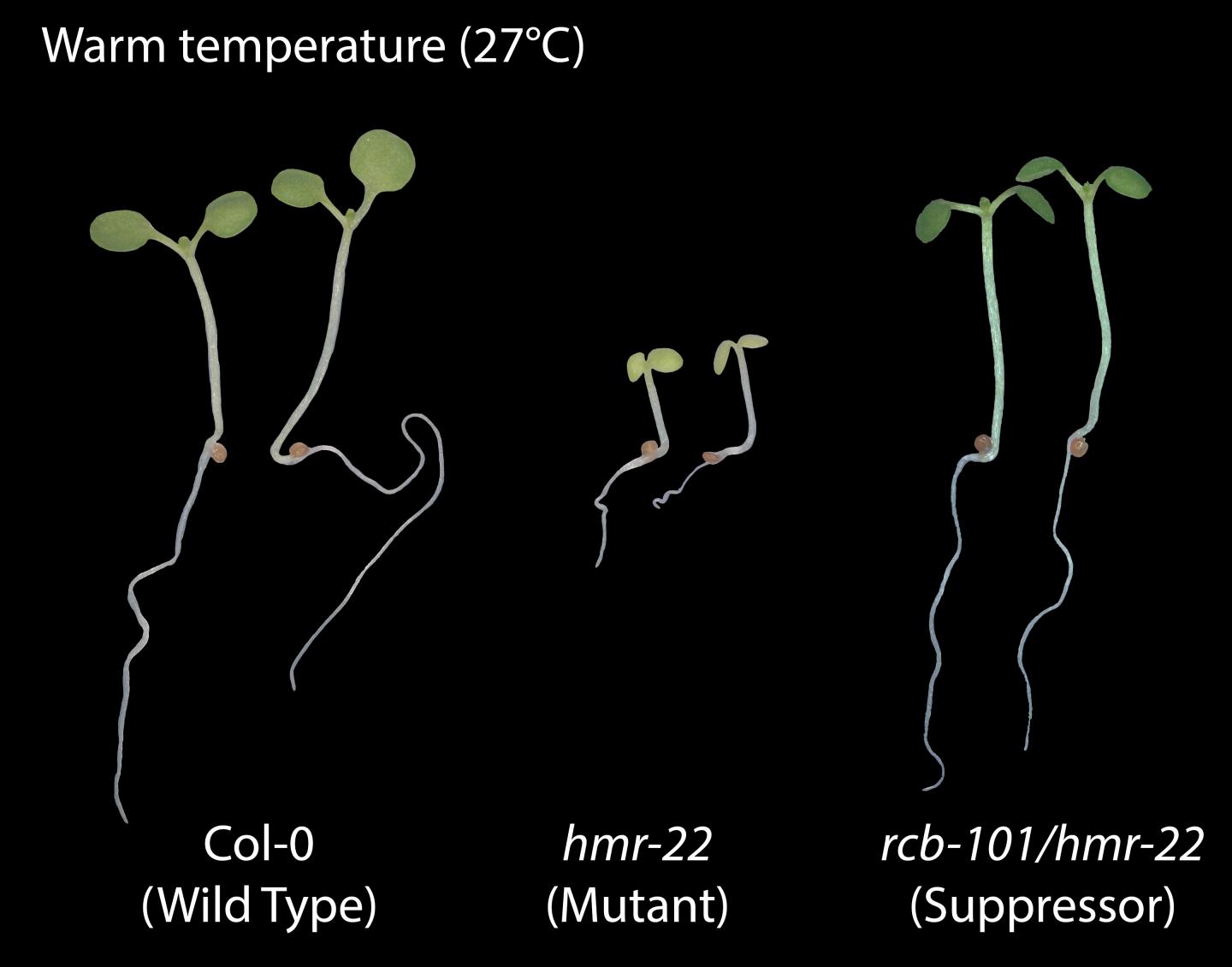
IMAGE

Credit: Meng Chen/UCR

By 2050 global warming could reduce crop yields by one-third. UC Riverside researchers have identified a gene that could put the genie back in the bottle.

Warmer temperatures signal to plants that summer is coming. Anticipating less water, they flower early then lack the energy to produce more seeds, so crop yields are lower. This is problematic as the world’s population is expected to balloon to 10 billion, with much less food to eat.

“We need plants that can endure warmer temperatures, have a longer time to flower and a longer growth period,” said UCR botany and plant sciences professor Meng Chen. “But, to be able to modify plants’ temperature responses, you first have to understand how they work. So, that’s why identifying this gene that enables heat response is so important.”

The work that Chen and his colleagues did to uncover the heat-sensing gene was published this week in the journal Nature Communications. It is the second gene they’ve found involved in temperature sensing.

They located the first gene, called HEMERA, two years ago. Then they did an experiment to see if they could identify other genes involved in controlling the temperature-sensing process.

Ordinarily, plants react to shifts of even a few degrees in weather. For this experiment, the team began with a mutant Arabidopsis plant completely insensitive to temperature, and they modified it to once again become reactive.

Examining the genes of this twice-mutated plant revealed the new gene, RCB, whose products work closely with HEMERA to stabilize the heat-sensing function. “If you knock out either gene, your plant is no longer sensitive to temperature,” Chen said.

Both HEMERA and RCB are required to regulate the abundance of a group of master gene regulators that serve multiple functions, reacting to temperature as well as light, and turning plants green. These proteins are distributed to two different parts of plant cells, the nucleus as well as organelles called chloroplasts.

Going forward, Chen says his laboratory will focus on understanding how these two parts of the cell communicate and work together to achieve growth, greening, flowering, and other functions.

“When you change light or temperature, genes in both the nucleus and chloroplasts change their expression. We think HEMERA and RCB are involved coordinating gene expression between these two cell compartments,” Chen said.

Ultimately, the goal is to be able to modify temperature response to ensure the future of our food supply.

“We were excited to find this second gene,” Chen said. “It’s a new piece of the puzzle. Once we understand how it all works, we can modify it, and help crops cope better with climate change.”

###

Media Contact
Jules Bernstein
[email protected]

Original Source

https://news.ucr.edu/articles/2021/04/06/discovery-key-creating-heat-tolerant-crops

Related Journal Article

http://dx.doi.org/10.1038/s41467-021-22313-x

Tags: Agricultural Production/EconomicsAgricultureCell BiologyClimate ChangeFood/Food ScienceGenesGeneticsPlant Sciences
Share13Tweet8Share2ShareShareShare2

Related Posts

New Post-Hoc Analysis Explores Daily Oral Orforglipron Use in Adults Over 65 with Obesity, Regardless of Diabetes Status

May 11, 2026

Evaluating Digoxin Use in Patients with Symptomatic Rheumatic Heart Disease

May 10, 2026

Evaluating the Effectiveness and Safety of Digitalis Glycosides in Treating Heart Failure

May 10, 2026

Urdu Fall Risk Questionnaire Adapted for Elderly

May 10, 2026
Please login to join discussion

POPULAR NEWS

  • Research Indicates Potential Connection Between Prenatal Medication Exposure and Elevated Autism Risk

    840 shares
    Share 336 Tweet 210
  • New Study Reveals Plants Can Detect the Sound of Rain

    727 shares
    Share 290 Tweet 181
  • Salmonella Haem Blocks Macrophages, Boosts Infection

    61 shares
    Share 24 Tweet 15
  • Breastmilk Balances E. coli and Beneficial Bacteria in Infant Gut Microbiomes

    57 shares
    Share 23 Tweet 14

About

We bring you the latest biotechnology news from best research centers and universities around the world. Check our website.

Follow us

Recent News

New Post-Hoc Analysis Explores Daily Oral Orforglipron Use in Adults Over 65 with Obesity, Regardless of Diabetes Status

Evaluating Digoxin Use in Patients with Symptomatic Rheumatic Heart Disease

Evaluating the Effectiveness and Safety of Digitalis Glycosides in Treating Heart Failure

Subscribe to Blog via Email

Enter your email address to subscribe to this blog and receive notifications of new posts by email.

Join 82 other subscribers
  • Contact Us

Bioengineer.org © Copyright 2023 All Rights Reserved.

Welcome Back!

Login to your account below

Forgotten Password?

Retrieve your password

Please enter your username or email address to reset your password.

Log In
No Result
View All Result
  • Homepages
    • Home Page 1
    • Home Page 2
  • News
  • National
  • Business
  • Health
  • Lifestyle
  • Science

Bioengineer.org © Copyright 2023 All Rights Reserved.