• HOME
  • NEWS
  • EXPLORE
    • CAREER
      • Companies
      • Jobs
    • EVENTS
    • iGEM
      • News
      • Team
    • PHOTOS
    • VIDEO
    • WIKI
  • BLOG
  • COMMUNITY
    • FACEBOOK
    • INSTAGRAM
    • TWITTER
Thursday, March 26, 2026
BIOENGINEER.ORG
No Result
View All Result
  • Login
  • HOME
  • NEWS
  • EXPLORE
    • CAREER
      • Companies
      • Jobs
        • Lecturer
        • PhD Studentship
        • Postdoc
        • Research Assistant
    • EVENTS
    • iGEM
      • News
      • Team
    • PHOTOS
    • VIDEO
    • WIKI
  • BLOG
  • COMMUNITY
    • FACEBOOK
    • INSTAGRAM
    • TWITTER
  • HOME
  • NEWS
  • EXPLORE
    • CAREER
      • Companies
      • Jobs
        • Lecturer
        • PhD Studentship
        • Postdoc
        • Research Assistant
    • EVENTS
    • iGEM
      • News
      • Team
    • PHOTOS
    • VIDEO
    • WIKI
  • BLOG
  • COMMUNITY
    • FACEBOOK
    • INSTAGRAM
    • TWITTER
No Result
View All Result
Bioengineer.org
No Result
View All Result
Home NEWS Science News Biology

Ozone pollution harms maize crops, study finds

Bioengineer by Bioengineer
April 5, 2021
in Biology
Reading Time: 2 mins read
0
IMAGE
Share on FacebookShare on TwitterShare on LinkedinShare on RedditShare on Telegram

IMAGE

Credit: Ainsworth lab

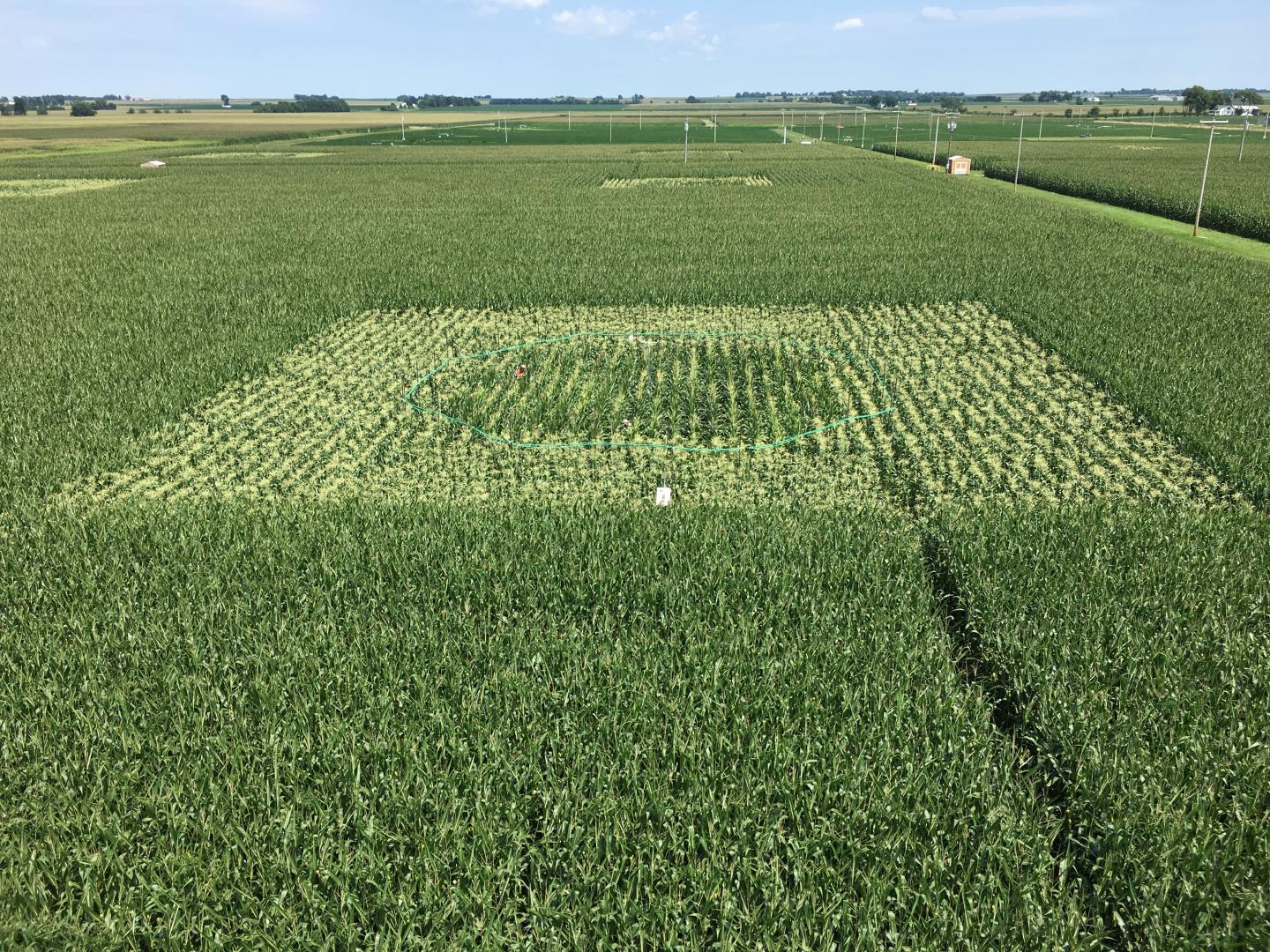
Although stratospheric ozone protects us by filtering out the sun’s ultraviolet radiation, tropospheric ozone is a harmful pollutant. A new study has shown that ozone in the lower layers of the atmosphere decreases crop yields in maize and changes the types of chemicals that are found inside the leaves.

Ozone is formed when nitrous oxide, released from industries and tail pipes of cars, is broken down by sunlight and chemically reacts to form ozone. Researchers at the University of Illinois Urbana-Champaign have been studying the effects of ozone pollution on crops for over 20 years at a unique facility where crops can be grown under real-world farm field conditions but with increased concentrations of ozone pollution.

“Ozone pollution is higher in the northern hemisphere, and peaks in the warmer, summer months. High concentrations of ozone pollution overlap temporally and spatially with crop growth, so it is important to study how the high ozone concentrations affect crop yields,” said Jessica Wedow, a former PhD student in the Ainsworth lab.

The researchers looked at three types of maize: two inbred lines B73 and Mo17, and the hybrid cross B73 × Mo17. Surprisingly, they found that chronic ozone stress caused a 25% decrease in yield in the hybrid crops while the inbred plants remained unaffected. The hybrid plants also aged faster than the inbred crops.

To understand why B73 × Mo17 was affected, the researchers measured the chemical composition of the leaves. “The inbred plants did not respond to ozone. On the other hand, the hybrid plants produced more α?tocopherol and phytosterols, which help quench reactive oxygen molecules and stabilize the chloroplast membranes,” Wedow said. These results suggest that the since the hybrid maize is more sensitive to ozone exposure, they may be producing more chemicals that deal with the consequences of chronic ozone stress.

“This study provides clues to improve maize tolerance to ozone pollution,” said Lisa Ainsworth (GEGC), the Research Leader of the USDA ARS Global Change and Photosynthesis Research Unit. The group is currently studying whether these responses are consistent across other important grasses, including those used for bioenergy.

###

The paper “Age-dependent increase in a-tocopherol and phytosterols in maize leaves exposed to elevated ozone pollution” was published in Plant Direct and can be found at https://doi.org/10.1002/pld3.307. The study was funded by the NSF Plant Genome Research Program.

Media Contact
Ananya Sen
[email protected]

Original Source

https://www.igb.illinois.edu/article/ozone-pollution-harms-maize-crops-study-finds

Related Journal Article

http://dx.doi.org/10.1002/pld3.307

Tags: AgricultureBiologyClimate ChangePlant Sciences
Share12Tweet8Share2ShareShareShare2

Related Posts

How to sway group opinions: Encourage opponents to stay undecided

How to sway group opinions: Encourage opponents to stay undecided

March 23, 2026
Deep Learning Model Maps How Individual Cells Shape Disease Outcomes

Deep Learning Model Maps How Individual Cells Shape Disease Outcomes

March 20, 2026

Removing only 15 female sharks annually could endanger the entire population, scientists warn

March 20, 2026

Scientists Urge Fragrance Industry to Transition from Sustainability Talk to Active Funding of Plant Conservation

March 20, 2026
Please login to join discussion

POPULAR NEWS

  • blank

    Revolutionary AI Model Enhances Precision in Detecting Food Contamination

    96 shares
    Share 38 Tweet 24
  • Imagine a Social Media Feed That Challenges Your Views Instead of Reinforcing Them

    1003 shares
    Share 397 Tweet 248
  • Uncovering Functions of Cavernous Malformation Proteins in Organoids

    54 shares
    Share 22 Tweet 14
  • Promising Outcomes from First Clinical Trials of Gene Regulation in Epilepsy

    51 shares
    Share 20 Tweet 13

About

We bring you the latest biotechnology news from best research centers and universities around the world. Check our website.

Follow us

Recent News

In-Sensor Cryptography Links Physical Process to Digital Identity

Can Psychosocial Factors Influence Cancer Risk?

Depression Factors in Elderly: Pre vs. Post-COVID Analysis

Subscribe to Blog via Email

Enter your email address to subscribe to this blog and receive notifications of new posts by email.

Join 78 other subscribers
  • Contact Us

Bioengineer.org © Copyright 2023 All Rights Reserved.

Welcome Back!

Login to your account below

Forgotten Password?

Retrieve your password

Please enter your username or email address to reset your password.

Log In
No Result
View All Result
  • Homepages
    • Home Page 1
    • Home Page 2
  • News
  • National
  • Business
  • Health
  • Lifestyle
  • Science

Bioengineer.org © Copyright 2023 All Rights Reserved.