• HOME
  • NEWS
  • EXPLORE
    • CAREER
      • Companies
      • Jobs
    • EVENTS
    • iGEM
      • News
      • Team
    • PHOTOS
    • VIDEO
    • WIKI
  • BLOG
  • COMMUNITY
    • FACEBOOK
    • INSTAGRAM
    • TWITTER
Saturday, February 7, 2026
BIOENGINEER.ORG
No Result
View All Result
  • Login
  • HOME
  • NEWS
  • EXPLORE
    • CAREER
      • Companies
      • Jobs
        • Lecturer
        • PhD Studentship
        • Postdoc
        • Research Assistant
    • EVENTS
    • iGEM
      • News
      • Team
    • PHOTOS
    • VIDEO
    • WIKI
  • BLOG
  • COMMUNITY
    • FACEBOOK
    • INSTAGRAM
    • TWITTER
  • HOME
  • NEWS
  • EXPLORE
    • CAREER
      • Companies
      • Jobs
        • Lecturer
        • PhD Studentship
        • Postdoc
        • Research Assistant
    • EVENTS
    • iGEM
      • News
      • Team
    • PHOTOS
    • VIDEO
    • WIKI
  • BLOG
  • COMMUNITY
    • FACEBOOK
    • INSTAGRAM
    • TWITTER
No Result
View All Result
Bioengineer.org
No Result
View All Result
Home NEWS Science News

Decline in black cherry regeneration may herald wider forest change

Bioengineer by Bioengineer
March 24, 2021
in Science News
Reading Time: 2 mins read
0
IMAGE
Share on FacebookShare on TwitterShare on LinkedinShare on RedditShare on Telegram

IMAGE

Credit: USDA Forest Service photograph

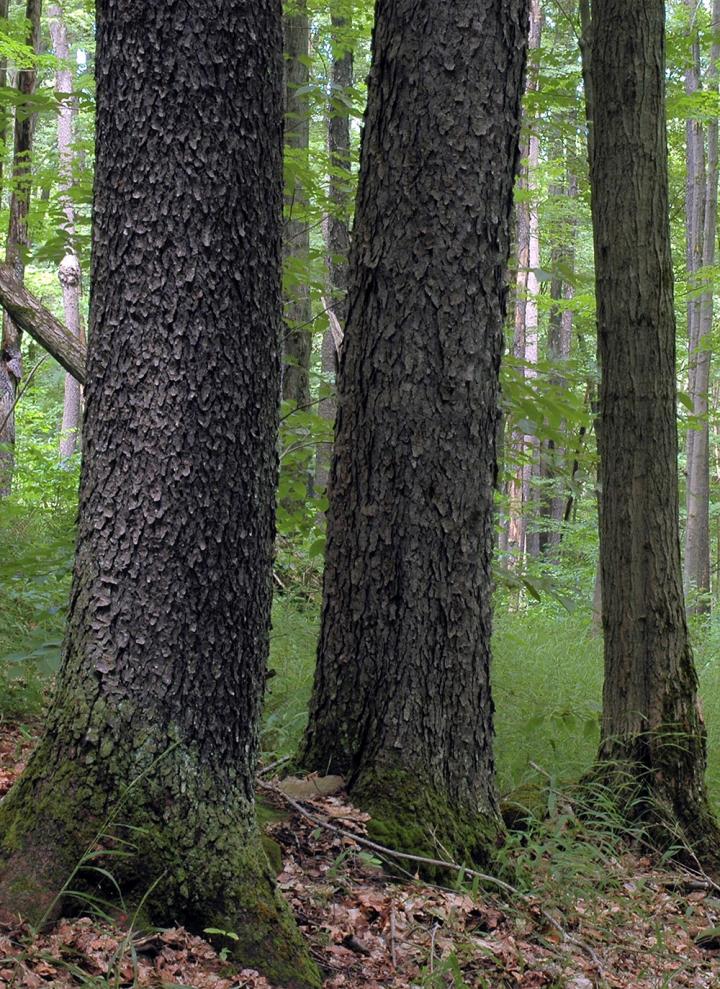
In the heart of black cherry’s native range, including a part of the Allegheny Hardwoods that bills itself as the “Black Cherry Capital of the World,” the tree’s regeneration, growth and survival have all been declining for more than a decade. In a new analysis, a team of USDA Forest Service and University of Missouri scientists identify likely factors behind the tree’s decline and, more significantly, conclude that black cherry may be the tip of the iceberg in terms of change in eastern deciduous forests.

Scientists used a combination of synthesis of existing research and new analyses to examine the leading hypotheses for black cherry’s regeneration failure. They conclude that the two factors that are most likely contributing to declining abundance of black cherry are an increase in pathogens and less nitrogen deposition in soil.

“We began this project wanting to narrow down the potential drivers behind the change in black cherry; what we found is that this may be a story of change on a much bigger scale, with mixed species forests in the coming century likely to reflect the response of many individual tree species to changing environmental conditions, biotic stressors, and their interactions,” said Alejandro Royo, a research ecologist with the Northern Research Station and the study’s lead author.

###

The study, “The Forest of Unintended Consequences: Anthropogenic Actions Trigger the Rise and Fall of Black Cherry,” is available at: https://www.nrs.fs.fed.us/pubs/62065

USDA is an equal opportunity provider, employer, and lender.

Media Contact
Jane Hodgins
[email protected]

Original Source

https://www.nrs.fs.fed.us/news/release/black-cherry-decline

Related Journal Article

http://dx.doi.org/10.1093/biosci/biab002

Tags: AgricultureEcology/EnvironmentForestryPlant Sciences
Share13Tweet8Share2ShareShareShare2

Related Posts

Evaluating Pediatric Emergency Care Quality in Ethiopia

February 7, 2026

TPMT Expression Predictions Linked to Azathioprine Side Effects

February 7, 2026

Improving Dementia Care with Enhanced Activity Kits

February 7, 2026

Decoding Prostate Cancer Origins via snFLARE-seq, mxFRIZNGRND

February 7, 2026
Please login to join discussion

POPULAR NEWS

  • Robotic Ureteral Reconstruction: A Novel Approach

    Robotic Ureteral Reconstruction: A Novel Approach

    82 shares
    Share 33 Tweet 21
  • Digital Privacy: Health Data Control in Incarceration

    63 shares
    Share 25 Tweet 16
  • Study Reveals Lipid Accumulation in ME/CFS Cells

    57 shares
    Share 23 Tweet 14
  • Breakthrough in RNA Research Accelerates Medical Innovations Timeline

    53 shares
    Share 21 Tweet 13

About

We bring you the latest biotechnology news from best research centers and universities around the world. Check our website.

Follow us

Recent News

Evaluating Pediatric Emergency Care Quality in Ethiopia

TPMT Expression Predictions Linked to Azathioprine Side Effects

Improving Dementia Care with Enhanced Activity Kits

Subscribe to Blog via Email

Success! An email was just sent to confirm your subscription. Please find the email now and click 'Confirm' to start subscribing.

Join 73 other subscribers
  • Contact Us

Bioengineer.org © Copyright 2023 All Rights Reserved.

Welcome Back!

Login to your account below

Forgotten Password?

Retrieve your password

Please enter your username or email address to reset your password.

Log In
No Result
View All Result
  • Homepages
    • Home Page 1
    • Home Page 2
  • News
  • National
  • Business
  • Health
  • Lifestyle
  • Science

Bioengineer.org © Copyright 2023 All Rights Reserved.