• HOME
  • NEWS
  • EXPLORE
    • CAREER
      • Companies
      • Jobs
    • EVENTS
    • iGEM
      • News
      • Team
    • PHOTOS
    • VIDEO
    • WIKI
  • BLOG
  • COMMUNITY
    • FACEBOOK
    • INSTAGRAM
    • TWITTER
Sunday, April 12, 2026
BIOENGINEER.ORG
No Result
View All Result
  • Login
  • HOME
  • NEWS
  • EXPLORE
    • CAREER
      • Companies
      • Jobs
        • Lecturer
        • PhD Studentship
        • Postdoc
        • Research Assistant
    • EVENTS
    • iGEM
      • News
      • Team
    • PHOTOS
    • VIDEO
    • WIKI
  • BLOG
  • COMMUNITY
    • FACEBOOK
    • INSTAGRAM
    • TWITTER
  • HOME
  • NEWS
  • EXPLORE
    • CAREER
      • Companies
      • Jobs
        • Lecturer
        • PhD Studentship
        • Postdoc
        • Research Assistant
    • EVENTS
    • iGEM
      • News
      • Team
    • PHOTOS
    • VIDEO
    • WIKI
  • BLOG
  • COMMUNITY
    • FACEBOOK
    • INSTAGRAM
    • TWITTER
No Result
View All Result
Bioengineer.org
No Result
View All Result
Home NEWS Science News

Fundamental solid state phenomenon unraveled

Bioengineer by Bioengineer
December 16, 2016
in Science News
Reading Time: 2 mins read
0
Share on FacebookShare on TwitterShare on LinkedinShare on RedditShare on Telegram
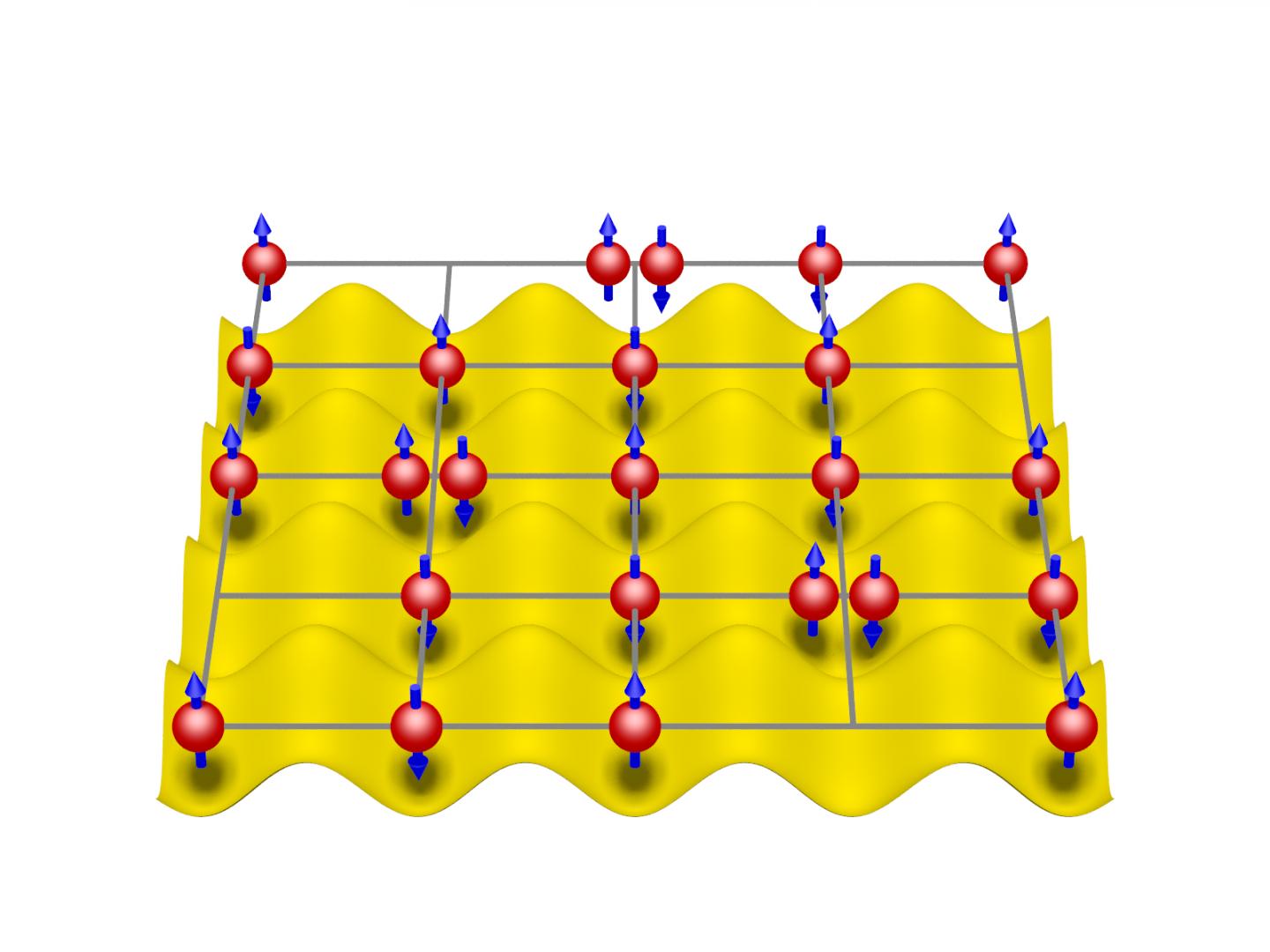
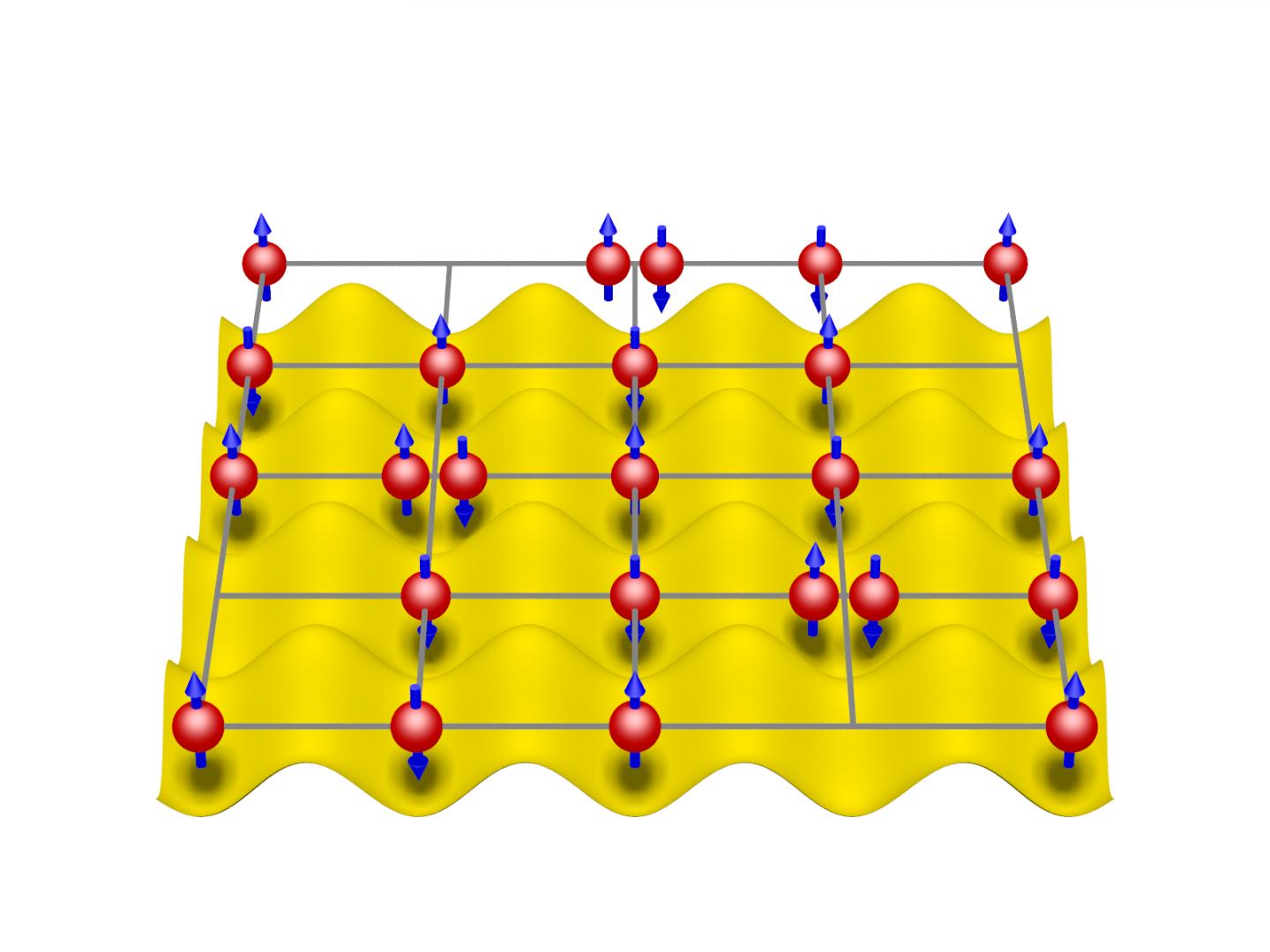
IMAGE

Credit: Dr. Ulrich Tutsch

Whether water freezes to ice, iron is demagnetized or a material becomes superconducting – for physicists there is always a phase transition behind it. They endeavour to understand these different phenomena by searching for universal properties. Researchers at Goethe University Frankfurt and Technische Universität Dresden have now made a pioneering discovery during their study of a phase transition from an electrical conductor to an insulator (Mott metal-insulator transition).

According to Sir Nevill Francis Mott's prediction in 1937, the mutual repulsion of charged electrons, which are responsible for carrying electrical current, can cause a metal-insulator transition. Yet, contrary to common textbook opinion, according to which the phase transition is determined solely by the electrons, it is the interaction of the electrons with the atomic lattice of the solid which is the determinant factor. The researchers have reported this in the latest issue of the Science Advances journal.

The research group, led by Professor Michael Lang of the Physics Institute at Goethe University Frankfurt, succeeded in making the discovery with the help of a homemade apparatus which is unique worldwide. It allows the measurement of length changes at low temperatures under variable external pressure with extremely high resolution. In this way, it was possible to prove experimentally for the first time that it is not just the electrons which play a significant role in the phase transition but also the atomic lattice – the solid's scaffold.

"These experimental results will herald in a paradigm shift in our understanding of one of the key phenomena of current condensed matter research", says Professor Lang. The Mott metal-insulator transition is namely linked to unusual phenomena, such as high-temperature superconductivity in copper oxide-based materials. These offer tremendous potential for future technical applications.

The theoretical analysis of the experimental findings is based on the fundamental notion that the many particles in a system close to a phase transition not only interact with their immediate neighbours but also "communicate" over long distances with all other particles. As a consequence, only overarching aspects are important, such as the system's symmetry. The identification of such universal properties is thus the key to understanding phase transitions.

"These new insights open up a whole new perspective on the Mott metal-insulator transition and permit more sophisticated theoretical modelling of the phase transition", explains Dr. Markus Garst, Senior Lecturer at the Institute of Theoretical Physics of Technische Universität Dresden.

###

The research work was funded by the German Research Foundation in the framework of the Collaborative Research Centre/Transregio "Condensed Matter Systems with Variable Many-Body Interactions" led by Professor Michael Lang.

Media Contact

Dr. Michael Lang
[email protected]
@goetheuni

http://www.uni-frankfurt.de

############

Story Source: Materials provided by Scienmag

Share13Tweet8Share2ShareShareShare2

Related Posts

Prebiotic Xylooligosaccharides Improve Liver Disease via Gut

Prebiotic Xylooligosaccharides Improve Liver Disease via Gut

April 12, 2026

Machine Learning Identifies Fall Risk in Parkinson’s

April 12, 2026

SGLT2 Inhibitors Safe, Effective for Diabetes in Elderly

April 12, 2026

Bayesian Study Links Aging to Visual Hand Bias

April 12, 2026
Please login to join discussion

POPULAR NEWS

  • Scientists Investigate Possible Connection Between COVID-19 and Increased Lung Cancer Risk

    55 shares
    Share 22 Tweet 14
  • Boosting Breast Cancer Risk Prediction with Genetics

    47 shares
    Share 19 Tweet 12
  • Popular Anti-Aging Compound Linked to Damage in Corpus Callosum, Study Finds

    45 shares
    Share 18 Tweet 11
  • Imagine a Social Media Feed That Challenges Your Views Instead of Reinforcing Them

    1012 shares
    Share 400 Tweet 250

About

We bring you the latest biotechnology news from best research centers and universities around the world. Check our website.

Follow us

Recent News

Prebiotic Xylooligosaccharides Improve Liver Disease via Gut

Machine Learning Identifies Fall Risk in Parkinson’s

SGLT2 Inhibitors Safe, Effective for Diabetes in Elderly

Subscribe to Blog via Email

Enter your email address to subscribe to this blog and receive notifications of new posts by email.

Join 79 other subscribers
  • Contact Us

Bioengineer.org © Copyright 2023 All Rights Reserved.

Welcome Back!

Login to your account below

Forgotten Password?

Retrieve your password

Please enter your username or email address to reset your password.

Log In
No Result
View All Result
  • Homepages
    • Home Page 1
    • Home Page 2
  • News
  • National
  • Business
  • Health
  • Lifestyle
  • Science

Bioengineer.org © Copyright 2023 All Rights Reserved.