• HOME
  • NEWS
  • EXPLORE
    • CAREER
      • Companies
      • Jobs
    • EVENTS
    • iGEM
      • News
      • Team
    • PHOTOS
    • VIDEO
    • WIKI
  • BLOG
  • COMMUNITY
    • FACEBOOK
    • INSTAGRAM
    • TWITTER
Saturday, February 7, 2026
BIOENGINEER.ORG
No Result
View All Result
  • Login
  • HOME
  • NEWS
  • EXPLORE
    • CAREER
      • Companies
      • Jobs
        • Lecturer
        • PhD Studentship
        • Postdoc
        • Research Assistant
    • EVENTS
    • iGEM
      • News
      • Team
    • PHOTOS
    • VIDEO
    • WIKI
  • BLOG
  • COMMUNITY
    • FACEBOOK
    • INSTAGRAM
    • TWITTER
  • HOME
  • NEWS
  • EXPLORE
    • CAREER
      • Companies
      • Jobs
        • Lecturer
        • PhD Studentship
        • Postdoc
        • Research Assistant
    • EVENTS
    • iGEM
      • News
      • Team
    • PHOTOS
    • VIDEO
    • WIKI
  • BLOG
  • COMMUNITY
    • FACEBOOK
    • INSTAGRAM
    • TWITTER
No Result
View All Result
Bioengineer.org
No Result
View All Result
Home NEWS Science News Biology

How human cells coordinate the start of DNA replication

Bioengineer by Bioengineer
March 23, 2021
in Biology
Reading Time: 2 mins read
0
IMAGE
Share on FacebookShare on TwitterShare on LinkedinShare on RedditShare on Telegram

IMAGE

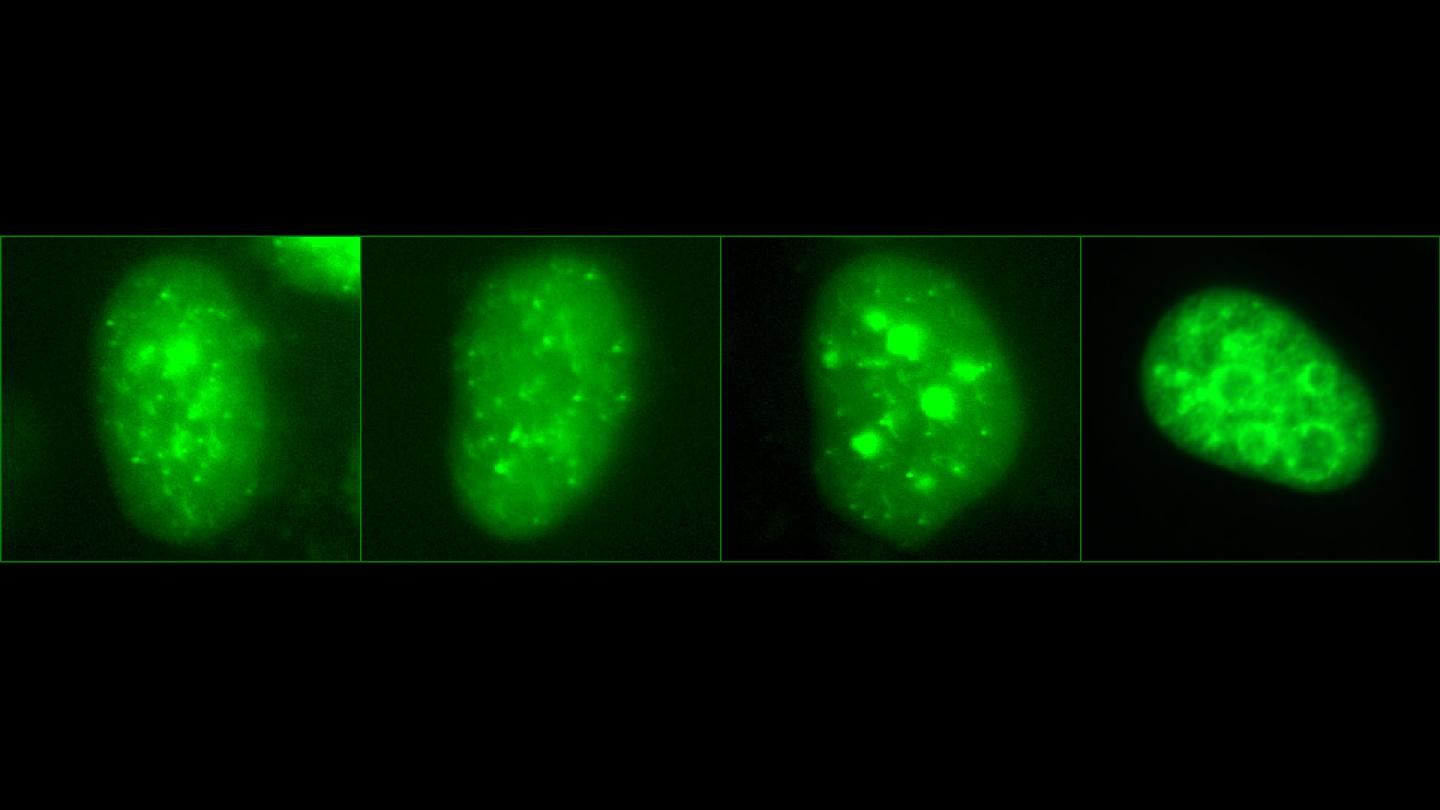
Credit: Manzar Hossain/Stillman lab/CSHL, 2021

Cold Spring Harbor Laboratory (CSHL) President and CEO Bruce Stillman has been dissecting DNA replication, a critical step in cell division, since the 1980s. His lab studies how Origin Recognition Complexes–ORCs–coordinate DNA duplication. They discovered how our cells assemble and disassemble ORCs during the cell division cycle. One ORC protein is sequestered into small liquid droplets, keeping it apart until the right time to recruit other proteins and initiate DNA replication.

The ORC recognizes where to initiate replication at numerous locations along the long, linear stretches of DNA in our cells’ chromosomes. Fully assembled ORCs recruit other proteins to make precise copies of the chromosomes. This mechanism is necessary to inherit DNA accurately without errors that can lead to disorders such as cancer.

Scientists have studied the structure of ORCs in several species. Stillman explains:

“We’ve previously studied this in baker’s yeast, but it turns out that human cells have a different way of doing things.”

Unlike single-celled yeast, humans have a variety of cells that divide at different times. To choreograph this, the researchers found that one human ORC protein, ORC1, has certain regions that yeast ORC1 lacks. When ORC binds to DNA, ORC1 recruits CDC6, a protein that assembles other DNA replication proteins. Some of the human-specific regions of ORC1 and CDC6 bind other proteins that regulate DNA replication. Manzar Hossain, a research investigator in Stillman’s lab, says:

“We found that ORC1 and CDC6 interact in a very tangential manner. We found a very short time period which allows them to interact.”

DNA-bound ORC1 is sequestered into liquid droplets that briefly change shape, then brings in CDC6. Kuhulika Bhalla, a postdoc in Stillman’s lab, explains:

“So if you can imagine a lava lamp, like you’ve got liquid, but you’ve got other colored liquid within it. And they still managed to stay separated.”

Throughout most of the cell division cycle, ORC1 and CDC6 amounts oscillate in the cell. Stillman explains that “both high and low amounts of ORC1 lead to severe consequences for cell viability. So, you have to have just the right amount” of each protein throughout the cell cycle. Stillman and his colleagues have shown that CDC6 recruits other regulatory proteins that control the activity and levels of ORC1 in both space and time. They published their findings in Molecular Cell.

###

Media Contact
Sara Roncero-Menendez
[email protected]

Related Journal Article

http://dx.doi.org/10.1016/j.molcel.2021.03.003

Tags: BiologyGenesGenetics
Share12Tweet8Share2ShareShareShare2

Related Posts

Florida Cane Toad: Complex Spread and Selective Evolution

Florida Cane Toad: Complex Spread and Selective Evolution

February 7, 2026
New Study Uncovers Mechanism Behind Burn Pit Particulate Matter–Induced Lung Inflammation

New Study Uncovers Mechanism Behind Burn Pit Particulate Matter–Induced Lung Inflammation

February 6, 2026

DeepBlastoid: Advancing Automated and Efficient Evaluation of Human Blastoids with Deep Learning

February 6, 2026

Navigating the Gut: The Role of Formic Acid in the Microbiome

February 6, 2026
Please login to join discussion

POPULAR NEWS

  • Robotic Ureteral Reconstruction: A Novel Approach

    Robotic Ureteral Reconstruction: A Novel Approach

    82 shares
    Share 33 Tweet 21
  • Digital Privacy: Health Data Control in Incarceration

    63 shares
    Share 25 Tweet 16
  • Study Reveals Lipid Accumulation in ME/CFS Cells

    57 shares
    Share 23 Tweet 14
  • Breakthrough in RNA Research Accelerates Medical Innovations Timeline

    53 shares
    Share 21 Tweet 13

About

We bring you the latest biotechnology news from best research centers and universities around the world. Check our website.

Follow us

Recent News

Barriers and Boosters of Seniors’ Physical Activity in Karachi

Evaluating Pediatric Emergency Care Quality in Ethiopia

TPMT Expression Predictions Linked to Azathioprine Side Effects

Subscribe to Blog via Email

Enter your email address to subscribe to this blog and receive notifications of new posts by email.

Join 73 other subscribers
  • Contact Us

Bioengineer.org © Copyright 2023 All Rights Reserved.

Welcome Back!

Login to your account below

Forgotten Password?

Retrieve your password

Please enter your username or email address to reset your password.

Log In
No Result
View All Result
  • Homepages
    • Home Page 1
    • Home Page 2
  • News
  • National
  • Business
  • Health
  • Lifestyle
  • Science

Bioengineer.org © Copyright 2023 All Rights Reserved.