• HOME
  • NEWS
  • EXPLORE
    • CAREER
      • Companies
      • Jobs
    • EVENTS
    • iGEM
      • News
      • Team
    • PHOTOS
    • VIDEO
    • WIKI
  • BLOG
  • COMMUNITY
    • FACEBOOK
    • INSTAGRAM
    • TWITTER
Monday, May 11, 2026
BIOENGINEER.ORG
No Result
View All Result
  • Login
  • HOME
  • NEWS
  • EXPLORE
    • CAREER
      • Companies
      • Jobs
        • Lecturer
        • PhD Studentship
        • Postdoc
        • Research Assistant
    • EVENTS
    • iGEM
      • News
      • Team
    • PHOTOS
    • VIDEO
    • WIKI
  • BLOG
  • COMMUNITY
    • FACEBOOK
    • INSTAGRAM
    • TWITTER
  • HOME
  • NEWS
  • EXPLORE
    • CAREER
      • Companies
      • Jobs
        • Lecturer
        • PhD Studentship
        • Postdoc
        • Research Assistant
    • EVENTS
    • iGEM
      • News
      • Team
    • PHOTOS
    • VIDEO
    • WIKI
  • BLOG
  • COMMUNITY
    • FACEBOOK
    • INSTAGRAM
    • TWITTER
No Result
View All Result
Bioengineer.org
No Result
View All Result
Home NEWS Science News Biology

Uniform drying time for goldenseal to enhance medicinal qualities of forest herb

Bioengineer by Bioengineer
March 22, 2021
in Biology
Reading Time: 2 mins read
0
IMAGE
Share on FacebookShare on TwitterShare on LinkedinShare on RedditShare on Telegram

IMAGE

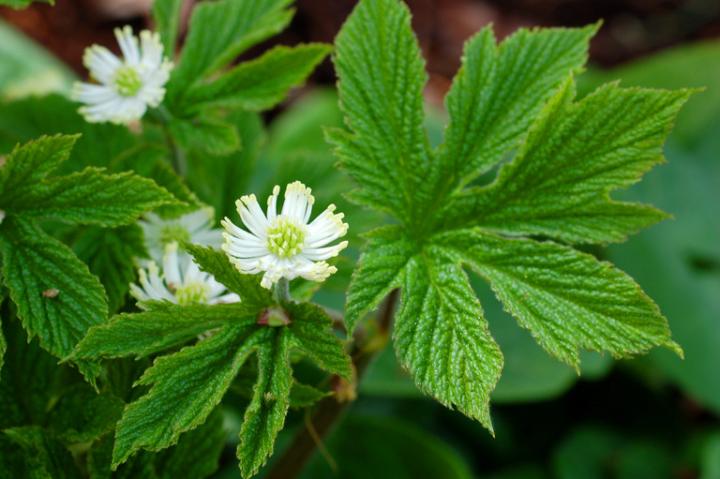
Credit: Eric Burkhart/Penn State

Developing a standardized drying protocol for goldenseal could lead to more predictable health applications and outcomes by preserving the alkaloids found in the plant, which is native to Appalachia, according to Penn State researchers, who conducted a new study of the medicinal forest herb.

The roots and rhizomes of goldenseal — Hydrastis canadensis — have been used for hundreds of years as a source of antimicrobials and compounds to treat intestinal ailments, noted study co-author Eric Burkhart, associate teaching professor, ecosystem science and management.

“Three alkaloids — berberine, hydrastine and canadine — are recognized as the major bioactive constituents in goldenseal,” said Burkhart, who also is program director, Appalachian botany and ethnobotany, at Shaver’s Creek Environmental Center. “One important postharvest processing step for goldenseal is drying. However, before this study it was not known how drying temperature influences the concentrations of these alkaloids.”

To investigate this question, researchers removed goldenseal samples from three plant colonies within a wild population located in central Pennsylvania. Fourteen “ramets,” or bunches, were harvested from each plot in early April while plants were dormant.

Lead researcher Grady Zuiderveen, doctoral student in ecosystem science and management, freeze-dried or air-dried goldenseal samples at six temperatures, ranging from 80 to 130 degrees Fahrenheit, to determine the relationship between drying temperature and alkaloid content in the rhizome and roots.

In findings recently published in Hortscience, high performance liquid chromatography analysis showed that berberine and hydrastine levels were unaffected by drying temperature, while canadine levels decreased as temperature increased. On average, the level of canadine dropped by slightly more than half when samples were freeze-dried and fell by nearly a third when dried at 130 F.

While canadine is the least abundant alkaloid of the three, it is known to have key antibacterial properties, Zuiderveen pointed out, so developing a more standardized drying protocol for goldenseal could lead to a more predictable phytochemical profile.

“This work is important because canadine has been found to have significant activity against numerous strains of bacteria, and in previous research it was the only one of the three major alkaloids found to be active against Pseudomonas aeruginosa and Staphylococcus aureus,” he said. “Also, canadine possesses significant antioxidant properties and has been identified as effective at strengthening the immune system.”

###

Joshua Lambert, associate professor of food science, also contributed to the study.

The Pennsylvania Department of Conservation and Natural Resources’ Wild Resources Conservation Program funded this research.

Media Contact
A’ndrea Elyse Messer
[email protected]

Related Journal Article

http://dx.doi.org/10.21273/HORTSCI15500-20

Tags: Agricultural Production/EconomicsAgriculturePharmaceutical ChemistryPharmaceutical SciencePlant Sciences
Share12Tweet8Share2ShareShareShare2

Related Posts

Ancient Plant Populations Reveal Fresh Insights into Climate Resilience — Biology

Ancient Plant Populations Reveal Fresh Insights into Climate Resilience

May 8, 2026
Rare Brain Disorders in Children Linked to Mutations in Lesser-Known Protein Complex — Biology

Rare Brain Disorders in Children Linked to Mutations in Lesser-Known Protein Complex

May 8, 2026

From Odd Insect to Underwater Predator: The Remarkable Evolution of a Bloodthirsty Fruit Fly

May 8, 2026

SNU Professor Sangwoo Seo’s Team Develops Next-Generation CRISPR Biocontainment Technology to Control Microbial Survival Without DNA Cleavage

May 8, 2026
Please login to join discussion

POPULAR NEWS

  • Research Indicates Potential Connection Between Prenatal Medication Exposure and Elevated Autism Risk

    840 shares
    Share 336 Tweet 210
  • New Study Reveals Plants Can Detect the Sound of Rain

    727 shares
    Share 290 Tweet 181
  • Salmonella Haem Blocks Macrophages, Boosts Infection

    61 shares
    Share 24 Tweet 15
  • Breastmilk Balances E. coli and Beneficial Bacteria in Infant Gut Microbiomes

    57 shares
    Share 23 Tweet 14

About

We bring you the latest biotechnology news from best research centers and universities around the world. Check our website.

Follow us

Recent News

New Post-Hoc Analysis Explores Daily Oral Orforglipron Use in Adults Over 65 with Obesity, Regardless of Diabetes Status

Evaluating Digoxin Use in Patients with Symptomatic Rheumatic Heart Disease

Evaluating the Effectiveness and Safety of Digitalis Glycosides in Treating Heart Failure

Subscribe to Blog via Email

Enter your email address to subscribe to this blog and receive notifications of new posts by email.

Join 82 other subscribers
  • Contact Us

Bioengineer.org © Copyright 2023 All Rights Reserved.

Welcome Back!

Login to your account below

Forgotten Password?

Retrieve your password

Please enter your username or email address to reset your password.

Log In
No Result
View All Result
  • Homepages
    • Home Page 1
    • Home Page 2
  • News
  • National
  • Business
  • Health
  • Lifestyle
  • Science

Bioengineer.org © Copyright 2023 All Rights Reserved.