A new imaging technique is shining a light on immune responses and setting the scene for enhancing immune memory to optimise vaccine strategies.
Credit: WEHI
A new imaging technique is shining a light on immune responses and setting the scene for enhancing immune memory to optimise vaccine strategies.
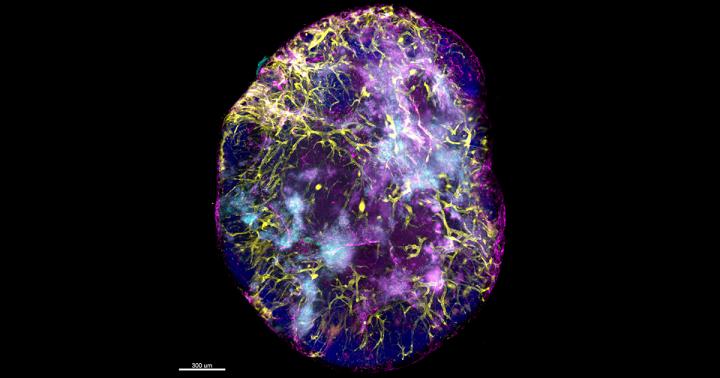
By imaging intact lymphoid organs in three dimensions, researchers have been able to identify specialised niches, which can determine how immune T cells function.
The research, published in Nature Immunology, is a step forward in understanding the differentiation of T cells – critical cells for developing strong immune responses – and how we can use these crucial findings to inform and optimise vaccine strategies.
At a glance
- Three-dimensional imaging has enabled researchers to identify the factors that play a role in determining where immune memory cells locate to in the lymph node, in response to infection or cancer.
- The research identified avenues to therapeutically target effector and memory cells for a host of applications, including vaccine development.
- The findings will help inform and optimise future vaccination strategies.
Keeping memory cells at the ready
WEHI researchers Ms Brigette Duckworth and Dr Joanna Groom said the imaging technique could be applied to many different settings.
“By using this type of three-dimensional imaging, we have the power to visualise how and where immune cells decide their fate. There is real interest in understanding these mechanisms, as that gives us clues about how we can therapeutically target them and harness them for a host of applications, including vaccine development,” Ms Duckworth said.
The team studied two types of immune cell: effector cells, which fight infections, and memory cells, which ‘remember’ how to fight specific infections, like viruses, so they can be rapidly cleared if they return in the future.
“These memory cells are particularly important because they keep chronic infections and cancers in check and act rapidly if we see the virus a second time,” Ms Duckworth said.
“This work opens the door to harnessing extrinsic factors like vaccines to alter immune cell positioning in the lymph node and potentially direct the exact type of immune response we would like to generate.”
Understanding vaccine strategies
Dr Groom said COVID-19 had put vaccines and vaccination strategies in the spotlight and had highlighted the importance of having a better understanding of our immune response to vaccination.
“These memory cells are what we want to generate when we vaccinate. Previously, we have focussed on the overall immune response, but our data suggests that may not be the best strategy,” she said.
“A more efficient response might be to specifically direct vaccines towards memory formation because we want those cells to remain long after vaccination and to react when we come in contact with a virus.”
Using T cell differentiation to improve the immune response
Dr Groom said the research team had identified factors that played a role in determining where the memory cells locate to in the lymph node.
“We have identified several ways we can modify the direction of the T cell differentiation,” she said.
“These modifiers can be used as a lever to control whether we want more effector cells, which is good to overcome an immediate threat, such as cancer; or whether we want to switch to memory cells for longer lasting immunity benefits.”
“We are now looking at these targets to identify the therapeutic window of opportunity and pinpointing which cells will be most effective and have the most impact in future vaccination strategies.”
###
The research was supported with funding from the National Health and Medical Research Council, a WEHI Centenary Fellowship sponsored by CSL, the Australian Research Council, the Norman, Ann and Graeme Atkins Charitable Trust and the Victorian Government.
Media Contact
Samantha Robin
[email protected]
Related Journal Article
http://dx.