• HOME
  • NEWS
  • EXPLORE
    • CAREER
      • Companies
      • Jobs
    • EVENTS
    • iGEM
      • News
      • Team
    • PHOTOS
    • VIDEO
    • WIKI
  • BLOG
  • COMMUNITY
    • FACEBOOK
    • INSTAGRAM
    • TWITTER
Thursday, March 26, 2026
BIOENGINEER.ORG
No Result
View All Result
  • Login
  • HOME
  • NEWS
  • EXPLORE
    • CAREER
      • Companies
      • Jobs
        • Lecturer
        • PhD Studentship
        • Postdoc
        • Research Assistant
    • EVENTS
    • iGEM
      • News
      • Team
    • PHOTOS
    • VIDEO
    • WIKI
  • BLOG
  • COMMUNITY
    • FACEBOOK
    • INSTAGRAM
    • TWITTER
  • HOME
  • NEWS
  • EXPLORE
    • CAREER
      • Companies
      • Jobs
        • Lecturer
        • PhD Studentship
        • Postdoc
        • Research Assistant
    • EVENTS
    • iGEM
      • News
      • Team
    • PHOTOS
    • VIDEO
    • WIKI
  • BLOG
  • COMMUNITY
    • FACEBOOK
    • INSTAGRAM
    • TWITTER
No Result
View All Result
Bioengineer.org
No Result
View All Result
Home NEWS Science News

Wild relatives offer a solution to devastating chickpea disease Ascochyta blight

Bioengineer by Bioengineer
March 9, 2021
in Science News
Reading Time: 2 mins read
0
IMAGE
Share on FacebookShare on TwitterShare on LinkedinShare on RedditShare on Telegram

IMAGE

Credit: Lars Kamphuis

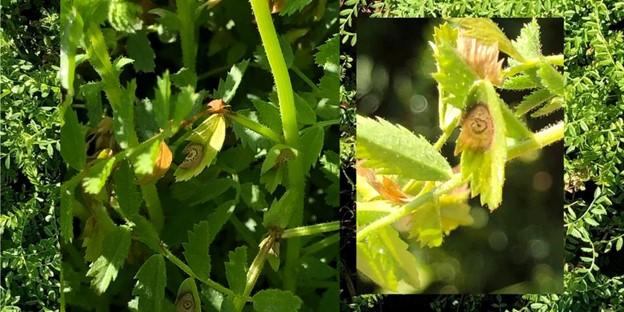
A staple for many, chickpeas are a rich source of vitamins, minerals, and fiber and offer many health benefits, such as improving digestion and reducing the risk of ailments including heart disease and cancer. However, chickpeas possess a rather narrow genetic diversity and are susceptible to Ascochyta blight, a devastating disease that can cause a yield loss of up to 100 percent. In Australia alone, this disease costs an average of $4.8 million annually.

To help curtail the impact of Ascochyta blight, plant pathologists in Western Australia have turned to wild relatives of the chickpea: Cicer reticulatum and Cicer echinospermum and found that these plants have a natural resistance to the disease. This is the first report of Ascochyta blight resistance in a novel wild Cicer collection.

“Identifying such sources of resistance is a very exciting finding for the chickpea industry and can offer growers better genetic control of the disease,” explained Lars Kamphuis, one of the scientists involved with the study. “These sources of resistance can be utilized in chickpea breeding programs around the world to improve their resistance to this pathogen.”

Kamphuis and his colleagues used a germplasm collection that has also been a valuable source of resistance to other diseases and pests such as root lesion nematodes and pod-borer. Using the disease scores for Ascochyta blight and genotypic information of the germplasm, they were also able to identify Ascochyta blight-associated regions in the wild Cicer genome.

“Collaborators in Australia are evaluating this resource for sources of resistance to Phytophthora root rot, acid soil, and chilling tolerance,” said Kamphuis. “This novel wild Cicer germplasm is thus being mined for novel sources of biotic and abiotic stress resistance and will help improve the genetic diversity within chickpea breeding programs.”

###

For more information about this study read “Identification of Novel Sources of Resistance to Ascochyta Blight in a Collection of Wild Cicer Accessions” published in the February issue of Phytopathology. To hear more about how Australian researcher are utilizing the wild Cicer resource to improve chickpeas listen to the podcast in the following link (https://grdc.com.au/news-and-media/audio/podcast/better-chickpeas-a-wild-idea).

Media Contact
Ashley Carlin
[email protected]

Related Journal Article

http://dx.doi.org/10.1094/PHYTO-04-20-0137-R

Tags: Agricultural Production/EconomicsAgricultureBiochemistryBiologyEcology/EnvironmentFood/Food ScienceGeneticsMicrobiologyPlant Sciences
Share12Tweet8Share2ShareShareShare2

Related Posts

Starburst Winds Drain Supernova Energy Quickly

Starburst Winds Drain Supernova Energy Quickly

March 26, 2026
Decoding the Phosphorus Puzzle: How Microplastics and Hydrochar Transform Nutrient Dynamics in Rice Paddies

Decoding the Phosphorus Puzzle: How Microplastics and Hydrochar Transform Nutrient Dynamics in Rice Paddies

March 26, 2026

Microtubules Found to Actively Ensure Accurate Chromosome Distribution During Cell Division

March 25, 2026

Aversive Learning Hijacks Brain Sugar Sensor

March 25, 2026
Please login to join discussion

POPULAR NEWS

  • blank

    Revolutionary AI Model Enhances Precision in Detecting Food Contamination

    96 shares
    Share 38 Tweet 24
  • Imagine a Social Media Feed That Challenges Your Views Instead of Reinforcing Them

    1003 shares
    Share 397 Tweet 248
  • Uncovering Functions of Cavernous Malformation Proteins in Organoids

    54 shares
    Share 22 Tweet 14
  • Promising Outcomes from First Clinical Trials of Gene Regulation in Epilepsy

    51 shares
    Share 20 Tweet 13

About

We bring you the latest biotechnology news from best research centers and universities around the world. Check our website.

Follow us

Recent News

In-Sensor Cryptography Links Physical Process to Digital Identity

Can Psychosocial Factors Influence Cancer Risk?

Depression Factors in Elderly: Pre vs. Post-COVID Analysis

Subscribe to Blog via Email

Success! An email was just sent to confirm your subscription. Please find the email now and click 'Confirm' to start subscribing.

Join 78 other subscribers
  • Contact Us

Bioengineer.org © Copyright 2023 All Rights Reserved.

Welcome Back!

Login to your account below

Forgotten Password?

Retrieve your password

Please enter your username or email address to reset your password.

Log In
No Result
View All Result
  • Homepages
    • Home Page 1
    • Home Page 2
  • News
  • National
  • Business
  • Health
  • Lifestyle
  • Science

Bioengineer.org © Copyright 2023 All Rights Reserved.