• HOME
  • NEWS
  • EXPLORE
    • CAREER
      • Companies
      • Jobs
    • EVENTS
    • iGEM
      • News
      • Team
    • PHOTOS
    • VIDEO
    • WIKI
  • BLOG
  • COMMUNITY
    • FACEBOOK
    • INSTAGRAM
    • TWITTER
Tuesday, October 6, 2026
BIOENGINEER.ORG
No Result
View All Result
  • Login
  • HOME
  • NEWS
  • EXPLORE
    • CAREER
      • Companies
      • Jobs
        • Lecturer
        • PhD Studentship
        • Postdoc
        • Research Assistant
    • EVENTS
    • iGEM
      • News
      • Team
    • PHOTOS
    • VIDEO
    • WIKI
  • BLOG
  • COMMUNITY
    • FACEBOOK
    • INSTAGRAM
    • TWITTER
No Result
View All Result
Bioengineer.org
No Result
View All Result
Home NEWS Science News

Insectivorous long-fingered bats may also be capable of catching fish

Bioengineer by Bioengineer
December 14, 2016
in Science News
Reading Time: 2 mins read
0
Share on FacebookShare on TwitterShare on LinkedinShare on RedditShare on Telegram
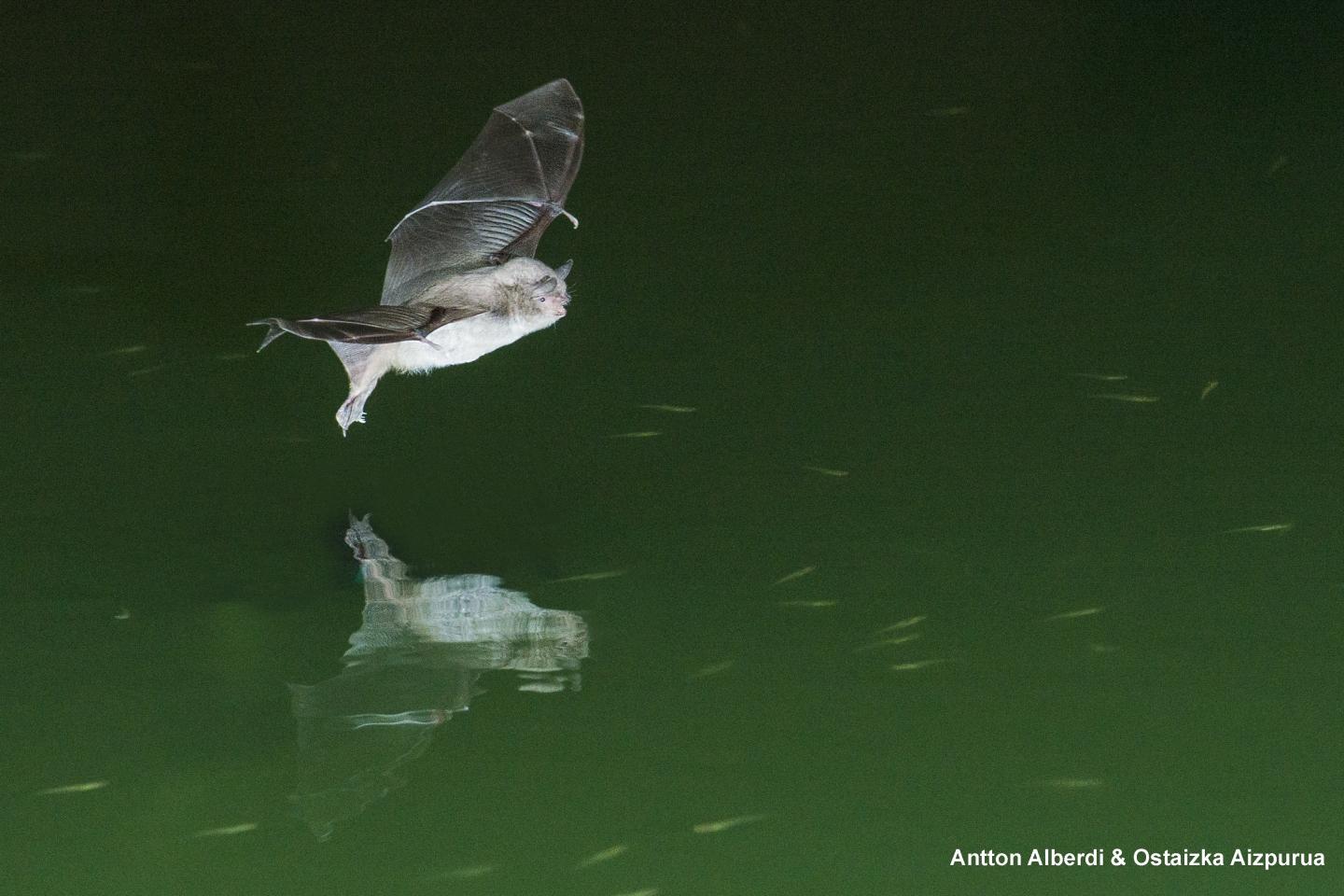
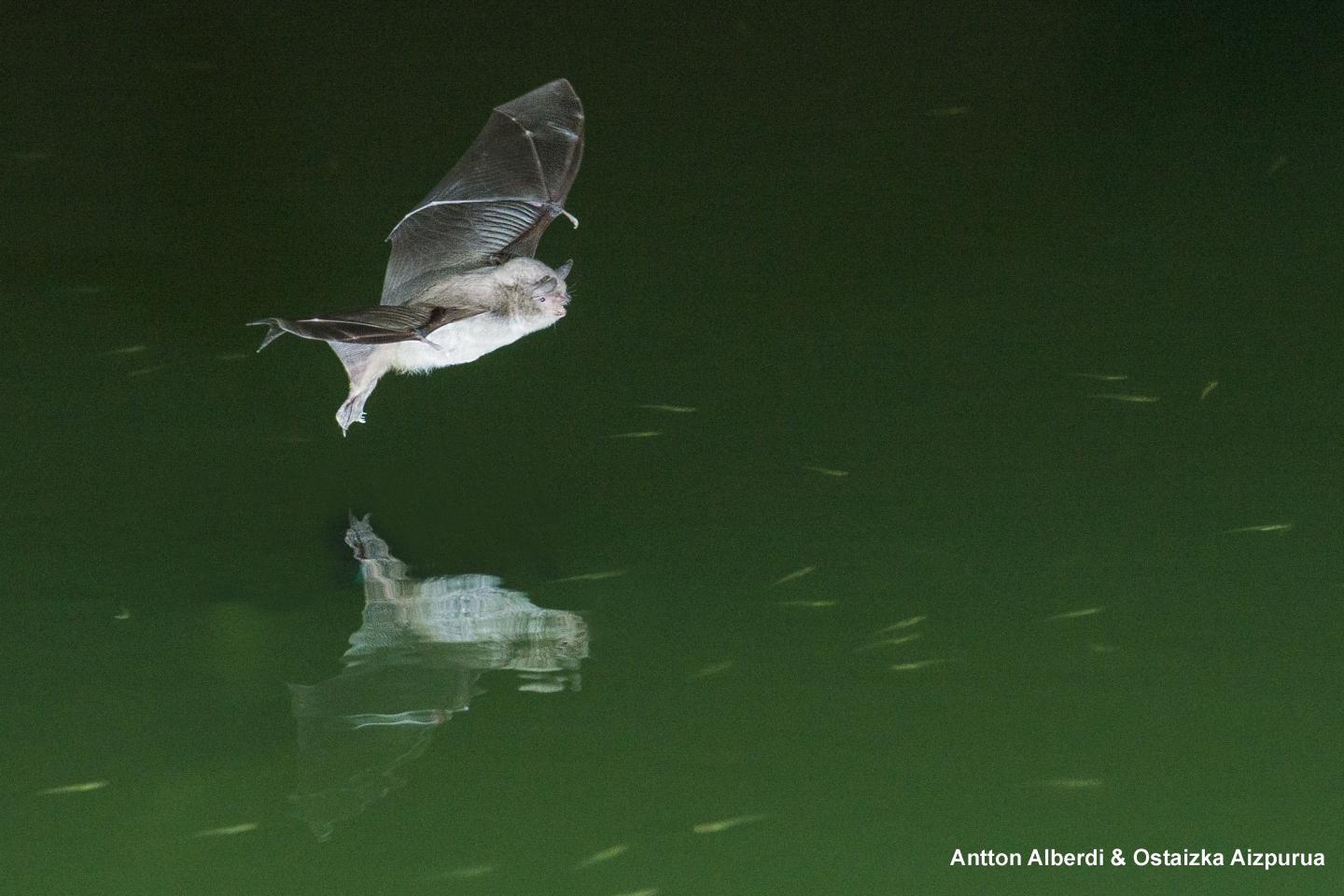
IMAGE

Credit: Antton Alberdi and Ostaizka Aizpurua

While most long-fingered bats eat only insects, they may all be instinctively able to also catch fish, according to a study published December 14, 2016 in the open-access journal PLOS ONE by Ostaizka Aizpurua and colleagues from the University of Copenhagen, Denmark and the University of the Basque Country, Spain.

Many animals adapt their diets when their environment changes and new food sources become available. Long-fingered bats (Myotis capaccinii) are generally thought to consume only insects, but previous studies found some individuals that ate fish.

To investigate the origins of fishing behavior in long-fingered bats, Aizpurua and colleagues conducted a field study in the Valencia, Western Spain, comparing a community of long-fingered bats known to eat fish at a golf course pond near Dénia, with a community of strictly insectivorous bats at a stream pool near Ròtova. The researchers compared the bats' reactions to insect-like (stationary) and fish-like (moving) prey targets between the two communities.

Both fish-eating and insectivorous long-fingered bat communities could attack moving fish-like targets, and made deeper, longer dips when targets were submerged underwater compared to stationary fish-like targets. However, the difference in the two modes of attack was exaggerated in the bats used to eating fish, suggesting that these bats had previously honed their technique to improve their chances of catching a fish.

The researchers' results suggest that the fishing technique developed when fish prey became available came from a primary hunting reaction shared by all long-fingered bats. All individuals seem adapted to be capable of detecting and capturing fish, although under appropriate environmental conditions, they may be able to improve their technique by experience and/or social learning. Further research could explore how long it takes for long-fingered bats to improve their fishing techniques, which may provide new insight into mammalian learning processes.

###

In your coverage please use this URL to provide access to the freely available paper: http://journals.plos.org/plosone/article?id=10.1371/journal.pone.0167164

Citation: Aizpurua O, Alberdi A, Aihartza J, Garin I (2016) Fishing Technique of Long-Fingered Bats Was Developed from a Primary Reaction to Disappearing Target Stimuli. PLoS ONE 11(12): e0167164. doi:10.1371/journal.pone.0167164

Funding: This study was part of the Ministerio de Ciencia e Innovación (MICINN) project CGL2009-12393. The University of The Basque Country (UPV/EHU) (INF09/15) and the Basque Government (IT385-07 and IT301-10) funded this study and provided grant support to O.A. and A.A. (BFI-2009-252, BFI-2010-190, Doktore berriak eta Ikertzaile doktoreak espezializatzeko kontratatzeko laguntzak). The funders had no role in study design, data collection and analysis, decision to publish, or preparation of the manuscript.

Competing Interests: The authors have declared that no competing interests exist.

Media Contact

Tessa Gregory
[email protected]

Home

############

Story Source: Materials provided by Scienmag

Share12Tweet8Share2ShareShareShare2

Related Posts

Drone Data Reveals the Critical Wheat Growth Window That Predicts Yield

Drone Data Reveals the Critical Wheat Growth Window That Predicts Yield

October 6, 2026
Gut Microbes Emerge as Unexpected Players in the Fight Against Eczema

Gut Microbes Emerge as Unexpected Players in the Fight Against Eczema

October 6, 2026

Microbe Team Turns CO2 Electrolysis Waste Into Valuable Chemicals

October 6, 2026

Virtual Reality Training Boosts Nurses’ Skills, Landmark Review Finds

October 6, 2026
Please login to join discussion

POPULAR NEWS

  • Alloys That Shrink Their Own Grains: New PIX Mechanism Refines Metals With Heat Alone

    Alloys That Shrink Their Own Grains: New PIX Mechanism Refines Metals With Heat Alone

    29 shares
    Share 12 Tweet 7
  • Endurance Exercise Reshapes the Liver in Males and Females Through Distinct Molecular Routes

    29 shares
    Share 12 Tweet 7
  • Single Transcription Factor PU.1 Rapidly Converts Fibroblasts into Macrophage-Lineage Cells

    29 shares
    Share 12 Tweet 7
  • New Scale Measures How Ready Nurse Educators Really Are for the AI Era

    29 shares
    Share 12 Tweet 7

About

We bring you the latest biotechnology news from best research centers and universities around the world. Check our website.

Follow us

Recent News

Alloys That Shrink Their Own Grains: New PIX Mechanism Refines Metals With Heat Alone

Endurance Exercise Reshapes the Liver in Males and Females Through Distinct Molecular Routes

Single Transcription Factor PU.1 Rapidly Converts Fibroblasts into Macrophage-Lineage Cells

Subscribe to Blog via Email

Success! An email was just sent to confirm your subscription. Please find the email now and click 'Confirm' to start subscribing.

Join 85 other subscribers
  • Contact Us

Bioengineer.org © Copyright 2023 All Rights Reserved.

Welcome Back!

Login to your account below

Forgotten Password?

Retrieve your password

Please enter your username or email address to reset your password.

Log In
No Result
View All Result
  • Homepages
    • Home Page 1
    • Home Page 2
  • News
  • National
  • Business
  • Health
  • Lifestyle
  • Science

Bioengineer.org © Copyright 2023 All Rights Reserved.