• HOME
  • NEWS
  • EXPLORE
    • CAREER
      • Companies
      • Jobs
    • EVENTS
    • iGEM
      • News
      • Team
    • PHOTOS
    • VIDEO
    • WIKI
  • BLOG
  • COMMUNITY
    • FACEBOOK
    • INSTAGRAM
    • TWITTER
Saturday, February 7, 2026
BIOENGINEER.ORG
No Result
View All Result
  • Login
  • HOME
  • NEWS
  • EXPLORE
    • CAREER
      • Companies
      • Jobs
        • Lecturer
        • PhD Studentship
        • Postdoc
        • Research Assistant
    • EVENTS
    • iGEM
      • News
      • Team
    • PHOTOS
    • VIDEO
    • WIKI
  • BLOG
  • COMMUNITY
    • FACEBOOK
    • INSTAGRAM
    • TWITTER
  • HOME
  • NEWS
  • EXPLORE
    • CAREER
      • Companies
      • Jobs
        • Lecturer
        • PhD Studentship
        • Postdoc
        • Research Assistant
    • EVENTS
    • iGEM
      • News
      • Team
    • PHOTOS
    • VIDEO
    • WIKI
  • BLOG
  • COMMUNITY
    • FACEBOOK
    • INSTAGRAM
    • TWITTER
No Result
View All Result
Bioengineer.org
No Result
View All Result
Home NEWS Science News Chemistry

Silicon chip provides low cost solution to help machines see the world clearly

Bioengineer by Bioengineer
February 10, 2021
in Chemistry
Reading Time: 2 mins read
0
IMAGE
Share on FacebookShare on TwitterShare on LinkedinShare on RedditShare on Telegram

IMAGE

Credit: Pointcloud Inc

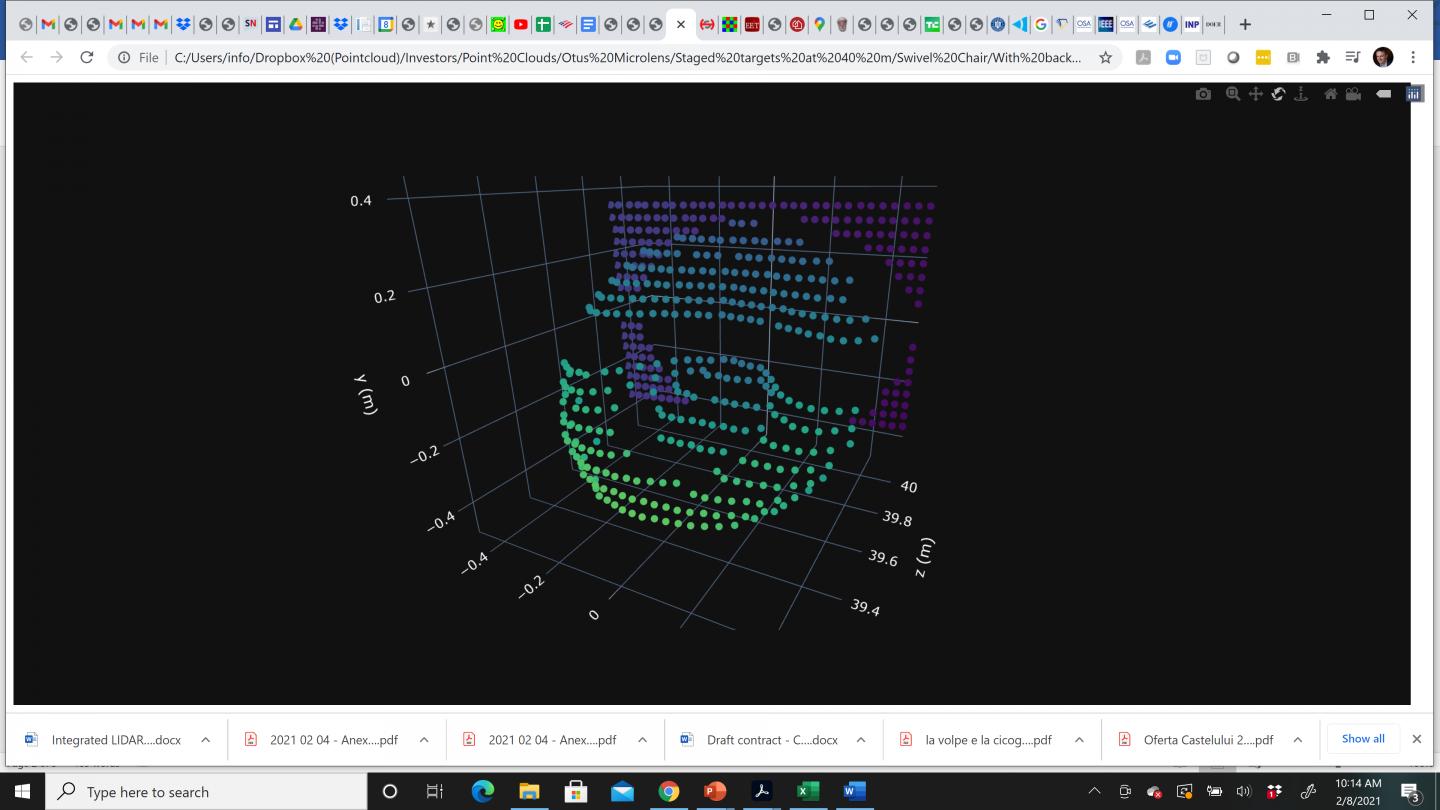
Researchers in Southampton and San Francisco have developed the first compact 3D LiDAR imaging system that can match and exceed the performance and accuracy of most advanced, mechanical systems currently used.

3D LiDAR can provide accurate imaging and mapping for many applications; it is the “eyes” for autonomous cars and is used in facial recognition software and by autonomous robots and drones. Accurate imaging is essential for machines to map and interact with the physical world but the size and costs of the technology currently needed has limited LIDAR’s use in commercial applications.

Now a team of researchers from Pointcloud Inc in San Francisco and the University of Southampton’s Optoelectronic Research Centre (ORC) have developed a new, integrated system, which uses silicon photonic components and CMOS electronic circuits in the same microchip. The prototype they have developed would be a low-cost solution and could pave the way to large volume production of low-cost, compact and high-performance 3D imaging cameras for use in robotics, autonomous navigation systems, mapping of building sites to increase safety and in healthcare.

Graham Reed, Professor of Silicon Photonics within the ORC said, “LIDAR has been promising a lot but has not always delivered on its potential in recent years because, although experts have recognised that integrated versions can scale down costs, the necessary performance has not been there. Until now.

“The silicon photonics system we have developed provides much higher accuracy at distance compared to other chip-based LIDAR systems to date, and most mechanical versions, showing that the much sought-after integrated system for LIDAR is viable.”

Remus Nicolaescu, CEO of Pointcloud Inc added, “The combination of high performance and low cost manufacturing, will accelerate existing applications in autonomy and augmented reality, as well as open new directions, such as industrial and consumer digital twin applications requiring high depth accuracy, or preventive healthcare through remote behavioural and vital signs monitoring requiring high velocity accuracy.

“The collaboration with the world class team at the ORC has been instrumental, and greatly accelerated the technology development.”

The latest tests of the prototype, published in the journal Nature, show that it has an accuracy of 3.1 millimetres at a distance of 75 metres.

Amongst the problems faced by previous integrated systems are the difficulties in providing a dense array of pixels that can be easily addressed; this has restricted them to fewer than 20 pixels whereas this new system is the first large-scale 2D coherent detector array consisting of 512 pixels. The research teams are now working to extend the pixels arrays and the beam steering technology to make the system even better suited to real-world applications and further improve performance.

###

Media Contact
Steve Bates
[email protected]

Related Journal Article

http://dx.doi.org/10.1038/s41586-021-03259-y

Tags: Computer ScienceHardwareMechanical EngineeringMultimedia/Networking/Interface DesignNanotechnology/MicromachinesOpticsResearch/DevelopmentRobotry/Artificial IntelligenceTechnology/Engineering/Computer ScienceTheory/Design
Share13Tweet8Share2ShareShareShare2

Related Posts

blank

Breakthrough in Environmental Cleanup: Scientists Develop Solar-Activated Biochar for Faster Remediation

February 7, 2026
blank

Cutting Costs: Making Hydrogen Fuel Cells More Affordable

February 6, 2026

Scientists Develop Hand-Held “Levitating” Time Crystals

February 6, 2026

Observing a Key Green-Energy Catalyst Dissolve Atom by Atom

February 6, 2026
Please login to join discussion

POPULAR NEWS

  • Robotic Ureteral Reconstruction: A Novel Approach

    Robotic Ureteral Reconstruction: A Novel Approach

    82 shares
    Share 33 Tweet 21
  • Digital Privacy: Health Data Control in Incarceration

    63 shares
    Share 25 Tweet 16
  • Study Reveals Lipid Accumulation in ME/CFS Cells

    57 shares
    Share 23 Tweet 14
  • Breakthrough in RNA Research Accelerates Medical Innovations Timeline

    53 shares
    Share 21 Tweet 13

About

We bring you the latest biotechnology news from best research centers and universities around the world. Check our website.

Follow us

Recent News

Decoding Prostate Cancer Origins via snFLARE-seq, mxFRIZNGRND

Digital Health Perspectives from Baltic Sea Experts

Florida Cane Toad: Complex Spread and Selective Evolution

Subscribe to Blog via Email

Enter your email address to subscribe to this blog and receive notifications of new posts by email.

Join 73 other subscribers
  • Contact Us

Bioengineer.org © Copyright 2023 All Rights Reserved.

Welcome Back!

Login to your account below

Forgotten Password?

Retrieve your password

Please enter your username or email address to reset your password.

Log In
No Result
View All Result
  • Homepages
    • Home Page 1
    • Home Page 2
  • News
  • National
  • Business
  • Health
  • Lifestyle
  • Science

Bioengineer.org © Copyright 2023 All Rights Reserved.