• HOME
  • NEWS
  • EXPLORE
    • CAREER
      • Companies
      • Jobs
    • EVENTS
    • iGEM
      • News
      • Team
    • PHOTOS
    • VIDEO
    • WIKI
  • BLOG
  • COMMUNITY
    • FACEBOOK
    • INSTAGRAM
    • TWITTER
Friday, December 19, 2025
BIOENGINEER.ORG
No Result
View All Result
  • Login
  • HOME
  • NEWS
  • EXPLORE
    • CAREER
      • Companies
      • Jobs
        • Lecturer
        • PhD Studentship
        • Postdoc
        • Research Assistant
    • EVENTS
    • iGEM
      • News
      • Team
    • PHOTOS
    • VIDEO
    • WIKI
  • BLOG
  • COMMUNITY
    • FACEBOOK
    • INSTAGRAM
    • TWITTER
  • HOME
  • NEWS
  • EXPLORE
    • CAREER
      • Companies
      • Jobs
        • Lecturer
        • PhD Studentship
        • Postdoc
        • Research Assistant
    • EVENTS
    • iGEM
      • News
      • Team
    • PHOTOS
    • VIDEO
    • WIKI
  • BLOG
  • COMMUNITY
    • FACEBOOK
    • INSTAGRAM
    • TWITTER
No Result
View All Result
Bioengineer.org
No Result
View All Result
Home NEWS Science News

Increasing snow depth prevented wintertime soils from cooling during the warming hiatus

Bioengineer by Bioengineer
February 1, 2021
in Science News
Reading Time: 2 mins read
0
IMAGE
Share on FacebookShare on TwitterShare on LinkedinShare on RedditShare on Telegram

IMAGE

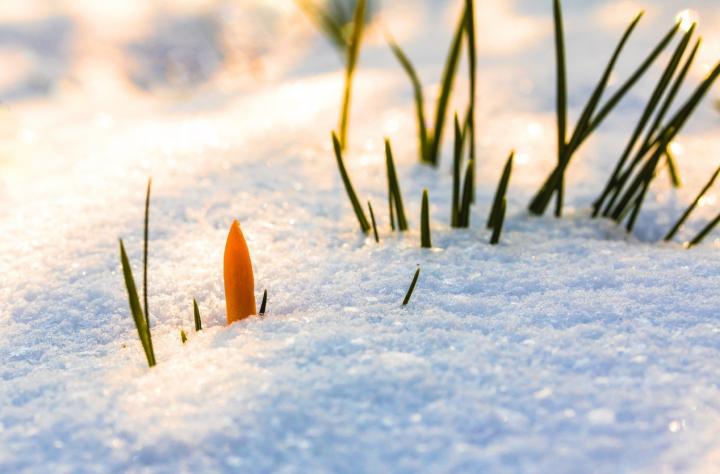
Credit: Myriams Fotos from Pixabay

Soil temperature has a significant impact on land-atmosphere interaction within the Earth system, affecting surrounding ecology, agriculture, and much more. This influence is a primary component of what is called a “thermal regime” of land, or a regular pattern of temperature change within the soil. Climatologists are intrigued by fluctuating soil temperatures, especially during the first decade of the 21st century where global surface warming has slowed down. The thermal regime, according to scientists, is greatly influential on climate, particularly seasonal climate prediction. Now, studies are focused on determining whether or not soil temperatures also respond to slower surface warming, therefore entering a warming slowdown, or hiatus.

“Soil temperatures normally are closely coupled with the upper surface air temperature,” said Dr. Haoxin Zhang, the lead author of the most recent study published in Advances in Atmospheric Sciences, “…there are also many other factors including solar radiation, snow cover, soil memory, etc., that may alter the soil temperatures.”

During the recent global warming hiatus, the strongest warming slowdown throughout China occurred during winter. Observed surface air temperatures and soil temperatures at multiple depths showed consistent cooling trends at many Chinese reporting stations. However, in northeastern China, surface air temperature seemed less influential on soil temperature. In this region, soil data retrieved from 0cm to a depth of 80cm suggested a continuing warming trend despite the surface air warming hiatus.

“The enhanced thermal insulation effect of the snow cover reduced the heat loss from the soils,” said Dr. Zhang. To confirm their results, the team investigated snow cover along with other direct and indirect soil temperature influences in northeastern China. The research further showed that the increasing snow depth in northeastern China may be the main reason for the continued warming trend in soil temperatures. Dr. Zhang further stated “…this is important for the agriculture.”

In addition to the thermal insulation effect of snow cover, the ability for soil to record human changes and environmental influences, or “soil memory” is also important, especially at greater depths.

“This means the effects of various factors may be ‘memorized’ in the deep soil temperatures, which in turn contribute to the seasonal climate prediction.” said Dr. Naiming Yuan, the corresponding author of the study. “The thermal conditions from previous seasons have stronger impacts than those from the surface air temperatures or the snow cover of the considered season at deeper layers (around 160cm or deeper).”

###

Media Contact
Ms. Zheng Lin
[email protected]

Original Source

http://english.iap.cas.cn/home/News/202101/t20210129_262369.html

Related Journal Article

http://dx.doi.org/10.1007/s00376-020-0074-y

Tags: AgricultureAtmospheric ScienceEarth Science
Share12Tweet8Share2ShareShareShare2

Related Posts

Healthy Behaviors, Social Ties Reduce Veteran Suicide Risk

December 19, 2025
Streptococcus Protein Triggers PBP1a for Cell Division

Streptococcus Protein Triggers PBP1a for Cell Division

December 19, 2025

Nanostructured LiMPO4 Cathodes: Synthesis and Properties

December 19, 2025

Forceps Use Linked to Neonatal Bleeding Risks

December 19, 2025
Please login to join discussion

POPULAR NEWS

  • Nurses’ Views on Online Learning: Effects on Performance

    Nurses’ Views on Online Learning: Effects on Performance

    70 shares
    Share 28 Tweet 18
  • NSF funds machine-learning research at UNO and UNL to study energy requirements of walking in older adults

    70 shares
    Share 28 Tweet 18
  • Unraveling Levofloxacin’s Impact on Brain Function

    53 shares
    Share 21 Tweet 13
  • MoCK2 Kinase Shapes Mitochondrial Dynamics in Rice Fungal Pathogen

    72 shares
    Share 29 Tweet 18

About

We bring you the latest biotechnology news from best research centers and universities around the world. Check our website.

Follow us

Recent News

Healthy Behaviors, Social Ties Reduce Veteran Suicide Risk

Streptococcus Protein Triggers PBP1a for Cell Division

Nanostructured LiMPO4 Cathodes: Synthesis and Properties

Subscribe to Blog via Email

Success! An email was just sent to confirm your subscription. Please find the email now and click 'Confirm' to start subscribing.

Join 70 other subscribers
  • Contact Us

Bioengineer.org © Copyright 2023 All Rights Reserved.

Welcome Back!

Login to your account below

Forgotten Password?

Retrieve your password

Please enter your username or email address to reset your password.

Log In
No Result
View All Result
  • Homepages
    • Home Page 1
    • Home Page 2
  • News
  • National
  • Business
  • Health
  • Lifestyle
  • Science

Bioengineer.org © Copyright 2023 All Rights Reserved.