• HOME
  • NEWS
  • EXPLORE
    • CAREER
      • Companies
      • Jobs
    • EVENTS
    • iGEM
      • News
      • Team
    • PHOTOS
    • VIDEO
    • WIKI
  • BLOG
  • COMMUNITY
    • FACEBOOK
    • INSTAGRAM
    • TWITTER
Saturday, February 7, 2026
BIOENGINEER.ORG
No Result
View All Result
  • Login
  • HOME
  • NEWS
  • EXPLORE
    • CAREER
      • Companies
      • Jobs
        • Lecturer
        • PhD Studentship
        • Postdoc
        • Research Assistant
    • EVENTS
    • iGEM
      • News
      • Team
    • PHOTOS
    • VIDEO
    • WIKI
  • BLOG
  • COMMUNITY
    • FACEBOOK
    • INSTAGRAM
    • TWITTER
  • HOME
  • NEWS
  • EXPLORE
    • CAREER
      • Companies
      • Jobs
        • Lecturer
        • PhD Studentship
        • Postdoc
        • Research Assistant
    • EVENTS
    • iGEM
      • News
      • Team
    • PHOTOS
    • VIDEO
    • WIKI
  • BLOG
  • COMMUNITY
    • FACEBOOK
    • INSTAGRAM
    • TWITTER
No Result
View All Result
Bioengineer.org
No Result
View All Result
Home NEWS Science News

A skillful rescue robot with remote-control function

Bioengineer by Bioengineer
December 13, 2016
in Science News
Reading Time: 2 mins read
0
Share on FacebookShare on TwitterShare on LinkedinShare on RedditShare on Telegram
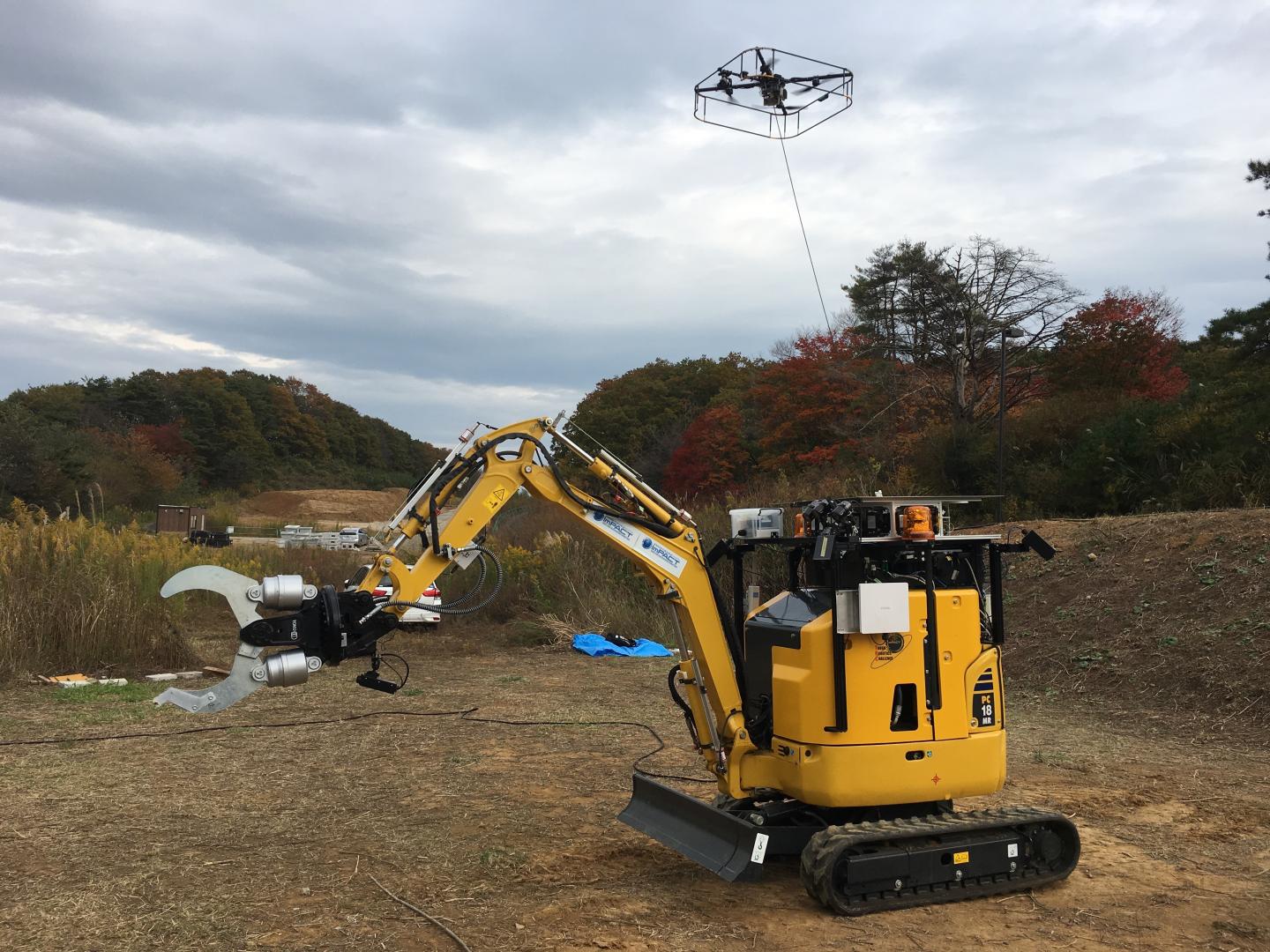
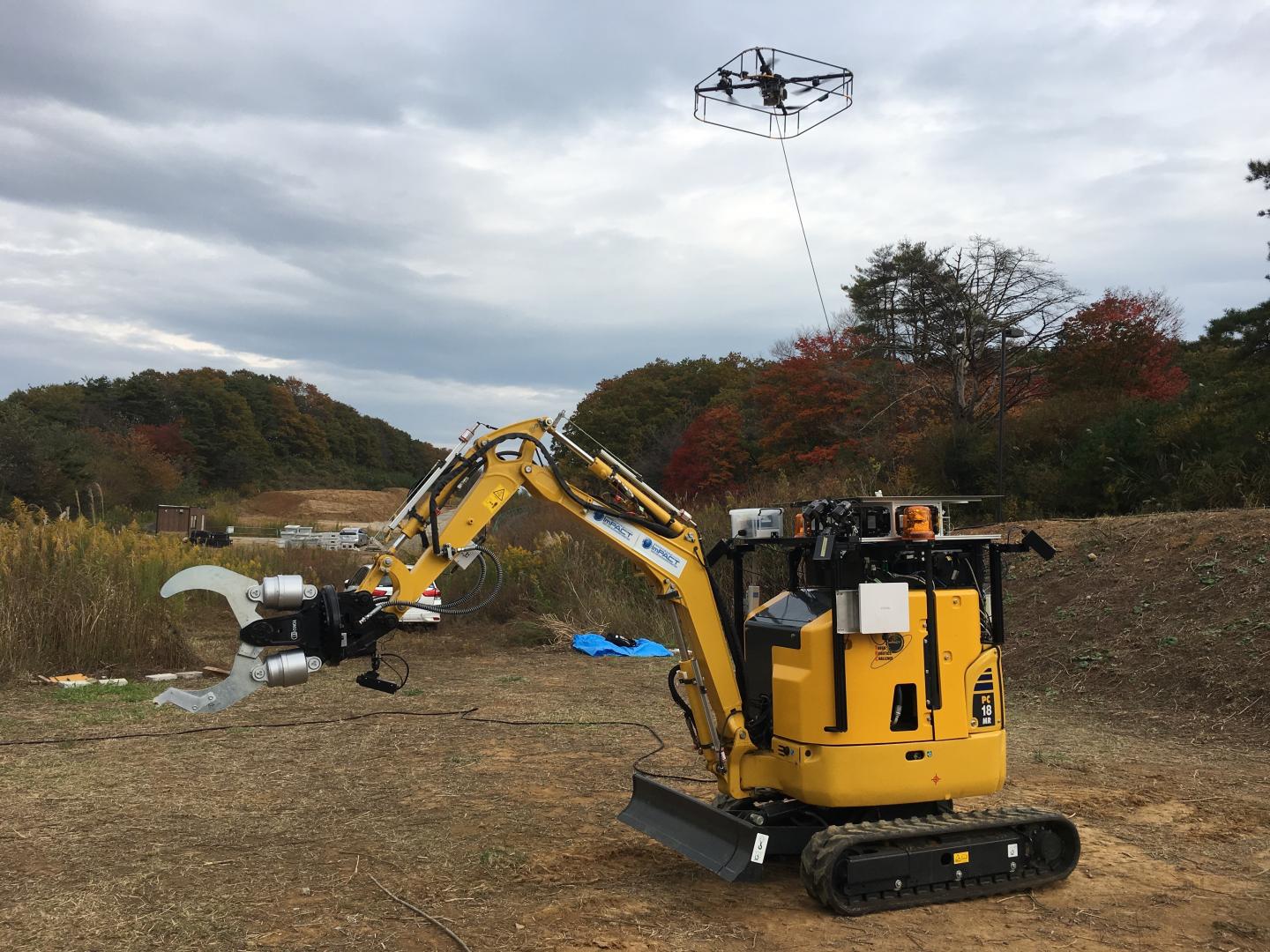
IMAGE

Credit: Hiroshi Yoshinada

A group of Japanese researchers developed a prototype construction robot for disaster relief situations. This prototype has drastically improved operability and mobility compared to conventional construction machines.

As part of the Impulsing Paradigm Challenge through Disruptive Technologies Program (ImPACT)'s Tough Robotics Challenge Program, a group of research leaders at Osaka University, Kobe University, Tohoku University, The University of Tokyo, and Tokyo Institute of Technology developed construction robots for disaster relief in order to solve various challenges of conventional construction machines used in such situations. Using a prototype machine with elemental technologies under development, verification tests were performed on places that represented disaster sites, and a certain level of performance was confirmed. This prototype looks like an ordinary hydraulic excavator, but, specifically, has the following elemental technologies:

  • Quickly and stably controlling heavy power machines with high inertia by achieving target values regarding location and speed through fine tuning and by controlling pressures on a cylinder at high speeds.
  • Estimating external load of multiple degree of freedom (DOF) hydraulically-driven robot from oil pressure of each hydraulic cylinder. The estimated force will be used for force control or force feedback to the operator of tele-operated rescue robots.
  • Measuring high frequency vibration by a force sensor installed at the forearm of the robot and giving the operator vibrotactile feedback.
  • Flying a multi-rotor unmanned aircraft vehicle UAV ("drone") to the place of the operator's choice and obtaining image information. Long flights and pin-point landing of the drone are available due to power supply through electric lines and a power-feeding helipad for tethering the drone.
  • Presenting the operator images of an overhead view from an arbitrary place by using 4 fish-eye cameras mounted on the robot in real time so that the operator can assess the area surrounding the robot.
  • Using a far-infrared ray camera capable of viewing with long-wavelength light so that the operator can operate the robot while assessing the situation even under bad weather conditions like fog.

In addition to the above-mentioned technologies, this group is developing several useful elemental technologies and making efforts to improve their technical performance. They are also developing new robots with a double rotation mechanism and double arms with the purpose of achieving higher operability and terrain adaptability.

###

Media Contact

Saori Obayashi
[email protected]
81-661-055-886
@osaka_univ_e

http://www.osaka-u.ac.jp/en

############

Story Source: Materials provided by Scienmag

Share12Tweet8Share2ShareShareShare2

Related Posts

Evaluating Pediatric Emergency Care Quality in Ethiopia

February 7, 2026

TPMT Expression Predictions Linked to Azathioprine Side Effects

February 7, 2026

Improving Dementia Care with Enhanced Activity Kits

February 7, 2026

Decoding Prostate Cancer Origins via snFLARE-seq, mxFRIZNGRND

February 7, 2026
Please login to join discussion

POPULAR NEWS

  • Robotic Ureteral Reconstruction: A Novel Approach

    Robotic Ureteral Reconstruction: A Novel Approach

    82 shares
    Share 33 Tweet 21
  • Digital Privacy: Health Data Control in Incarceration

    63 shares
    Share 25 Tweet 16
  • Study Reveals Lipid Accumulation in ME/CFS Cells

    57 shares
    Share 23 Tweet 14
  • Breakthrough in RNA Research Accelerates Medical Innovations Timeline

    53 shares
    Share 21 Tweet 13

About

We bring you the latest biotechnology news from best research centers and universities around the world. Check our website.

Follow us

Recent News

Evaluating Pediatric Emergency Care Quality in Ethiopia

TPMT Expression Predictions Linked to Azathioprine Side Effects

Improving Dementia Care with Enhanced Activity Kits

Subscribe to Blog via Email

Enter your email address to subscribe to this blog and receive notifications of new posts by email.

Join 73 other subscribers
  • Contact Us

Bioengineer.org © Copyright 2023 All Rights Reserved.

Welcome Back!

Login to your account below

Forgotten Password?

Retrieve your password

Please enter your username or email address to reset your password.

Log In
No Result
View All Result
  • Homepages
    • Home Page 1
    • Home Page 2
  • News
  • National
  • Business
  • Health
  • Lifestyle
  • Science

Bioengineer.org © Copyright 2023 All Rights Reserved.