• HOME
  • NEWS
  • EXPLORE
    • CAREER
      • Companies
      • Jobs
    • EVENTS
    • iGEM
      • News
      • Team
    • PHOTOS
    • VIDEO
    • WIKI
  • BLOG
  • COMMUNITY
    • FACEBOOK
    • INSTAGRAM
    • TWITTER
Sunday, January 11, 2026
BIOENGINEER.ORG
No Result
View All Result
  • Login
  • HOME
  • NEWS
  • EXPLORE
    • CAREER
      • Companies
      • Jobs
        • Lecturer
        • PhD Studentship
        • Postdoc
        • Research Assistant
    • EVENTS
    • iGEM
      • News
      • Team
    • PHOTOS
    • VIDEO
    • WIKI
  • BLOG
  • COMMUNITY
    • FACEBOOK
    • INSTAGRAM
    • TWITTER
  • HOME
  • NEWS
  • EXPLORE
    • CAREER
      • Companies
      • Jobs
        • Lecturer
        • PhD Studentship
        • Postdoc
        • Research Assistant
    • EVENTS
    • iGEM
      • News
      • Team
    • PHOTOS
    • VIDEO
    • WIKI
  • BLOG
  • COMMUNITY
    • FACEBOOK
    • INSTAGRAM
    • TWITTER
No Result
View All Result
Bioengineer.org
No Result
View All Result
Home NEWS Science News

Scientists developing new solutions for honeybee colony collapse

Bioengineer by Bioengineer
January 7, 2021
in Science News
Reading Time: 2 mins read
0
IMAGE
Share on FacebookShare on TwitterShare on LinkedinShare on RedditShare on Telegram

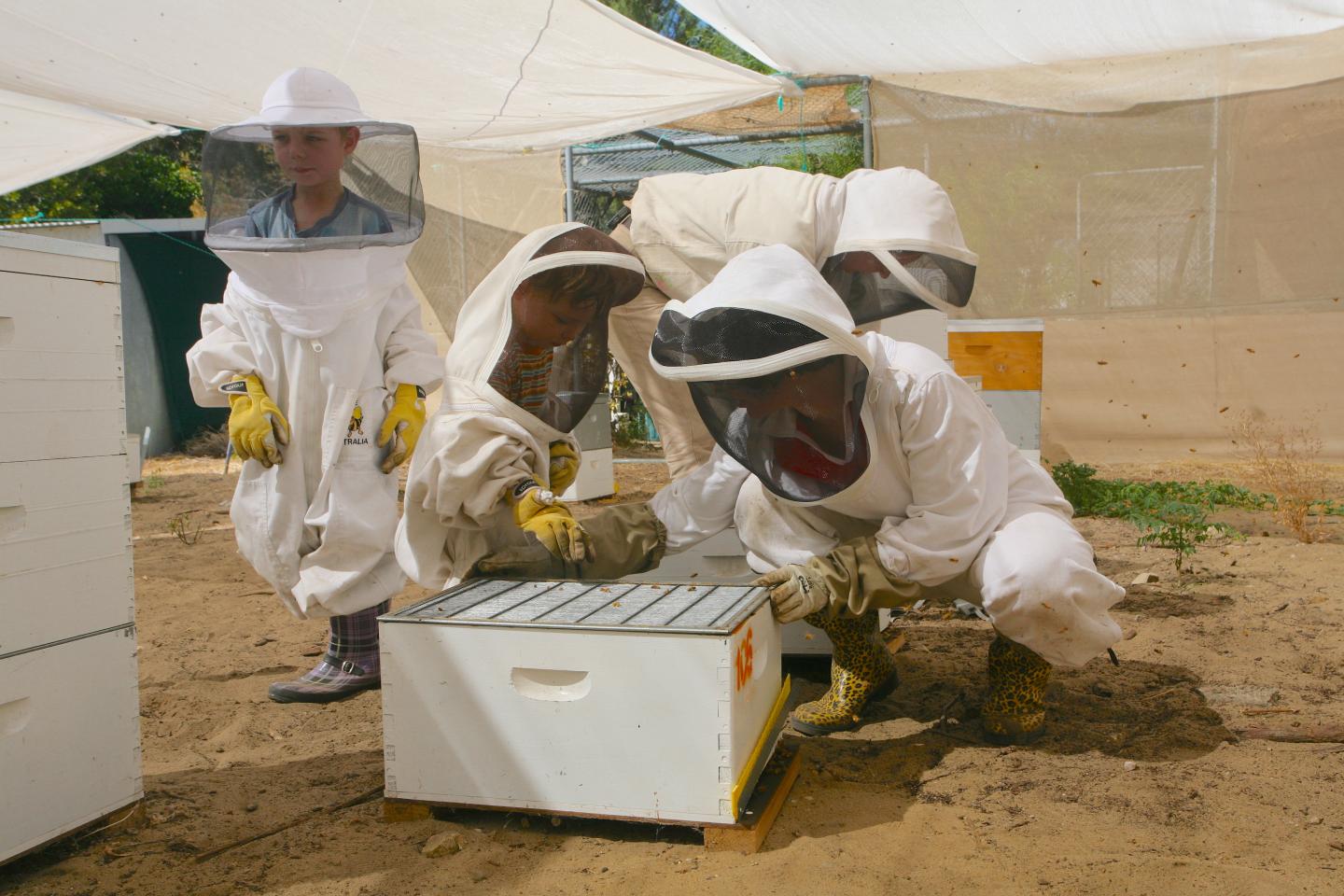
Grant establishes network of bee researchers at four UC campuses
IMAGE

Credit: Boris Baer/UCR

The University of California, Riverside, is leading a new effort to stop and reverse a worldwide decline in honeybees, which threatens food security and prices.

Honeybees pollinate more than 80 agricultural crops, which account for about a third of what we eat. Several factors, including pesticide exposure and the spread of parasites and environmental changes, are to blame for the widespread collapse of bee colonies over the past decade.

To boost dwindling honeybee populations, the University of California’s Office of the President has awarded $900,000 to a four-campus network of bee researchers and engineers.

“This will become one of the largest honeybee health networks in the country,” said Boris Baer, a professor of entomology at UC Riverside and principal investigator of the project. “I’m very excited about so many different kinds of bee expertise joining forces through this project.”

The network, which includes researchers from the Davis, San Diego and Merced campuses, is approaching the problem in three main ways.

The first is through breeding programs — a particular focus of Baer’s laboratory. “We seek to identify and breed bees that are better able to cope with environmental stress,” he said.

A second goal of the new network is to develop medications and treatments for sick bees. Certain types of honeybees generate molecules that make them more tolerant of pesticides and parasites. New technology will enable the scientists to isolate those molecules and use them as a basis for drugs.

Finally, the group is looking to give beekeepers tools to better monitor bees’ health. Small devices will be able to ‘listen’ and ‘smell’ inside hives to give beekeepers indications about the health of the hive.

“We know bee queens have a special pheromone they give off when they’re hungry or dying, and these can be traced,” Baer said. “We are essentially building ‘electronic veterinarians.'”

Preventative devices like these are key to keeping bees alive, because once the colony collapses, it’s too late to bring it back, Baer said.

The network’s goals closely mirror those of UC Riverside’s Center for Integrative Bee Research, or CIBER, which is also attempting to address the ‘pollinator crisis.’

Both groups are working closely with local beekeepers and getting feedback on whether the tools being developed are working for them.

“Together, we’ll develop innovative tools needed to effectively combat declining honeybee health, keep our food affordable, and safeguard the livelihood of those working with bees,” Baer said.

Funding will also help provide research opportunities for undergraduates, including underrepresented students, with the goal of ensuring that students who enter research, academia, and industry reflects the diversity of the communities in which they learn and work.

###

Media Contact
Jules Bernstein
[email protected]

Original Source

https://news.ucr.edu/articles/2021/01/07/scientists-developing-new-solutions-honeybee-colony-collapse

Tags: Agricultural Production/EconomicsAgricultureBiologyBiotechnologyEntomologyFood/Food ScienceMolecular Biology
Share12Tweet8Share2ShareShareShare2

Related Posts

Developing Eye Care Guidelines for Prone Ventilation

January 11, 2026

Guillain-Barré Syndrome Linked to TNF Inhibitor in Blau

January 11, 2026

Dual Nanocarriers Target Smad3 and Runx2 in Aortic Valve Disease

January 11, 2026

Psychological Resilience Eases Loneliness in Caregivers

January 11, 2026
Please login to join discussion

POPULAR NEWS

  • Enhancing Spiritual Care Education in Nursing Programs

    154 shares
    Share 62 Tweet 39
  • PTSD, Depression, Anxiety in Childhood Cancer Survivors, Parents

    146 shares
    Share 58 Tweet 37
  • Robotic Ureteral Reconstruction: A Novel Approach

    50 shares
    Share 20 Tweet 13
  • Impact of Vegan Diet and Resistance Exercise on Muscle Volume

    47 shares
    Share 19 Tweet 12
v>

About

We bring you the latest biotechnology news from best research centers and universities around the world. Check our website.

Follow us

Recent News

Developing Eye Care Guidelines for Prone Ventilation

Guillain-Barré Syndrome Linked to TNF Inhibitor in Blau

Dual Nanocarriers Target Smad3 and Runx2 in Aortic Valve Disease

Subscribe to Blog via Email

Success! An email was just sent to confirm your subscription. Please find the email now and click 'Confirm' to start subscribing.

Join 71 other subscribers
  • Contact Us

Bioengineer.org © Copyright 2023 All Rights Reserved.

Welcome Back!

Login to your account below

Forgotten Password?

Retrieve your password

Please enter your username or email address to reset your password.

Log In
No Result
View All Result
  • Homepages
    • Home Page 1
    • Home Page 2
  • News
  • National
  • Business
  • Health
  • Lifestyle
  • Science

Bioengineer.org © Copyright 2023 All Rights Reserved.