• HOME
  • NEWS
  • EXPLORE
    • CAREER
      • Companies
      • Jobs
    • EVENTS
    • iGEM
      • News
      • Team
    • PHOTOS
    • VIDEO
    • WIKI
  • BLOG
  • COMMUNITY
    • FACEBOOK
    • INSTAGRAM
    • TWITTER
Friday, December 19, 2025
BIOENGINEER.ORG
No Result
View All Result
  • Login
  • HOME
  • NEWS
  • EXPLORE
    • CAREER
      • Companies
      • Jobs
        • Lecturer
        • PhD Studentship
        • Postdoc
        • Research Assistant
    • EVENTS
    • iGEM
      • News
      • Team
    • PHOTOS
    • VIDEO
    • WIKI
  • BLOG
  • COMMUNITY
    • FACEBOOK
    • INSTAGRAM
    • TWITTER
  • HOME
  • NEWS
  • EXPLORE
    • CAREER
      • Companies
      • Jobs
        • Lecturer
        • PhD Studentship
        • Postdoc
        • Research Assistant
    • EVENTS
    • iGEM
      • News
      • Team
    • PHOTOS
    • VIDEO
    • WIKI
  • BLOG
  • COMMUNITY
    • FACEBOOK
    • INSTAGRAM
    • TWITTER
No Result
View All Result
Bioengineer.org
No Result
View All Result
Home NEWS Science News

Discussion and de-escalation in social media

Bioengineer by Bioengineer
January 4, 2021
in Science News
Reading Time: 2 mins read
0
IMAGE
Share on FacebookShare on TwitterShare on LinkedinShare on RedditShare on Telegram

International research team awarded funding to develop AI-based, social media ‘moderator’
IMAGE

Credit: Dr Valentin Gold, University of Göttingen

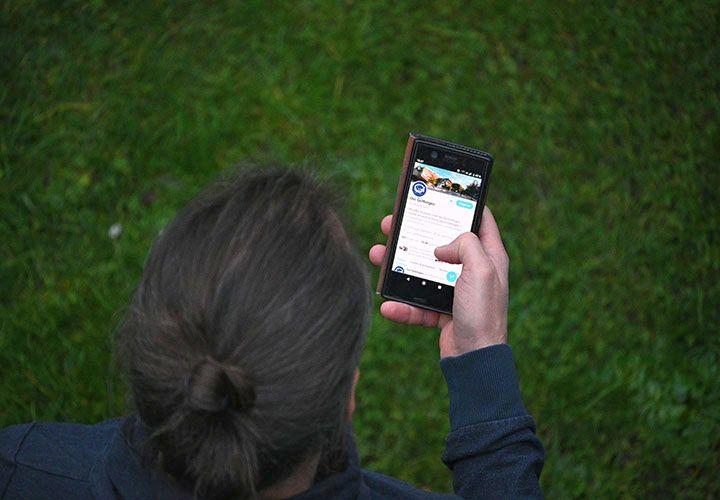
It’s a familiar situation: a compelling discussion develops on Tw­­itter, Facebook or Instagram – it could be about any topic – but instead of working constructively towards a common solution, the tone becomes increasingly aggressive. The rift between the differing opinions grows ever larger. Often, intercultural differences and lack of understanding are the root causes of the conflict. An international research team led by the University of Göttingen now wants to develop a “moderator” using artificial intelligence (AI) that can recognise hate messages in social media and intervene to de-escalate the situation. The Volkswagen Foundation will fund the project for four years from April 2021 with a total of around 1.5 million euros.

There has been a growing change in the style of communication in social media in recent years. This is particularly noticeable when it comes to questions of cultural identity. There is increasing conflict: users become emotional and attack each other; always anxious to emphasise what divides rather than what they have in common. A constructive exchange of information, facts and arguments takes place to a very limited extent. This leads to the well-known phenomena of filter bubbles and echo chambers in social media.

“The current approach to controlling insults and hate messages in social media goes no further than deleting the messages,” explains project leader Dr Valentin Gold from the Center of Methods in Social Sciences at Göttingen University. “We therefore want to develop a virtual moderator that uses artificial intelligence to recognise when discussions in social media are becoming increasingly destructive in character. In addition, the virtual moderator should also intervene in the debate and help to prevent escalation. We plan to train the moderator for three languages: English, German, and Polish.” Depending on the situation, various strategies for de-escalating conflicts in social media will be applied. Before the virtual moderator is used in real debates, the effectiveness of the different strategies will be tested experimentally in the laboratory.

The Volkswagen Foundation will fund the project “Deliberation Laboratory (DeLab)” under the funding line Artificial Intelligence and the Society of the Future. The project brings together expertise from the fields of philosophy, ethics, political science, linguistics and technology. In addition to the University of Göttingen, the Warsaw University of Technology and the Universities of Konstanz, Maastricht and Dundee are involved.

###

Contact:

Dr Valentin Gold

University of Göttingen

Faculty of Social Sciences

Center of Methods in Social Sciences

Goßlerstraße 19, 37073 Göttingen

Tel: +49 (0)551 39-21526

Email: [email protected]

https://www.uni-goettingen.de/en/443311.html

Media Contact
Melissa Sollich

49-055-139-26228

Original Source

https://www.uni-goettingen.de/en/3240.html?id=6132

Tags: BehaviorGroup OrganizationInformation Management/Tracking SystemsInternetLanguage/Linguistics/SpeechLearning/Literacy/ReadingMass MediaRobotry/Artificial IntelligenceSocial/Behavioral ScienceTechnology/Engineering/Computer Science
Share12Tweet8Share2ShareShareShare2

Related Posts

Healthy Behaviors, Social Ties Reduce Veteran Suicide Risk

December 19, 2025
Streptococcus Protein Triggers PBP1a for Cell Division

Streptococcus Protein Triggers PBP1a for Cell Division

December 19, 2025

Nanostructured LiMPO4 Cathodes: Synthesis and Properties

December 19, 2025

Forceps Use Linked to Neonatal Bleeding Risks

December 19, 2025
Please login to join discussion

POPULAR NEWS

  • Nurses’ Views on Online Learning: Effects on Performance

    Nurses’ Views on Online Learning: Effects on Performance

    70 shares
    Share 28 Tweet 18
  • NSF funds machine-learning research at UNO and UNL to study energy requirements of walking in older adults

    70 shares
    Share 28 Tweet 18
  • Unraveling Levofloxacin’s Impact on Brain Function

    53 shares
    Share 21 Tweet 13
  • MoCK2 Kinase Shapes Mitochondrial Dynamics in Rice Fungal Pathogen

    72 shares
    Share 29 Tweet 18

About

We bring you the latest biotechnology news from best research centers and universities around the world. Check our website.

Follow us

Recent News

Healthy Behaviors, Social Ties Reduce Veteran Suicide Risk

Streptococcus Protein Triggers PBP1a for Cell Division

Nanostructured LiMPO4 Cathodes: Synthesis and Properties

Subscribe to Blog via Email

Success! An email was just sent to confirm your subscription. Please find the email now and click 'Confirm' to start subscribing.

Join 70 other subscribers
  • Contact Us

Bioengineer.org © Copyright 2023 All Rights Reserved.

Welcome Back!

Login to your account below

Forgotten Password?

Retrieve your password

Please enter your username or email address to reset your password.

Log In
No Result
View All Result
  • Homepages
    • Home Page 1
    • Home Page 2
  • News
  • National
  • Business
  • Health
  • Lifestyle
  • Science

Bioengineer.org © Copyright 2023 All Rights Reserved.