• HOME
  • NEWS
  • EXPLORE
    • CAREER
      • Companies
      • Jobs
    • EVENTS
    • iGEM
      • News
      • Team
    • PHOTOS
    • VIDEO
    • WIKI
  • BLOG
  • COMMUNITY
    • FACEBOOK
    • INSTAGRAM
    • TWITTER
Saturday, May 16, 2026
BIOENGINEER.ORG
No Result
View All Result
  • Login
  • HOME
  • NEWS
  • EXPLORE
    • CAREER
      • Companies
      • Jobs
        • Lecturer
        • PhD Studentship
        • Postdoc
        • Research Assistant
    • EVENTS
    • iGEM
      • News
      • Team
    • PHOTOS
    • VIDEO
    • WIKI
  • BLOG
  • COMMUNITY
    • FACEBOOK
    • INSTAGRAM
    • TWITTER
  • HOME
  • NEWS
  • EXPLORE
    • CAREER
      • Companies
      • Jobs
        • Lecturer
        • PhD Studentship
        • Postdoc
        • Research Assistant
    • EVENTS
    • iGEM
      • News
      • Team
    • PHOTOS
    • VIDEO
    • WIKI
  • BLOG
  • COMMUNITY
    • FACEBOOK
    • INSTAGRAM
    • TWITTER
No Result
View All Result
Bioengineer.org
No Result
View All Result
Home NEWS Science News Biology

Pandas’ popularity not protecting neighbors

Bioengineer by Bioengineer
January 4, 2021
in Biology
Reading Time: 3 mins read
0
IMAGE
Share on FacebookShare on TwitterShare on LinkedinShare on RedditShare on Telegram

IMAGE

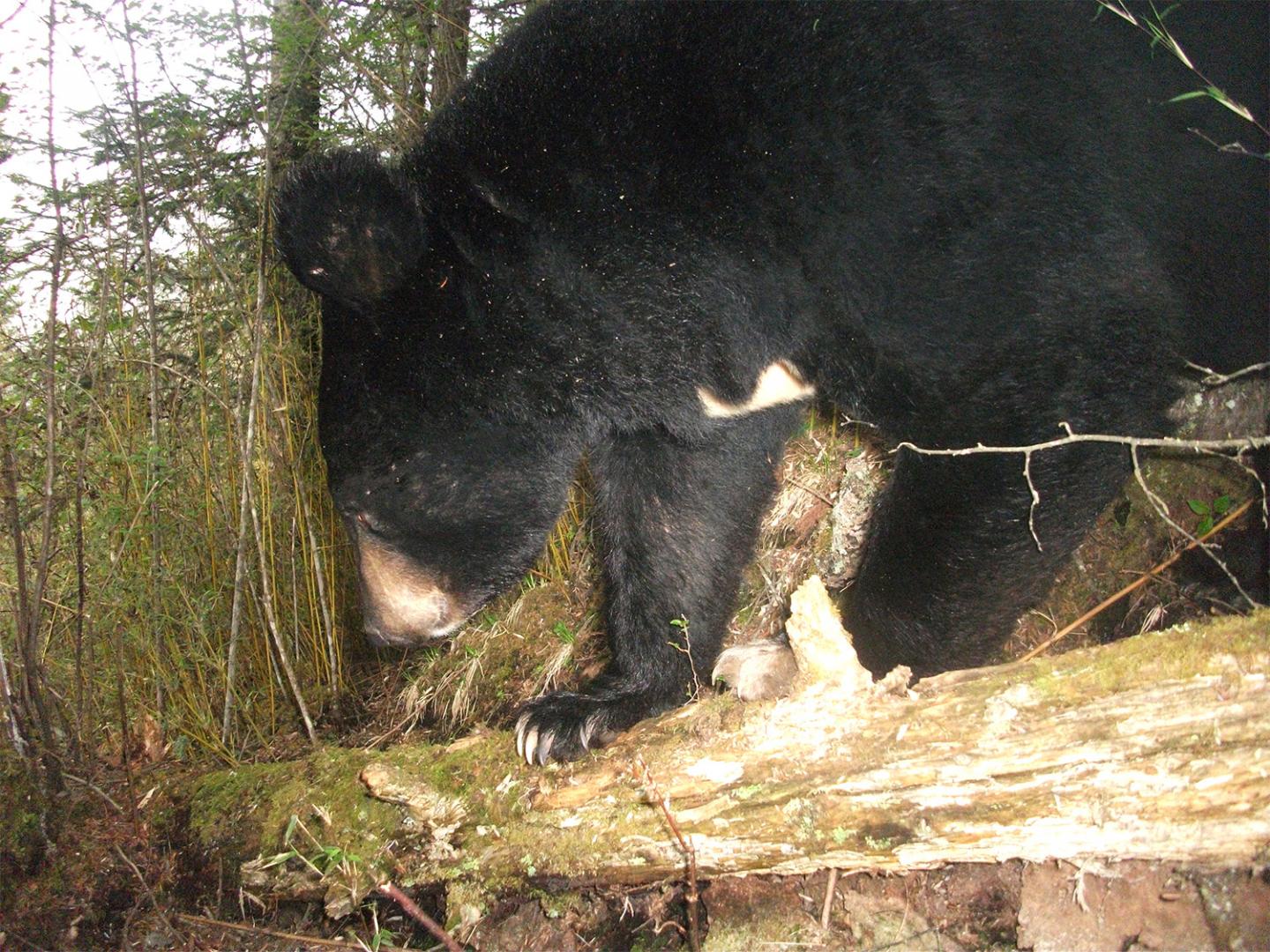
Credit: Fang Wang, Michigan State University Center for Systems Integration and Sustainability

Forgive Asiatic black bear if they’re not impressed with their popular giant panda neighbors.

For decades, conservationists have preached that panda popularity, and the resulting support for their habitat, automatically benefits other animals in the mountainous ranges. That logic extends across the world, as animals regarded as cute, noble or otherwise appealing drum up support to protect where they live.

Yet in Biological Conservation, scientists take a closer look at how other animals under the panda “umbrella” fare and find several species have every reason to be ticked at panda-centric policies.

“The popularity of giant pandas, as of the popularity of other beloved threatened animals across the world, has generated tremendous advances in protecting forests and other fragile habitats,” said Jianguo “Jack” Liu, Michigan State University’s Rachel Carson Chair in Sustainability and a paper author. “But this is an important reminder that it can’t assume that what’s good for a panda is automatically good for other species. Different species have specific needs and preferences.”

The authors of “The hidden risk of using umbrella species as conservation surrogates: A spatio-temporal approach” used camera trap data collected throughout mountain ranges to get a clear understanding of what and how animals were using protected habitats.

What they discovered is that while the pandas are doing very well (the species in 2016 was declared “threatened” rather than “endangered” – a conservation point of pride). But three of the eight species focused upon in this study – the Asiatic black bear, the forest musk deer and the Chinese serow (a goat-like animal) seem to have suffered significant habitat loss and/or degradation under panda-centric habitat management. Pandas are picky about where they live – needing lots of bamboo, a gentle slope and no contact with humans. And the managed habitats have largely delivered for them. Just not so much for others.

Fang Wang, the paper’s first author, noted that earlier efforts at tracking how a broader range of animals fared were handicapped by turning a blind eye to different habitat preferences, and not spotting potentially different habitat trends of other animals. The authors suggested that the forests and shrublands in lower elevations next to the habitats that best serve pandas could be better for bear and deer.

“China has made a tremendous achievement in establishing giant panda nature reserves, and now we’re learning that one size does not fit all,” said Wang, who with Liu and other authors is part of MSU’s Center for Systems Integration and Sustainability. “China as well as other countries that face similar conservation challenges have the opportunity to move forward from rescuing single species to protecting animal communities and ecosystems.”

###

The work was supported by the National Science Foundation, the National Natural Science Foundation of China and the Ocean Park Conservation Foundation. Besides Liu and Wang, the paper was written by Julie Winkler, Andrés Viña, William Joseph McShea, Sheng Li, Thomas Connor, Zhiqiang Zhao, Dajun Wang, Hongbo Yang, Ying Tang and Jindong Zhang.

Media Contact
Sue Nichols
[email protected]

Original Source

https://www.canr.msu.edu/news/pandas-popularity-not-protecting-neighbors

Related Journal Article

http://dx.doi.org/10.1016/j.biocon.2020.108913

Tags: BiologyEcology/Environment
Share12Tweet8Share2ShareShareShare2

Related Posts

Uncovering C. elegans Immunity via Genetic Screens — Biology

Uncovering C. elegans Immunity via Genetic Screens

May 16, 2026
Single mother must adapt swiftly — the survival of her colony depends on it — Biology

Single mother must adapt swiftly — the survival of her colony depends on it

May 15, 2026

Why Are Nearly Everyone Right-Handed? It Might Be Linked to How We Learned to Walk

May 15, 2026

Excessive Neuronal Activity Initiates Severe Autoimmune Brain Disorder

May 15, 2026
Please login to join discussion

POPULAR NEWS

  • Research Indicates Potential Connection Between Prenatal Medication Exposure and Elevated Autism Risk

    844 shares
    Share 338 Tweet 211
  • New Study Reveals Plants Can Detect the Sound of Rain

    730 shares
    Share 291 Tweet 182
  • Salmonella Haem Blocks Macrophages, Boosts Infection

    62 shares
    Share 25 Tweet 16
  • Breastmilk Balances E. coli and Beneficial Bacteria in Infant Gut Microbiomes

    58 shares
    Share 23 Tweet 15

About

We bring you the latest biotechnology news from best research centers and universities around the world. Check our website.

Follow us

Recent News

Uncovering C. elegans Immunity via Genetic Screens

Congenital Heart Disease’s Lasting Impact on Brain Health

Metabolic Stress Worsens Parkinson’s via Mitochondrial Ferroptosis

Subscribe to Blog via Email

Enter your email address to subscribe to this blog and receive notifications of new posts by email.

Join 82 other subscribers
  • Contact Us

Bioengineer.org © Copyright 2023 All Rights Reserved.

Welcome Back!

Login to your account below

Forgotten Password?

Retrieve your password

Please enter your username or email address to reset your password.

Log In
No Result
View All Result
  • Homepages
    • Home Page 1
    • Home Page 2
  • News
  • National
  • Business
  • Health
  • Lifestyle
  • Science

Bioengineer.org © Copyright 2023 All Rights Reserved.