• HOME
  • NEWS
  • EXPLORE
    • CAREER
      • Companies
      • Jobs
    • EVENTS
    • iGEM
      • News
      • Team
    • PHOTOS
    • VIDEO
    • WIKI
  • BLOG
  • COMMUNITY
    • FACEBOOK
    • INSTAGRAM
    • TWITTER
Friday, May 15, 2026
BIOENGINEER.ORG
No Result
View All Result
  • Login
  • HOME
  • NEWS
  • EXPLORE
    • CAREER
      • Companies
      • Jobs
        • Lecturer
        • PhD Studentship
        • Postdoc
        • Research Assistant
    • EVENTS
    • iGEM
      • News
      • Team
    • PHOTOS
    • VIDEO
    • WIKI
  • BLOG
  • COMMUNITY
    • FACEBOOK
    • INSTAGRAM
    • TWITTER
  • HOME
  • NEWS
  • EXPLORE
    • CAREER
      • Companies
      • Jobs
        • Lecturer
        • PhD Studentship
        • Postdoc
        • Research Assistant
    • EVENTS
    • iGEM
      • News
      • Team
    • PHOTOS
    • VIDEO
    • WIKI
  • BLOG
  • COMMUNITY
    • FACEBOOK
    • INSTAGRAM
    • TWITTER
No Result
View All Result
Bioengineer.org
No Result
View All Result
Home NEWS Science News Health

Protein tells developing cells to stick together

Bioengineer by Bioengineer
December 24, 2020
in Health
Reading Time: 2 mins read
0
IMAGE
Share on FacebookShare on TwitterShare on LinkedinShare on RedditShare on Telegram

IMAGE

Credit: Tohoku University

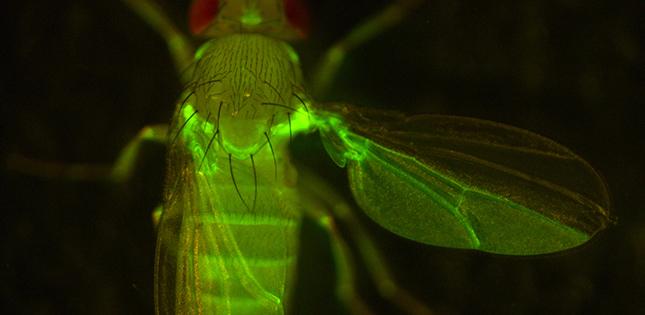
Tohoku University scientists have, for the first time, provided experimental evidence that cell stickiness helps them stay sorted within correct compartments during development. How tightly cells clump together, known as cell adhesion, appears to be enabled by a protein better known for its role in the immune system. The findings were detailed in the journal Nature Communications.

Scientists have long observed that not-yet-specialized cells move in a way that ensures that cell groups destined for a specific tissue stay together. In 1964, American biologist Malcolm Steinberg proposed that cells with similar adhesiveness move to come in contact with each other to minimize energy use, producing a thermodynamically stable structure. This is known as the differential adhesion hypothesis.

“Many other theoretical works have emphasized the importance of differences in cell-to-cell adhesion for separating cell populations and maintaining the boundaries between them, but this had not yet been demonstrated in living animal epithelial tissues,” says Erina Kuranaga of Tohoku University’s Laboratory for Histogenetic Dynamics, who led the investigations. “Our study showed, for the first time, that cell sorting is regulated by changes in adhesion.”

Kuranaga and her team conducted experiments in fruit fly pupae, finding that a gene, called Toll-1, played a major role in this adhesion process.

As fruit flies develop from the immature larval stage into the mature adult, epithelial tissue-forming cells, called histoblasts, cluster together into several ‘nests’ in the abdomen. Each nest contains an anterior and a posterior compartment. Histoblasts are destined to replace larval cells to form the adult epidermis, the outermost layer that covers the flies. The cells in each compartment form discrete cell populations, so they need to stick together, with a distinct boundary forming between them.

Using fluorescent tags, Kuranaga and her team observed the Toll-1 protein is expressed mainly in the posterior compartment. Its fluorescence also showed a sharp boundary between the two compartments.

Further investigations showed Toll-1 performs the function of an adhesion molecule, encouraging similar cells to stick together. This process keeps the boundary between the two compartments straight, correcting distortions that arise as the cells divide to increase the number.

Interestingly, Toll proteins are best known for recognizing invading pathogens, and little is known about their work beyond the immune system. “Our work improves understanding of the non-immune roles of Toll proteins,” says Kuranaga. She and her team next plan to study the function of other Toll genes in fruit fly epithelial cells.

###

Media Contact
Erina Kuranaga
[email protected]

Original Source

https://www.tohoku.ac.jp/en/press/protein_tells_developing_cells_to_stick_together.html

Related Journal Article

http://dx.doi.org/10.1038/s41467-020-20118-y

Tags: BiologyDevelopmental/Reproductive Biology
Share14Tweet9Share2ShareShareShare2

Related Posts

DNA Off-Targeting Disrupts RNA Chromatin Studies

May 15, 2026

Malnutrition Lowers Antioxidant Capacity in Older Adults

May 15, 2026

Paraprobiotics Mitigate BPA-Induced Damage to Male Fertility Linked to Plastic Exposure

May 15, 2026

Digital Health Fear Patterns in Older Cancer Patients

May 15, 2026
Please login to join discussion

POPULAR NEWS

  • Research Indicates Potential Connection Between Prenatal Medication Exposure and Elevated Autism Risk

    843 shares
    Share 337 Tweet 211
  • New Study Reveals Plants Can Detect the Sound of Rain

    729 shares
    Share 291 Tweet 182
  • Salmonella Haem Blocks Macrophages, Boosts Infection

    62 shares
    Share 25 Tweet 16
  • Breastmilk Balances E. coli and Beneficial Bacteria in Infant Gut Microbiomes

    58 shares
    Share 23 Tweet 15

About

We bring you the latest biotechnology news from best research centers and universities around the world. Check our website.

Follow us

Recent News

DNA Off-Targeting Disrupts RNA Chromatin Studies

Malnutrition Lowers Antioxidant Capacity in Older Adults

Revolutionary DNA-Guided CRISPR Paves the Way for Next-Generation RNA Editing

Subscribe to Blog via Email

Enter your email address to subscribe to this blog and receive notifications of new posts by email.

Join 82 other subscribers
  • Contact Us

Bioengineer.org © Copyright 2023 All Rights Reserved.

Welcome Back!

Login to your account below

Forgotten Password?

Retrieve your password

Please enter your username or email address to reset your password.

Log In
No Result
View All Result
  • Homepages
    • Home Page 1
    • Home Page 2
  • News
  • National
  • Business
  • Health
  • Lifestyle
  • Science

Bioengineer.org © Copyright 2023 All Rights Reserved.