• HOME
  • NEWS
  • EXPLORE
    • CAREER
      • Companies
      • Jobs
    • EVENTS
    • iGEM
      • News
      • Team
    • PHOTOS
    • VIDEO
    • WIKI
  • BLOG
  • COMMUNITY
    • FACEBOOK
    • INSTAGRAM
    • TWITTER
Monday, October 5, 2026
BIOENGINEER.ORG
No Result
View All Result
  • Login
  • HOME
  • NEWS
  • EXPLORE
    • CAREER
      • Companies
      • Jobs
        • Lecturer
        • PhD Studentship
        • Postdoc
        • Research Assistant
    • EVENTS
    • iGEM
      • News
      • Team
    • PHOTOS
    • VIDEO
    • WIKI
  • BLOG
  • COMMUNITY
    • FACEBOOK
    • INSTAGRAM
    • TWITTER
  • HOME
  • NEWS
  • EXPLORE
    • CAREER
      • Companies
      • Jobs
        • Lecturer
        • PhD Studentship
        • Postdoc
        • Research Assistant
    • EVENTS
    • iGEM
      • News
      • Team
    • PHOTOS
    • VIDEO
    • WIKI
  • BLOG
  • COMMUNITY
    • FACEBOOK
    • INSTAGRAM
    • TWITTER
No Result
View All Result
Bioengineer.org
No Result
View All Result
Home NEWS Science News

A new light on stellar death

Bioengineer by Bioengineer
December 12, 2016
in Science News
Reading Time: 3 mins read
0
Share on FacebookShare on TwitterShare on LinkedinShare on RedditShare on Telegram
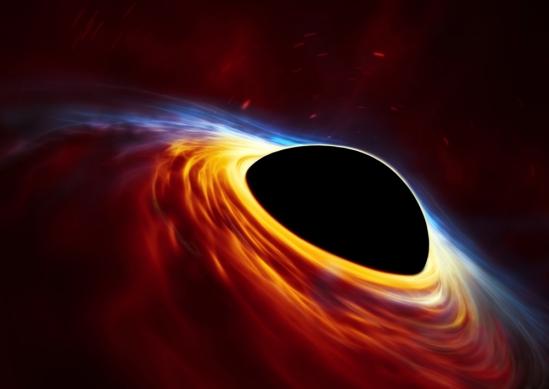
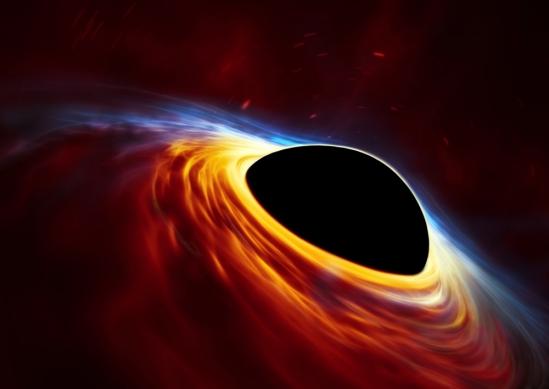
IMAGE

Credit: ESO, ESA/Hubble, M. Kornmesser

Back in 2015 when astronomers discovered an intense flare in a distant galaxy, they considered it the brightest supernova ever observed.

Now, UC Santa Barbara astrophysicists and a group of international colleagues offer an entirely different interpretation based on new astronomical observation data from the Las Cumbres Observatory (LCO), a global robotic telescope network, and the Hubble Space Telescope.

The new information indicates that the event, called ASASSN-15lh, is actually a tidal disruption event (TDE) — the destruction of a star by a supermassive black hole. The findings appear in the inaugural issue of the journal Nature Astronomy.

"Years ago we just wouldn't have been able to follow an event like this," said co-author Andy Howell, leader of the supernova group at the Goleta, California-based LCO and an adjunct professor in UCSB's Department of Physics. "This study shows that large-area surveys, a global robotic telescope network and a NASA satellite can come together to reveal dramatic new discoveries that wouldn't be possible without each piece of that puzzle."

Using images from the Hubble Space Telescope that were not available when ASASSN-15lh was discovered, the scientists found that the event occurred at the center of the galaxy where the supermassive black hole resides. The black hole inferred to lie in this galaxy is more than 100 million times the mass of the sun.

For a star to be tidally disrupted by such a massive black hole — rather than swallowed whole — the black hole must be spinning very rapidly. This discovery marks the first time that a TDE has been used to probe the spin of a black hole, a property that is very difficult to measure and is used to infer the existence of so-called Kerr black holes.

ASASSN-15lh occurred when the star strayed too close to the supermassive black hole and was torn apart by the tides generated by the extreme gravity. The stellar material orbited around the black hole, collided with itself at high velocity and started falling into the black hole. This released copious amounts of energy and generated the bright flare astronomers observed as ASASSN-15lh.

"We've only been studying the optical flares of tidal disruptions for the last few years," said co-author Iair Arcavi, principal investigator of the LCO program that's used to observe ASASSN-15lh and an Einstein postdoctoral fellow at UCSB. "ASASSN-15lh is similar in some ways to the other events we've been seeing but is different in ways we didn't expect. It turns out that these events — and the black holes that make them — are more diverse than we had previously imagined."

"This is like discovering a new kind of dinosaur," Howell said. "Now that we have the right tools and know what to look for, we're going to find more and get a better sense of the population. It's exciting to have new ways of learning about black holes and stellar death."

###

Media Contact

Julie Cohen
[email protected]
805-893-7220
@ucsantabarbara

http://www.ucsb.edu

############

Story Source: Materials provided by Scienmag
Share12Tweet8Share2ShareShareShare2

Related Posts

AI Spots Hidden Thyroid Cancer Spread From Ultrasound Scans, Dual-Center Study Shows

AI Spots Hidden Thyroid Cancer Spread From Ultrasound Scans, Dual-Center Study Shows

October 5, 2026
HIV Blinds the Immune System to Lung Cancer Mutations, Study Suggests

HIV Blinds the Immune System to Lung Cancer Mutations, Study Suggests

October 5, 2026

Cloud Country’s Fragile Soils: Scientists Decode Why Meghalaya’s Hills Wash Away

October 5, 2026

A Simple Caliper Test May Outmeasure the Tape for Spotting Dangerous Belly Fat

October 5, 2026
Please login to join discussion

POPULAR NEWS

  • Alloys That Shrink Their Own Grains: New PIX Mechanism Refines Metals With Heat Alone

    Alloys That Shrink Their Own Grains: New PIX Mechanism Refines Metals With Heat Alone

    29 shares
    Share 12 Tweet 7
  • Endurance Exercise Reshapes the Liver in Males and Females Through Distinct Molecular Routes

    29 shares
    Share 12 Tweet 7
  • Single Transcription Factor PU.1 Rapidly Converts Fibroblasts into Macrophage-Lineage Cells

    29 shares
    Share 12 Tweet 7
  • New Scale Measures How Ready Nurse Educators Really Are for the AI Era

    29 shares
    Share 12 Tweet 7

About

We bring you the latest biotechnology news from best research centers and universities around the world. Check our website.

Follow us

Recent News

Alloys That Shrink Their Own Grains: New PIX Mechanism Refines Metals With Heat Alone

Endurance Exercise Reshapes the Liver in Males and Females Through Distinct Molecular Routes

Single Transcription Factor PU.1 Rapidly Converts Fibroblasts into Macrophage-Lineage Cells

Subscribe to Blog via Email

Success! An email was just sent to confirm your subscription. Please find the email now and click 'Confirm' to start subscribing.

Join 85 other subscribers
  • Contact Us

Bioengineer.org © Copyright 2023 All Rights Reserved.

Welcome Back!

Login to your account below

Forgotten Password?

Retrieve your password

Please enter your username or email address to reset your password.

Log In
No Result
View All Result
  • Homepages
    • Home Page 1
    • Home Page 2
  • News
  • National
  • Business
  • Health
  • Lifestyle
  • Science

Bioengineer.org © Copyright 2023 All Rights Reserved.