• HOME
  • NEWS
  • EXPLORE
    • CAREER
      • Companies
      • Jobs
    • EVENTS
    • iGEM
      • News
      • Team
    • PHOTOS
    • VIDEO
    • WIKI
  • BLOG
  • COMMUNITY
    • FACEBOOK
    • INSTAGRAM
    • TWITTER
Sunday, April 5, 2026
BIOENGINEER.ORG
No Result
View All Result
  • Login
  • HOME
  • NEWS
  • EXPLORE
    • CAREER
      • Companies
      • Jobs
        • Lecturer
        • PhD Studentship
        • Postdoc
        • Research Assistant
    • EVENTS
    • iGEM
      • News
      • Team
    • PHOTOS
    • VIDEO
    • WIKI
  • BLOG
  • COMMUNITY
    • FACEBOOK
    • INSTAGRAM
    • TWITTER
  • HOME
  • NEWS
  • EXPLORE
    • CAREER
      • Companies
      • Jobs
        • Lecturer
        • PhD Studentship
        • Postdoc
        • Research Assistant
    • EVENTS
    • iGEM
      • News
      • Team
    • PHOTOS
    • VIDEO
    • WIKI
  • BLOG
  • COMMUNITY
    • FACEBOOK
    • INSTAGRAM
    • TWITTER
No Result
View All Result
Bioengineer.org
No Result
View All Result
Home NEWS Science News Chemistry

Tiny bubbles on electrodes key to speeding up chemical processes

Bioengineer by Bioengineer
December 10, 2020
in Chemistry
Reading Time: 2 mins read
0
IMAGE
Share on FacebookShare on TwitterShare on LinkedinShare on RedditShare on Telegram

IMAGE

Credit: na

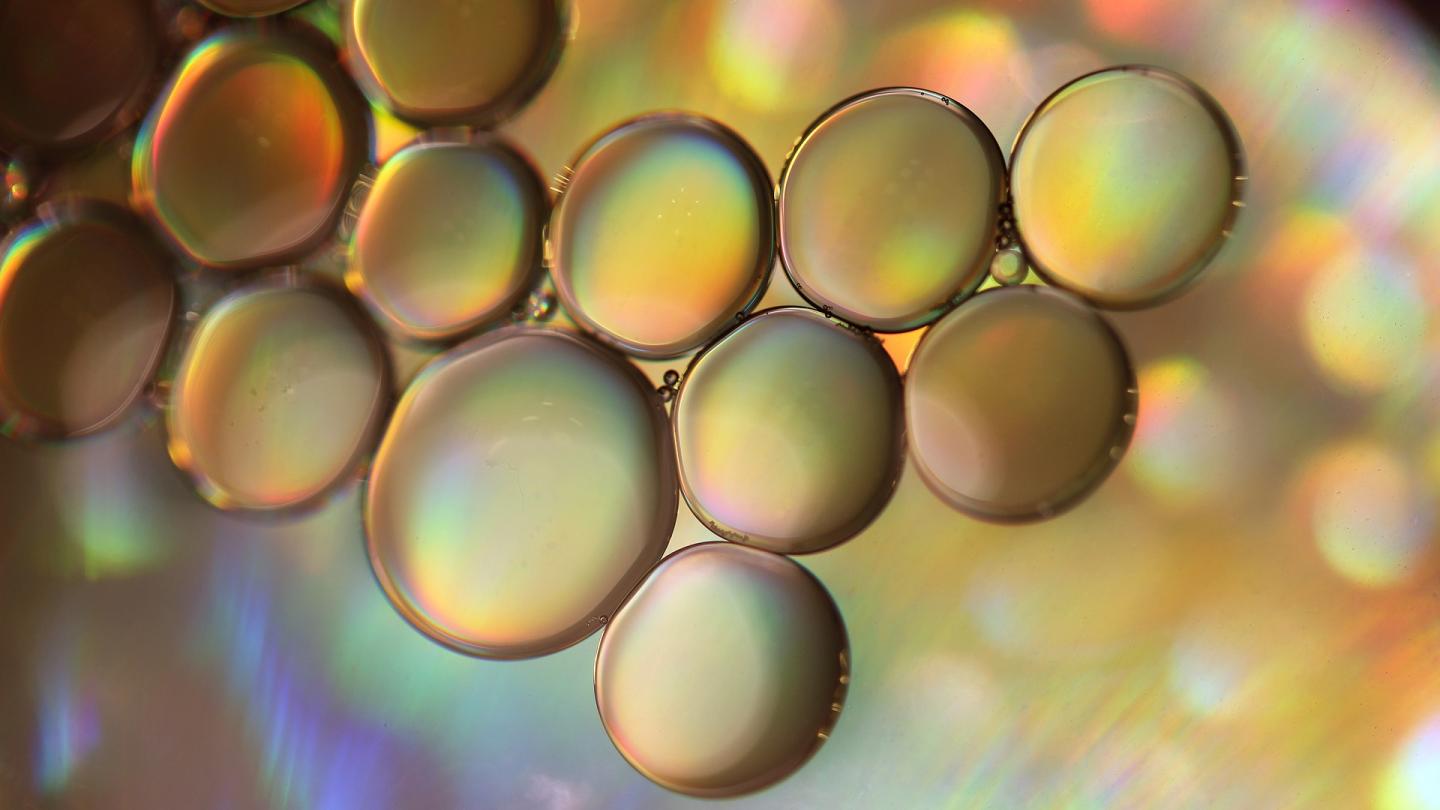
New Curtin University-led research has shown the formation of bubbles on electrodes, usually thought to be a hindrance, can be beneficial, with deliberately added bubbles, or oil droplets, able to accelerate processes such as the removal of pollutants such as hydrocarbons from contaminated water and the production of chlorine.

Dr Simone Ciampi, from Curtin’s School of Molecular Life Sciences, explained many industrial processes are electrochemical, meaning the desired chemical reaction to create an end product is assisted by the flow of electrical currents.

“Electrodes assist chemists to achieve required electrochemical reactions, such as in the purification of alumina, and the technology used to produce chlorine for swimming pools,” Dr Ciampi said.

“Often over the course of their use, small bubbles of gas begin to form on these electrodes, blocking parts of their surface. These bubbles prevent fresh solution from reaching the electrodes, and therefore, slow down the necessary reactions.

“It was generally thought these bubbles essentially stopped the electrode from working properly, and the appearance of the bubbles was a bad thing. However, our new research suggests otherwise,” Dr Ciampi said.

Using fluorescence microscopy, electrochemistry and multi-scale modelling, the research team showed that in the vicinity of bubbles that stick to an electrode surface, valuable chemical reactions occur under conditions where normally such reactions would be considered impossible.

Co-researcher Dr Yan Vogel, also from Curtin’s School of Molecular and Life Sciences, said it was these ‘impossible’ reactions occurring in the corona of bubbles that piqued the team’s interest, and warranted further exploration.

“We revealed for the first time that the surrounding surface of an electrode bubble accumulates hydroxide anions, to surprisingly large concentrations,” Dr Vogel said.

“This population of negatively charged ions surrounding bubbles is unbalanced by ions of the opposite sign, which was quite unexpected. Usually charged chemical species in solution are generally balanced, so this finding showed us more about the chemical reactivity of bubbles.

“Basically we’ve learned that surface bubbles can actually speed up electrochemical reactions where small molecules are joined to form large networks of molecules in a polymer, like in camera films or display devices like glucose sensors for blood sugar monitoring.”

###

Led by Curtin University, the research team included Dr Nadim Darwish from Curtin’s School of Molecular Life Sciences and scientists from the Australian National University, the University of New South Wales, and the University of Western Australia.

Media Contact
Lucien Wilkinson
[email protected]

Related Journal Article

http://dx.doi.org/10.1038/s41467-020-20186-0

Tags: Chemistry/Physics/Materials Sciences
Share12Tweet8Share2ShareShareShare2

Related Posts

Biochar Enhances Soil Carbon Storage via Microbial Activity, with Effects Differing by Soil Depth

Biochar Enhances Soil Carbon Storage via Microbial Activity, with Effects Differing by Soil Depth

April 3, 2026
Breakthrough Tiny Detector for Microwave Photons Poised to Propel Quantum Technology Forward

Breakthrough Tiny Detector for Microwave Photons Poised to Propel Quantum Technology Forward

April 3, 2026

Children Residing Near Southern California’s Salton Sea Exhibit Reduced Lung Function Growth

April 3, 2026

SKKU Develops Advanced Platinum Catalyst, Paving the Way for High-Efficiency Hydrogen Fuel Cell Vehicles

April 3, 2026
Please login to join discussion

POPULAR NEWS

  • blank

    Revolutionary AI Model Enhances Precision in Detecting Food Contamination

    97 shares
    Share 39 Tweet 24
  • Imagine a Social Media Feed That Challenges Your Views Instead of Reinforcing Them

    1008 shares
    Share 398 Tweet 249
  • Promising Outcomes from First Clinical Trials of Gene Regulation in Epilepsy

    51 shares
    Share 20 Tweet 13
  • Popular Anti-Aging Compound Linked to Damage in Corpus Callosum, Study Finds

    44 shares
    Share 18 Tweet 11

About

We bring you the latest biotechnology news from best research centers and universities around the world. Check our website.

Follow us

Recent News

Frailty, Depression, Social Participation Linked in Older Adults

Seismic Impact on Integrated Slope Stabilization: Numerical Study

Clinical Outcomes and Risks in Post-Ibrutinib Transplant

Subscribe to Blog via Email

Success! An email was just sent to confirm your subscription. Please find the email now and click 'Confirm' to start subscribing.

Join 78 other subscribers
  • Contact Us

Bioengineer.org © Copyright 2023 All Rights Reserved.

Welcome Back!

Login to your account below

Forgotten Password?

Retrieve your password

Please enter your username or email address to reset your password.

Log In
No Result
View All Result
  • Homepages
    • Home Page 1
    • Home Page 2
  • News
  • National
  • Business
  • Health
  • Lifestyle
  • Science

Bioengineer.org © Copyright 2023 All Rights Reserved.