• HOME
  • NEWS
  • EXPLORE
    • CAREER
      • Companies
      • Jobs
    • EVENTS
    • iGEM
      • News
      • Team
    • PHOTOS
    • VIDEO
    • WIKI
  • BLOG
  • COMMUNITY
    • FACEBOOK
    • INSTAGRAM
    • TWITTER
Saturday, February 7, 2026
BIOENGINEER.ORG
No Result
View All Result
  • Login
  • HOME
  • NEWS
  • EXPLORE
    • CAREER
      • Companies
      • Jobs
        • Lecturer
        • PhD Studentship
        • Postdoc
        • Research Assistant
    • EVENTS
    • iGEM
      • News
      • Team
    • PHOTOS
    • VIDEO
    • WIKI
  • BLOG
  • COMMUNITY
    • FACEBOOK
    • INSTAGRAM
    • TWITTER
  • HOME
  • NEWS
  • EXPLORE
    • CAREER
      • Companies
      • Jobs
        • Lecturer
        • PhD Studentship
        • Postdoc
        • Research Assistant
    • EVENTS
    • iGEM
      • News
      • Team
    • PHOTOS
    • VIDEO
    • WIKI
  • BLOG
  • COMMUNITY
    • FACEBOOK
    • INSTAGRAM
    • TWITTER
No Result
View All Result
Bioengineer.org
No Result
View All Result
Home NEWS Science News Chemistry

The smell of cooperation

Bioengineer by Bioengineer
November 25, 2020
in Chemistry
Reading Time: 3 mins read
0
IMAGE
Share on FacebookShare on TwitterShare on LinkedinShare on RedditShare on Telegram

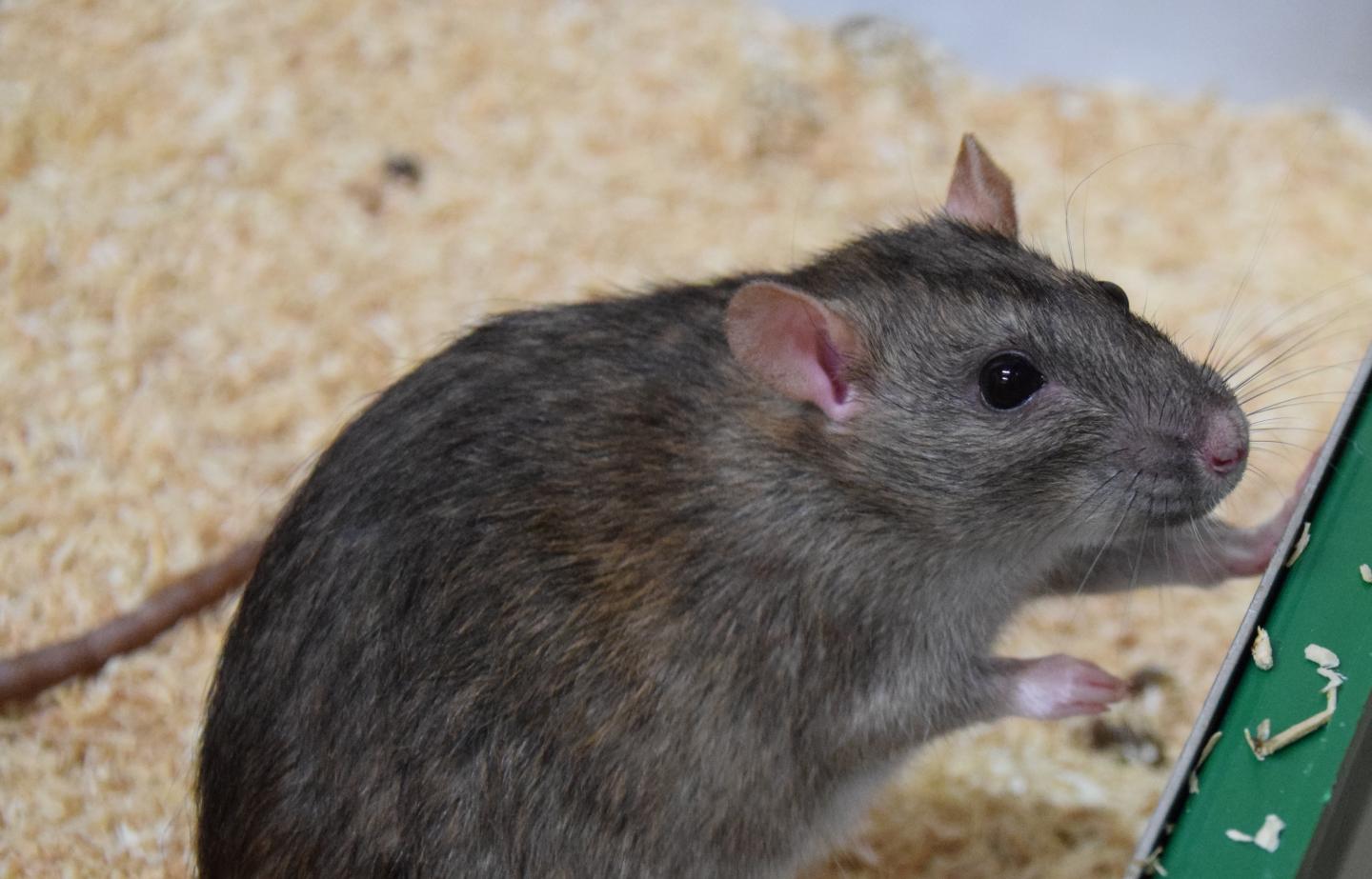
Research team with the University of Göttingen finds effect of odour on helpfulness in rats
IMAGE

Credit: Manon Schweinfurth

Despite their reputation, rats are surprisingly sociable and actually regularly help each other out with tasks. Researchers at the Universities of Göttingen, Bern and St Andrews have now shown that a rat just has to smell the scent of another rat that is engaged in helpful behaviour to increase his or her own helpfulness. This is the first study to show that just the smell of a cooperating individual rat is enough to trigger an altruistic and helpful response in another. The research was published in the Proceedings of the Royal Society B.

It is well known that rats will help each other out. What the researchers wanted to know was whether the rat’s odour during this behaviour had any effect on another rat’s helpfulness. They therefore carried out a series of tests to study the importance of the scent of a rat while making cooperative decisions. The rats being studied could choose to help another rat by pulling a platform containing a reward towards the other rat’s cage. This provided food for the other rat but did not have any immediate benefit for them personally. The researchers then provided the test rats either with the smell of a rat that was being helpful to another rat in a different room or with the smell of a rat that was not engaged in helpful behaviour. The researchers were surprised to find that just the scent of a rat engaged in helpful behavior was enough to illicit helpful behaviour in the other.

Dr Nina Gerber from the Wildlife Sciences at the University of Göttingen, who led the research, says: “Test rats increased their own helping behaviour when they were presented with the smell of a helpful rat. Remarkably, this holds true even though they did not experience this helpful behaviour themselves.” She goes on to say, “Furthermore, such a ‘smell of cooperation’ depends on the actual activity of helping and is not connected to an individual rat. There isn’t a “special smell” for certain nice rats: the same individual can release the scent of being helpful or not, depending solely on their behaviour.”

The researchers concluded that physical cues – such as smell – might be even more important for rats to encourage cooperation than actual experiences. Gerber adds, “Even though people do not seem to rely on communication through scent in the way rats do, some studies indicate that scent is key for finding partners, or that smelling certain chemicals can increase trust in others. Whether there is such a ‘smell of cooperation’ in humans, however, would be an interesting question for future studies.”

###

Original publication: Gerber N et al “The smell of cooperation: rats increase helpful behaviour when receiving odour cues of a conspecific performing a cooperative task”, Proceedings of the Royal Society B DOI: 10.1098/rspb.2020.2327

https://royalsocietypublishing.org/doi/10.1098/rspb.2020.2327

Contact

Dr Nina Gerber

University of Göttingen

Wildlife Sciences

Büsgenweg 3, 37077 Göttingen, Germany

Email: [email protected]

Media Contact
Melissa Sollich
[email protected]

Original Source

https://www.uni-goettingen.de/en/3240.html?id=6097

Related Journal Article

http://dx.doi.org/10.1098/rspb.2020.2327

Tags: BehaviorBiochemistryBiologyDecision-making/Problem SolvingSocial/Behavioral Science
Share12Tweet8Share2ShareShareShare2

Related Posts

blank

Breakthrough in Environmental Cleanup: Scientists Develop Solar-Activated Biochar for Faster Remediation

February 7, 2026
blank

Cutting Costs: Making Hydrogen Fuel Cells More Affordable

February 6, 2026

Scientists Develop Hand-Held “Levitating” Time Crystals

February 6, 2026

Observing a Key Green-Energy Catalyst Dissolve Atom by Atom

February 6, 2026
Please login to join discussion

POPULAR NEWS

  • Robotic Ureteral Reconstruction: A Novel Approach

    Robotic Ureteral Reconstruction: A Novel Approach

    82 shares
    Share 33 Tweet 21
  • Digital Privacy: Health Data Control in Incarceration

    63 shares
    Share 25 Tweet 16
  • Study Reveals Lipid Accumulation in ME/CFS Cells

    57 shares
    Share 23 Tweet 14
  • Breakthrough in RNA Research Accelerates Medical Innovations Timeline

    53 shares
    Share 21 Tweet 13

About

We bring you the latest biotechnology news from best research centers and universities around the world. Check our website.

Follow us

Recent News

Digital Health Perspectives from Baltic Sea Experts

Florida Cane Toad: Complex Spread and Selective Evolution

Exploring Decision-Making in Dementia Caregivers’ Mobility

Subscribe to Blog via Email

Enter your email address to subscribe to this blog and receive notifications of new posts by email.

Join 73 other subscribers
  • Contact Us

Bioengineer.org © Copyright 2023 All Rights Reserved.

Welcome Back!

Login to your account below

Forgotten Password?

Retrieve your password

Please enter your username or email address to reset your password.

Log In
No Result
View All Result
  • Homepages
    • Home Page 1
    • Home Page 2
  • News
  • National
  • Business
  • Health
  • Lifestyle
  • Science

Bioengineer.org © Copyright 2023 All Rights Reserved.