• HOME
  • NEWS
  • EXPLORE
    • CAREER
      • Companies
      • Jobs
    • EVENTS
    • iGEM
      • News
      • Team
    • PHOTOS
    • VIDEO
    • WIKI
  • BLOG
  • COMMUNITY
    • FACEBOOK
    • INSTAGRAM
    • TWITTER
Monday, December 1, 2025
BIOENGINEER.ORG
No Result
View All Result
  • Login
  • HOME
  • NEWS
  • EXPLORE
    • CAREER
      • Companies
      • Jobs
        • Lecturer
        • PhD Studentship
        • Postdoc
        • Research Assistant
    • EVENTS
    • iGEM
      • News
      • Team
    • PHOTOS
    • VIDEO
    • WIKI
  • BLOG
  • COMMUNITY
    • FACEBOOK
    • INSTAGRAM
    • TWITTER
  • HOME
  • NEWS
  • EXPLORE
    • CAREER
      • Companies
      • Jobs
        • Lecturer
        • PhD Studentship
        • Postdoc
        • Research Assistant
    • EVENTS
    • iGEM
      • News
      • Team
    • PHOTOS
    • VIDEO
    • WIKI
  • BLOG
  • COMMUNITY
    • FACEBOOK
    • INSTAGRAM
    • TWITTER
No Result
View All Result
Bioengineer.org
No Result
View All Result
Home NEWS Science News Chemistry

Research creates hydrogen-producing living droplets, paving way for alternative future energy source

Bioengineer by Bioengineer
November 25, 2020
in Chemistry
Reading Time: 2 mins read
0
IMAGE
Share on FacebookShare on TwitterShare on LinkedinShare on RedditShare on Telegram

IMAGE

Credit: Prof Xin Huang, Harbin Institute of Technology

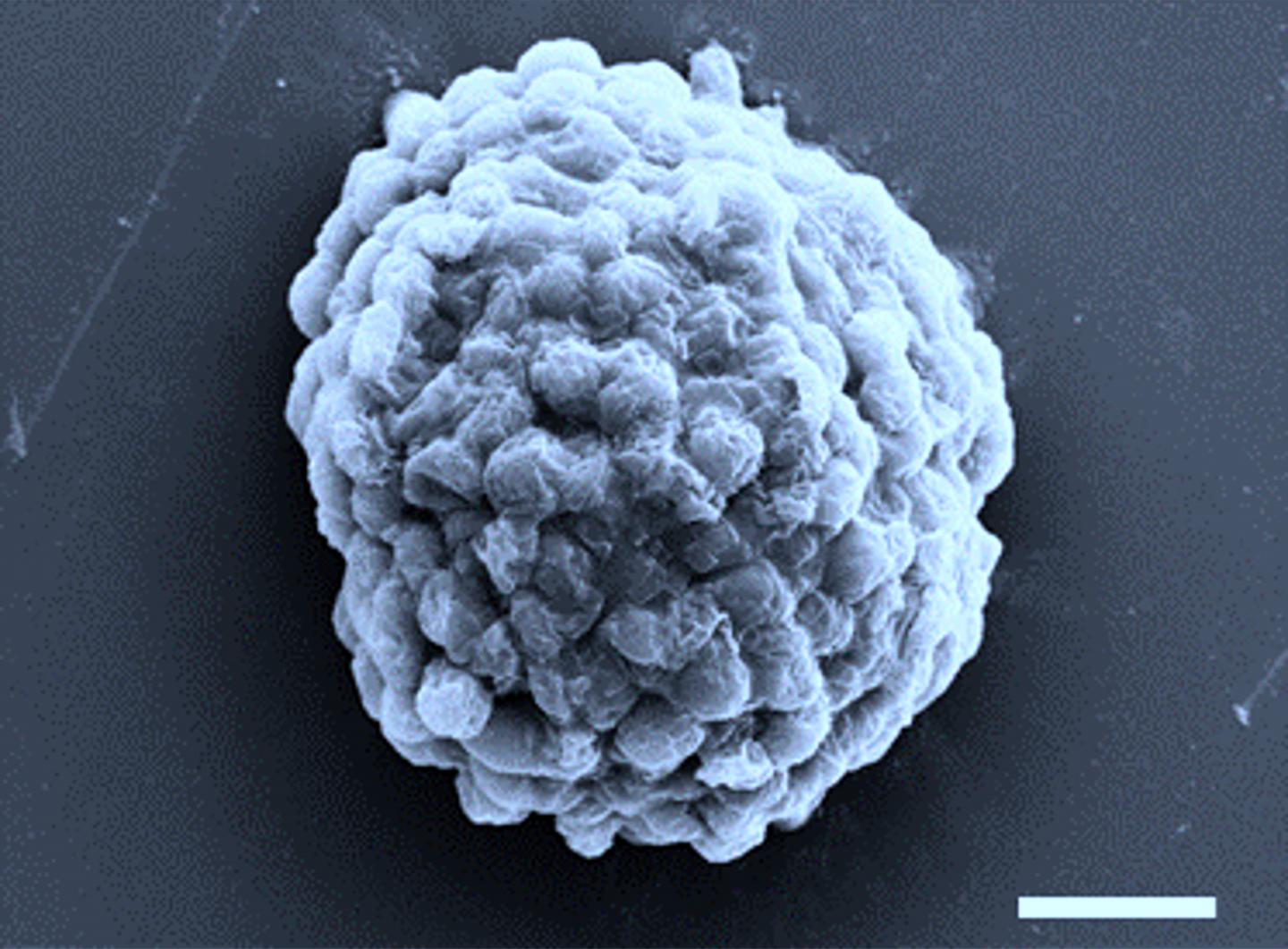
Scientists have built tiny droplet-based microbial factories that produce hydrogen, instead of oxygen, when exposed to daylight in air.

The findings of the international research team based at the University of Bristol and Harbin Institute of Technology in China, are published today in Nature Communications.

Normally, algal cells fix carbon dioxide and produce oxygen by photosynthesis. The study used sugary droplets packed with living algal cells to generate hydrogen, rather than oxygen, by photosynthesis.

Hydrogen is potentially a climate-neutral fuel, offering many possible uses as a future energy source. A major drawback is that making hydrogen involves using a lot of energy, so green alternatives are being sought and this discovery could provide an important step forward.

The team, comprising Professor Stephen Mann and Dr Mei Li from Bristol’s School of Chemistry together with Professor Xin Huang and colleagues at Harbin Institute of Technology in China, trapped ten thousand or so algal cells in each droplet, which were then crammed together by osmotic compression. By burying the cells deep inside the droplets, oxygen levels fell to a level that switched on special enzymes called hydrogenases that hijacked the normal photosynthetic pathway to produce hydrogen. In this way, around a quarter of a million microbial factories, typically only one-tenth of a millimetre in size, could be prepared in one millilitre of water.

To increase the level of hydrogen evolution, the team coated the living micro-reactors with a thin shell of bacteria, which were able to scavenge for oxygen and therefore increase the number of algal cells geared up for hydrogenase activity.

Although still at an early stage, the work provides a step towards photobiological green energy development under natural aerobic conditions.

Professor Stephen Mann, Co-Director of the Max Planck Bristol Centre for Minimal Biology at Bristol, said: “Using simple droplets as vectors for controlling algal cell organization and photosynthesis in synthetic micro-spaces offers a potentially environmentally benign approach to hydrogen production that we hope to develop in future work.”

Professor Xin Huang at Harbin Institute of Technology added: “Our methodology is facile and should be capable of scale-up without impairing the viability of the living cells. It also seems flexible; for example, we recently captured large numbers of yeast cells in the droplets and used the microbial reactors for ethanol production.”

###

“Photosynthetic hydrogen production by droplet-based microbial micro-reactors under aerobic conditions” by Xu Z, Wang S, Li S, Liu X, Wang L, Li M, Huang X and Mann S in Nature Communications.

Media Contact
Victoria Tagg
[email protected]

Related Journal Article

http://dx.doi.org/10.1038/s41467-020-19823-5

Tags: Chemistry/Physics/Materials SciencesEnergy Sources
Share12Tweet8Share2ShareShareShare2

Related Posts

Neighboring Groups Speed Up Polymer Self-Deconstruction

Neighboring Groups Speed Up Polymer Self-Deconstruction

November 28, 2025
blank

Activating Alcohols as Sulfonium Salts for Photocatalysis

November 26, 2025

Carbonate Ions Drive Water Ordering in CO₂ Reduction

November 25, 2025

Isolable Germa-Isonitrile with N≡Ge Triple Bond

November 24, 2025
Please login to join discussion

POPULAR NEWS

  • New Research Unveils the Pathway for CEOs to Achieve Social Media Stardom

    New Research Unveils the Pathway for CEOs to Achieve Social Media Stardom

    203 shares
    Share 81 Tweet 51
  • Scientists Uncover Chameleon’s Telephone-Cord-Like Optic Nerves, A Feature Missed by Aristotle and Newton

    120 shares
    Share 48 Tweet 30
  • Neurological Impacts of COVID and MIS-C in Children

    106 shares
    Share 42 Tweet 27
  • MoCK2 Kinase Shapes Mitochondrial Dynamics in Rice Fungal Pathogen

    67 shares
    Share 27 Tweet 17

About

We bring you the latest biotechnology news from best research centers and universities around the world. Check our website.

Follow us

Recent News

Revolutionizing Fashion: 3D Reconstruction Meets VR

Advancements in Lymphaticovenous Anastomosis Using Ultrasound Techniques

Machine Learning Identifies Early Right Ventricular Activation

Subscribe to Blog via Email

Enter your email address to subscribe to this blog and receive notifications of new posts by email.

Join 69 other subscribers
  • Contact Us

Bioengineer.org © Copyright 2023 All Rights Reserved.

Welcome Back!

Login to your account below

Forgotten Password?

Retrieve your password

Please enter your username or email address to reset your password.

Log In
No Result
View All Result
  • Homepages
    • Home Page 1
    • Home Page 2
  • News
  • National
  • Business
  • Health
  • Lifestyle
  • Science

Bioengineer.org © Copyright 2023 All Rights Reserved.