• HOME
  • NEWS
  • EXPLORE
    • CAREER
      • Companies
      • Jobs
    • EVENTS
    • iGEM
      • News
      • Team
    • PHOTOS
    • VIDEO
    • WIKI
  • BLOG
  • COMMUNITY
    • FACEBOOK
    • INSTAGRAM
    • TWITTER
Monday, January 12, 2026
BIOENGINEER.ORG
No Result
View All Result
  • Login
  • HOME
  • NEWS
  • EXPLORE
    • CAREER
      • Companies
      • Jobs
        • Lecturer
        • PhD Studentship
        • Postdoc
        • Research Assistant
    • EVENTS
    • iGEM
      • News
      • Team
    • PHOTOS
    • VIDEO
    • WIKI
  • BLOG
  • COMMUNITY
    • FACEBOOK
    • INSTAGRAM
    • TWITTER
  • HOME
  • NEWS
  • EXPLORE
    • CAREER
      • Companies
      • Jobs
        • Lecturer
        • PhD Studentship
        • Postdoc
        • Research Assistant
    • EVENTS
    • iGEM
      • News
      • Team
    • PHOTOS
    • VIDEO
    • WIKI
  • BLOG
  • COMMUNITY
    • FACEBOOK
    • INSTAGRAM
    • TWITTER
No Result
View All Result
Bioengineer.org
No Result
View All Result
Home NEWS Science News

Experimental evolution reveals how bacteria gain drug resistance

Bioengineer by Bioengineer
November 24, 2020
in Science News
Reading Time: 2 mins read
0
IMAGE
Share on FacebookShare on TwitterShare on LinkedinShare on RedditShare on Telegram

IMAGE

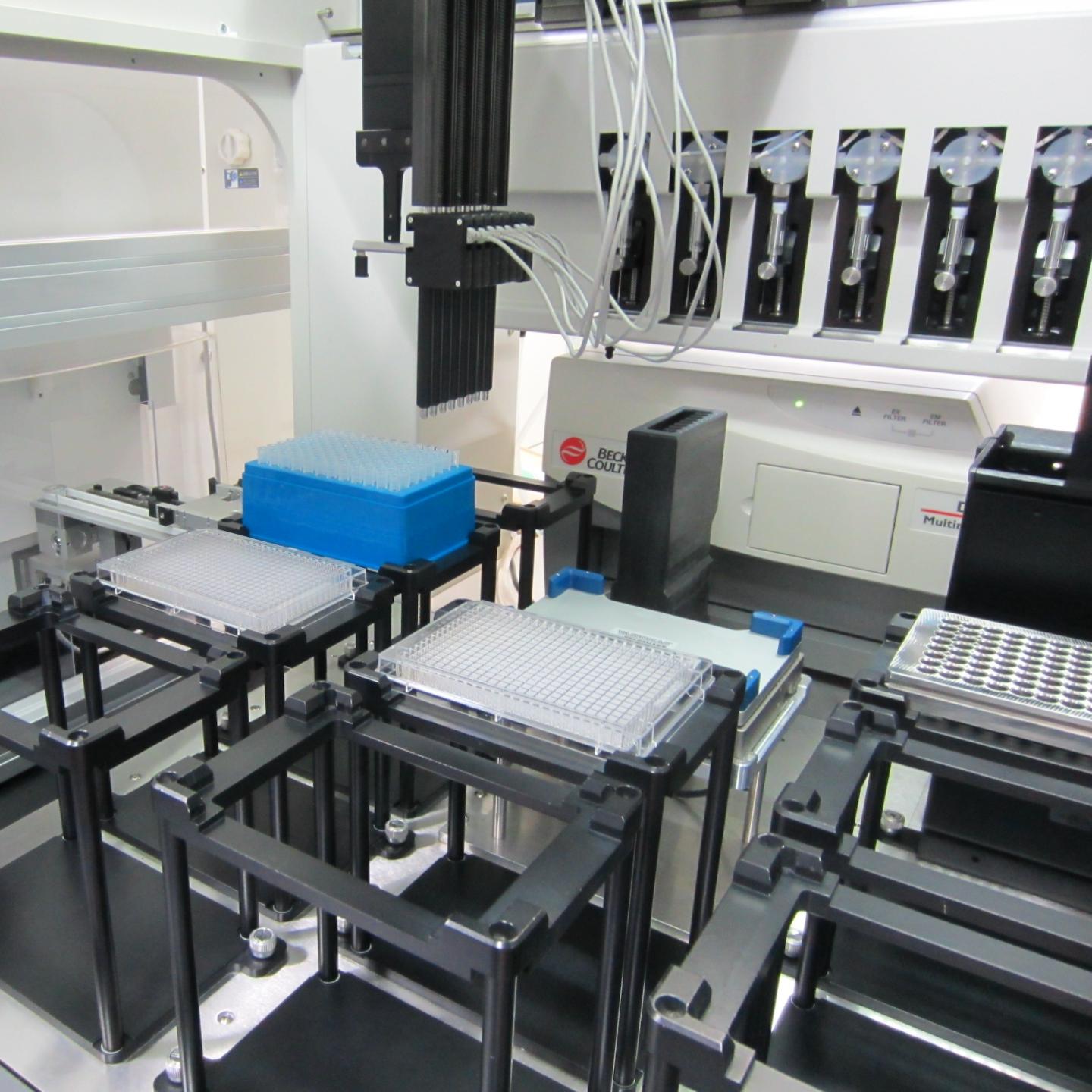
Credit: RIKEN

A research team at the RIKEN Center for Biosystems Dynamics Research (BDR) in Japan has succeeded in experimentally evolving the common bacteria Escherichia coli under pressure from a large number of individual antibiotics. In doing so, they were able to identify the mechanisms and constraints underlying evolved drug resistance. Their findings, published in the scientific journal Nature Communications, can be used to help develop drug-treatment strategies that minimize the chance that bacteria will develop resistance.

Counteracting multidrug-resistant bacteria is becoming a critical global challenge. It seems that every time we develop new antibiotics, novel antibiotic-resistant bacteria emerge during clinical use. To win this cat-and-mouse game, we must understand how drug resistance evolves in bacteria. Naturally, this process is very complicated, involving numerous changes in genome sequences and cellular states. Therefore, a comprehensive study of resistance dynamics for large numbers of antibiotics has never been reported.

“Laboratory evolution combined with genomic analyses is a promising approach for understanding antibiotic resistance dynamics,” explains Tomoya Maeda, a researcher at RIKEN BDR who led this study. “However, laboratory evolution is highly labor-intensive, requiring serial transfer of cultures over a long period and a large number of parallel experiments.” Additionally, Maeda says that identifying the genes that allow resistance to antibiotics is not always easy because of the large number of genetic features that are contained within the data.

To overcome these limitations, the team developed an automated robotic culture system that allowed them to successfully perform high-throughput laboratory evolution of E. coli for more than 250 generations under pressure from 95 different antibiotics. With this new ability, they were able to quantify changes in the bacteria’s transcriptome–the set of all messenger RNAs and their transcripts, which is the record of which genes are actually expressed. As a result, the system produced resistance profiles for 192 of the evolved strains. The researchers also developed a machine-learning method for analyzing this large amount of data, allowing them to identify both novel and well-known genes that contribute to the prediction of resistance evolution.

“We found that E. coli‘s evolutionary dynamics is attributable to a relatively small number of intracellular states, indicating that it is likely equipped with only a limited number of strategies for antibiotic resistance,” says Maeda. By being able to quantify the constraints that affect evolution of antibiotic resistance in E. coli, the team hopes they can predict, and thus control, antibiotic resistance.

For example, by using this new system, they were able to test 2162 pairs of drug combinations and discovered 157 pairs that have the potential to suppress antibiotic resistance acquisition in E. coli. As Maeda says, “We believe that our results can be applied to the development of alternative strategies for suppressing the emergence of drug-resistant bacteria.”

###

Media Contact
Masataka Sasabe
[email protected]

Related Journal Article

http://dx.doi.org/10.1038/s41467-020-19713-w

Tags: BacteriologyBiologyBiotechnologyEvolutionGeneticsMicrobiologyMolecular Biology
Share12Tweet8Share2ShareShareShare2

Related Posts

Diving Deep: Sindiplozoon Coreius Mitochondrial Genome Unveiled

Diving Deep: Sindiplozoon Coreius Mitochondrial Genome Unveiled

January 12, 2026
Deep Learning Revolutionizes Personalized Entrepreneurship Education

Deep Learning Revolutionizes Personalized Entrepreneurship Education

January 12, 2026

Senior Nursing Students Encounter End-of-Life Experiences

January 11, 2026

Kawasaki Disease Linked to Hepatitis and Torque Teno Virus

January 11, 2026
Please login to join discussion

POPULAR NEWS

  • Enhancing Spiritual Care Education in Nursing Programs

    154 shares
    Share 62 Tweet 39
  • PTSD, Depression, Anxiety in Childhood Cancer Survivors, Parents

    146 shares
    Share 58 Tweet 37
  • Robotic Ureteral Reconstruction: A Novel Approach

    68 shares
    Share 27 Tweet 17
  • Impact of Vegan Diet and Resistance Exercise on Muscle Volume

    47 shares
    Share 19 Tweet 12

About

We bring you the latest biotechnology news from best research centers and universities around the world. Check our website.

Follow us

Recent News

Diving Deep: Sindiplozoon Coreius Mitochondrial Genome Unveiled

Deep Learning Revolutionizes Personalized Entrepreneurship Education

Senior Nursing Students Encounter End-of-Life Experiences

Subscribe to Blog via Email

Enter your email address to subscribe to this blog and receive notifications of new posts by email.

Join 71 other subscribers
  • Contact Us

Bioengineer.org © Copyright 2023 All Rights Reserved.

Welcome Back!

Login to your account below

Forgotten Password?

Retrieve your password

Please enter your username or email address to reset your password.

Log In
No Result
View All Result
  • Homepages
    • Home Page 1
    • Home Page 2
  • News
  • National
  • Business
  • Health
  • Lifestyle
  • Science

Bioengineer.org © Copyright 2023 All Rights Reserved.