• HOME
  • NEWS
  • EXPLORE
    • CAREER
      • Companies
      • Jobs
    • EVENTS
    • iGEM
      • News
      • Team
    • PHOTOS
    • VIDEO
    • WIKI
  • BLOG
  • COMMUNITY
    • FACEBOOK
    • INSTAGRAM
    • TWITTER
Sunday, May 10, 2026
BIOENGINEER.ORG
No Result
View All Result
  • Login
  • HOME
  • NEWS
  • EXPLORE
    • CAREER
      • Companies
      • Jobs
        • Lecturer
        • PhD Studentship
        • Postdoc
        • Research Assistant
    • EVENTS
    • iGEM
      • News
      • Team
    • PHOTOS
    • VIDEO
    • WIKI
  • BLOG
  • COMMUNITY
    • FACEBOOK
    • INSTAGRAM
    • TWITTER
  • HOME
  • NEWS
  • EXPLORE
    • CAREER
      • Companies
      • Jobs
        • Lecturer
        • PhD Studentship
        • Postdoc
        • Research Assistant
    • EVENTS
    • iGEM
      • News
      • Team
    • PHOTOS
    • VIDEO
    • WIKI
  • BLOG
  • COMMUNITY
    • FACEBOOK
    • INSTAGRAM
    • TWITTER
No Result
View All Result
Bioengineer.org
No Result
View All Result
Home NEWS Science News Chemistry

UTA partners with NCTCOG to generate energy from food waste found in landfills

Bioengineer by Bioengineer
November 16, 2020
in Chemistry
Reading Time: 2 mins read
0
IMAGE
Share on FacebookShare on TwitterShare on LinkedinShare on RedditShare on Telegram

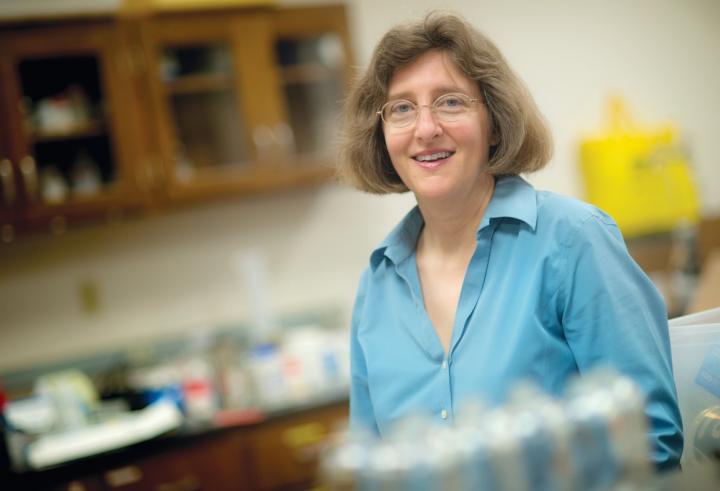
Project converts food waste into energy
IMAGE

Credit: UT Arlington

A University of Texas at Arlington environmental engineering professor is helping the North Central Texas Council of Governments (NCTCOG) determine how much more energy can be generated by diverting food waste from landfills to anaerobic food digesters.

The U.S. Environmental Protection Agency (EPA) recently awarded NCTCOG $300,000 in funding to help reduce food waste.

Melanie Sattler, professor in the Civil Engineering Department, is leading the UT Arlington effort.

“Twenty-two percent of our waste stream is food waste,” Sattler said. “It breaks down in landfills and produces methane, which can be used for alternative energy.

“But often the active part of the landfill doesn’t have a cover for two years. A lot of the gas escapes. The alternative to capture more of the gas from food waste is to use an anaerobic digester.”

There are eight wastewater treatment plants with digesters around the North Texas region. Sattler said sending the food waste to these existing or new digesters would produce a better yield of biogas production.

“Reducing food waste and maintaining adequate landfill capacity for a growing region are regional goals in the North Central Texas region,” said NCTCOG Executive Director Mike Eastland. “With this award, our agency will be partnering with The University of Texas at Arlington and our member governments to assess the amount of food waste in the region that could be used as feedstock to support development of future anaerobic digestion infrastructure and renewable energy projects in the region.

“The resultant North Central Texas Food Waste to Fuel Feasibility Study will be a step forward in assessing regional opportunities to divert food waste, and other organics, from landfills to preserve landfill capacity while increasing regional renewable energy production and reducing vehicle emissions.”

According to the Texas Commission on Environmental Quality, North Central Texas has 36 cumulative years of reserve landfill capacity – with the region gaining about 1 million new residents each decade. Reducing, recovering and diverting as many items as possible from the waste stream will be critical to expanding landfill capacity.

Another challenge with lost methane is the danger to the air.

“Methane is a greenhouse gas,” Sattler said. “It’s more potent than carbon dioxide. Capturing more of that gas is important to the environment.”

Sattler said the project also would consider potential energy production from collection of commercial food waste.

“Post-consumer food waste from restaurants, which cannot be fed to hungry people, could be used to generate renewable energy in digesters,” Sattler said.

Sattler said an earlier project through UT Arlington’s Center for Transportation, Equity, Decisions and Dollars built a spreadsheet tool that estimates costs/benefits and potential energy production from diverting food waste to wastewater treatment plants or other digesters. That tool will be used for evaluating the EPA project.

###

Media Contact
Herb Booth
[email protected]

Original Source

https://www.uta.edu/news/news-releases/2020/11/16/sattler-food-waste

Tags: Civil EngineeringClimate ScienceEcology/EnvironmentEnergy SourcesPollution/RemediationTechnology/Engineering/Computer ScienceUrbanization
Share13Tweet8Share2ShareShareShare2

Related Posts

Miniature Sensor Uses Light to Detect Touch — Chemistry

Miniature Sensor Uses Light to Detect Touch

May 8, 2026
Iron Minerals Determine Whether Dissolved Organic Matter Fuels Microbes or Becomes Long-Term Carbon Storage — Chemistry

Iron Minerals Determine Whether Dissolved Organic Matter Fuels Microbes or Becomes Long-Term Carbon Storage

May 8, 2026

Kate Evans Appointed Associate Lab Director for Biological and Environmental Systems Science at ORNL

May 8, 2026

Advancing Multiscale Modeling and Overcoming Operational Challenges in Autothermal COâ‚‚-to-Methanol Reactors

May 8, 2026
Please login to join discussion

POPULAR NEWS

  • Research Indicates Potential Connection Between Prenatal Medication Exposure and Elevated Autism Risk

    840 shares
    Share 336 Tweet 210
  • New Study Reveals Plants Can Detect the Sound of Rain

    727 shares
    Share 290 Tweet 181
  • Scientists Investigate Possible Connection Between COVID-19 and Increased Lung Cancer Risk

    68 shares
    Share 27 Tweet 17
  • Salmonella Haem Blocks Macrophages, Boosts Infection

    61 shares
    Share 24 Tweet 15

About

We bring you the latest biotechnology news from best research centers and universities around the world. Check our website.

Follow us

Recent News

Evaluating Digoxin Use in Patients with Symptomatic Rheumatic Heart Disease

Evaluating the Effectiveness and Safety of Digitalis Glycosides in Treating Heart Failure

Urdu Fall Risk Questionnaire Adapted for Elderly

Subscribe to Blog via Email

Enter your email address to subscribe to this blog and receive notifications of new posts by email.

Join 82 other subscribers
  • Contact Us

Bioengineer.org © Copyright 2023 All Rights Reserved.

Welcome Back!

Login to your account below

Forgotten Password?

Retrieve your password

Please enter your username or email address to reset your password.

Log In
No Result
View All Result
  • Homepages
    • Home Page 1
    • Home Page 2
  • News
  • National
  • Business
  • Health
  • Lifestyle
  • Science

Bioengineer.org © Copyright 2023 All Rights Reserved.