Credit: Mary Ann Liebert, Inc., publishers
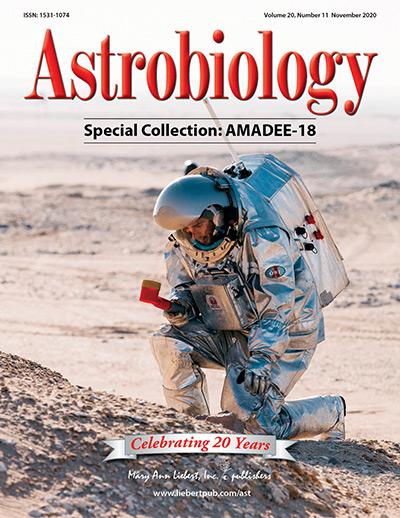
New Rochelle, NY, November 12, 2020–Future human missions to Mars depend on field research in an environment similar to that of Mars. It will enable the evaluation of operational concepts and optimization of strategies. The goals and results of the AMADEE-18 Mars analog mission are detailed in a special collection of articles in the peer-reviewed journal Astrobiology. Click here to read the articles now.
The AMADEE-18 expedition was designed in preparation for future human missions to the Mars surface. The mission took place in the Dhofar Desert in the Sultanate of Oman and was directed by a Mission Support Center in Austria. Brief descriptions of some of the papers in the collection follow.
A comprehensive overview of the mission, describing its technical and organizational infrastructure, is provided by Gernot Groemer, Austrian Space Forum, and coauthors. They describe the proposed workflow for coordinating the timing and location of the instruments and experiments. “In validation of this workflow, the decision-making interaction between the field and the Mission Support Center was studied,” state the authors.
A performance metrics analysis is presented by Sophie Gruber, Austrian Space Forum, and coauthors. Their aim is to develop a benchmarking tool for mission planning and evaluation. “We propose a method to compare analog missions across agencies, disciplines, and complexities/fidelities to improve scientific output and mission safety and maximize effectiveness and efficiency,” say the authors.
Methods to localize an unmanned aerial vehicle on Mars, such as an autonomous helicopter, were tested by Eren Allak, University of Klagenfurt, and coauthors. “In the absence of a global positioning system, a computationally efficient localization technology that can be applied on Mars is visual-inertial odometry (VIO). The AMADEE-18 mission provided an opportunity to test the feasibility of a state-of-the-art VIO algorithm and the camera in a Mars-like analog environment,” state the authors.
###
About the Journal
Astrobiology, led by Editor-in-Chief Sherry L. Cady, PhD, at the Pacific Northwest National Laboratory’s Marine and Coastal Research Laboratory (MCRL), and a prominent international editorial board comprised of esteemed scientists in the field, is the authoritative peer-reviewed journal for the most up-to-date information and perspectives on exciting new research findings and discoveries emanating from interplanetary exploration and terrestrial field and laboratory research programs. The Journal is published monthly online with Open Access options and in print. Complete tables of content and a sample issue may be viewed on the Astrobiology website. The 2019 Journal Citation Reports Impact Factor is 4.280.
About the Publisher
Mary Ann Liebert, Inc., publishers is a privately held, fully integrated media company known for establishing authoritative peer-reviewed journals in many promising areas of science and biomedical research, including New Space and High Altitude Medicine & Biology. Its biotechnology trade magazine, GEN (Genetic Engineering & Biotechnology News), was the first in its field and is today the industry’s most widely read publication worldwide. A complete list of the firm’s 80 journals, books, and newsmagazines is available at the Mary Ann Liebert, Inc., publishers website.
Media Contact
Kathryn Ryan
[email protected]
Original Source
https:/
Related Journal Article
http://dx.