• HOME
  • NEWS
  • EXPLORE
    • CAREER
      • Companies
      • Jobs
    • EVENTS
    • iGEM
      • News
      • Team
    • PHOTOS
    • VIDEO
    • WIKI
  • BLOG
  • COMMUNITY
    • FACEBOOK
    • INSTAGRAM
    • TWITTER
Friday, August 21, 2026
BIOENGINEER.ORG
No Result
View All Result
  • Login
  • HOME
  • NEWS
  • EXPLORE
    • CAREER
      • Companies
      • Jobs
        • Lecturer
        • PhD Studentship
        • Postdoc
        • Research Assistant
    • EVENTS
    • iGEM
      • News
      • Team
    • PHOTOS
    • VIDEO
    • WIKI
  • BLOG
  • COMMUNITY
    • FACEBOOK
    • INSTAGRAM
    • TWITTER
  • HOME
  • NEWS
  • EXPLORE
    • CAREER
      • Companies
      • Jobs
        • Lecturer
        • PhD Studentship
        • Postdoc
        • Research Assistant
    • EVENTS
    • iGEM
      • News
      • Team
    • PHOTOS
    • VIDEO
    • WIKI
  • BLOG
  • COMMUNITY
    • FACEBOOK
    • INSTAGRAM
    • TWITTER
No Result
View All Result
Bioengineer.org
No Result
View All Result
Home NEWS Science News Health

The interactions between predictive brains, cultural artefacts, and embodied visual search

Bioengineer by Bioengineer
November 5, 2020
in Health
Reading Time: 2 mins read
0
IMAGE
Share on FacebookShare on TwitterShare on LinkedinShare on RedditShare on Telegram

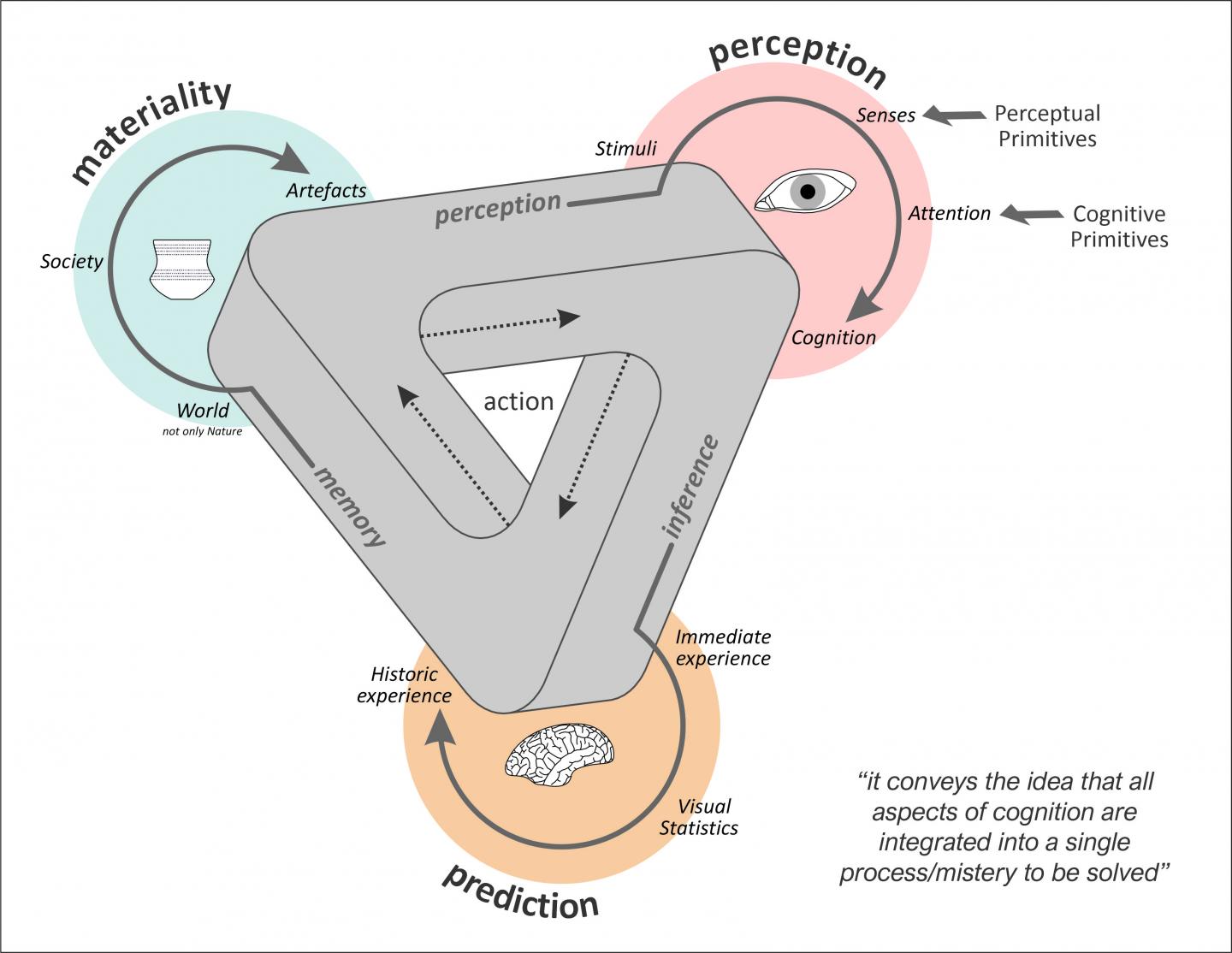
The project asks in what ways the worlds we build and inhabit alter our own minds and the ways we process information
IMAGE

Credit: INCIPIT-CSIC

The project asks in what ways the worlds we build and inhabit alter our own minds and the ways we process information? Do the material structures of our settlements, buildings, roads, and artefacts change fundamental patterns of thought and attention, so that understanding change in these ‘material codes’ becomes part and parcel of understanding the emergence of the modern mind?

To answer these questions, the “Material Minds” Project brings together a unique team from archaeology, vision science, and cognitive philosophy. Using a carefully curated set of materials, spanning a range of cultures and a wide sweep of archaeological, historic, ethnoarchaeological and contemporary settings, we aim to test, for the first time, the hypothesis of materiality-driven cognitive change. “Materiality” here refers to material culture: human made cultural artefacts that include portable objects but also buildings, landscapes and ornamentations. The project will develop and deploy a new synergistic methodology that combines multiple real-world case studies with state-of-the-art visual neuroscience, and agent-based simulations.

We will conduct 41 different world-wide case studies. Together, these will constitute the largest ecological experiment on embodied visual perception ever attempted. The project will also use the emerging paradigm known as ‘active inference’ (or ‘predictive processing’) which offers a principled means of linking perception, attention, and actions (including eye-movements) with cognitive change and learning. This will provide multiple proofs-of-principle while delivering insights into the fundamental principles that may be guiding materiality-driven cognitive change.

Using this unique combination of archaeological materials, visual neuroscience, and simulation- based studies, we aim to deliver the first fully-integrated framework for understanding the potent yet ill-understood cycles by which we humans make and transform the structured worlds that make and transform our minds.

The project will be funded by a ERC SYNERGY grant.

###

Media Contact
Ana Bellón
[email protected]

Tags: ArchaeologyBiologyneurobiologyOptics
Share12Tweet8Share2ShareShareShare2

Related Posts

Targeted lipid nanoparticles enable in vivo editing of human blood stem cells

August 21, 2026

Deep Learning Precisely Grades Schistosoma japonicum Liver Fibrosis Using Ultrasound Images

August 21, 2026

Study Finds Family Engagement Improves Follow-Up Participation Among High-Risk Infants

August 21, 2026

Insilico’s Alex Aliper to Attend Two Hong Kong Summits on AI Healthcare

August 21, 2026
Please login to join discussion

POPULAR NEWS

  • Targeted lipid nanoparticles enable in vivo editing of human blood stem cells

    29 shares
    Share 12 Tweet 7
  • How Climate Change Tests the Long-Term Resilience of Power Systems

    29 shares
    Share 12 Tweet 7
  • Deep Learning Precisely Grades Schistosoma japonicum Liver Fibrosis Using Ultrasound Images

    29 shares
    Share 12 Tweet 7
  • Atopic Dermatitis Phenotypes Linked to Long-Term Body Mass Index Trajectories

    29 shares
    Share 12 Tweet 7

About

We bring you the latest biotechnology news from best research centers and universities around the world. Check our website.

Follow us

Recent News

Targeted lipid nanoparticles enable in vivo editing of human blood stem cells

How Climate Change Tests the Long-Term Resilience of Power Systems

Deep Learning Precisely Grades Schistosoma japonicum Liver Fibrosis Using Ultrasound Images

Subscribe to Blog via Email

Enter your email address to subscribe to this blog and receive notifications of new posts by email.

Join 85 other subscribers
  • Contact Us

Bioengineer.org © Copyright 2023 All Rights Reserved.

Welcome Back!

Login to your account below

Forgotten Password?

Retrieve your password

Please enter your username or email address to reset your password.

Log In
No Result
View All Result
  • Homepages
    • Home Page 1
    • Home Page 2
  • News
  • National
  • Business
  • Health
  • Lifestyle
  • Science

Bioengineer.org © Copyright 2023 All Rights Reserved.