• HOME
  • NEWS
  • EXPLORE
    • CAREER
      • Companies
      • Jobs
    • EVENTS
    • iGEM
      • News
      • Team
    • PHOTOS
    • VIDEO
    • WIKI
  • BLOG
  • COMMUNITY
    • FACEBOOK
    • INSTAGRAM
    • TWITTER
Sunday, June 28, 2026
BIOENGINEER.ORG
No Result
View All Result
  • Login
  • HOME
  • NEWS
  • EXPLORE
    • CAREER
      • Companies
      • Jobs
        • Lecturer
        • PhD Studentship
        • Postdoc
        • Research Assistant
    • EVENTS
    • iGEM
      • News
      • Team
    • PHOTOS
    • VIDEO
    • WIKI
  • BLOG
  • COMMUNITY
    • FACEBOOK
    • INSTAGRAM
    • TWITTER
  • HOME
  • NEWS
  • EXPLORE
    • CAREER
      • Companies
      • Jobs
        • Lecturer
        • PhD Studentship
        • Postdoc
        • Research Assistant
    • EVENTS
    • iGEM
      • News
      • Team
    • PHOTOS
    • VIDEO
    • WIKI
  • BLOG
  • COMMUNITY
    • FACEBOOK
    • INSTAGRAM
    • TWITTER
No Result
View All Result
Bioengineer.org
No Result
View All Result
Home NEWS Science News Biology

Renewable energy targets can undermine sustainable intentions

Bioengineer by Bioengineer
October 28, 2020
in Biology
Reading Time: 3 mins read
0
IMAGE
Share on FacebookShare on TwitterShare on LinkedinShare on RedditShare on Telegram

IMAGE

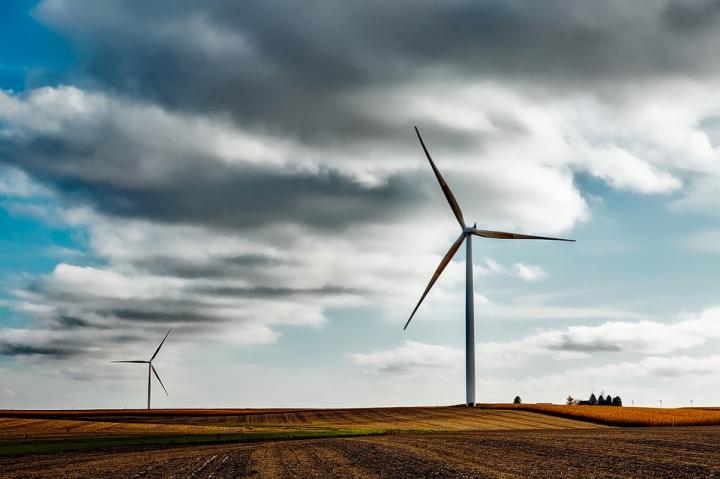
Credit: The University of Queensland

Renewable energy targets (RETs) may be too blunt a tool for ensuring a sustainable future, according to University of Queensland-led research.

PhD candidate Scott Spillias, from UQ’s School of Earth and Environmental Sciences, said that, while RETs are a go-to for policymakers, more nuanced approaches were more effective at actually achieving holistic, sustainable outcomes.

“Many jurisdictions around the world including the European Union, Australia, India and several states in the USA have set specific quantitative targets for renewable energy development,” Mr Spillias said.

“While it’s encouraging to see action being taken to move us away from fossil fuels, unless there’s rigorous analysis and stakeholder engagement that goes into their formulation, these targets could exacerbate many sustainability issues we face.

“For example, California is currently suffering extensive rolling energy blackouts that some attribute to an overzealous pursuit of state-wide targets for renewables.

“They’ve done this without solving the associated problem of what to do when energy demands are high and there is no sun or wind, and affordable battery storage is not yet a reality.

“Setting a target – a quantitative threshold to be attained, such as 80 per cent wind energy – rather than an objective – a qualitative direction in which to go, such as working to maximise wind energy – can blind us to trade-offs when evaluating different policy actions.

“They can also create psychological incentives to act quickly to implement them, causing decision-makers to lose sight of the more fundamental objectives that motivated the target in the first place.

“Europe’s Renewable Energy Directive, for example, instead of reducing carbon emissions and protecting the environment, threatens to increase net carbon emissions and deforestation.”

The researchers believe that setting such targets are a simple, easy policy instrument, but lack the nuance of more considered mechanisms for energy development.

“Targets may or may not be appropriate tools to use for renewable energy development,” Mr Spillias said.

“We argue that, instead, a rigorous decision-making process should be undertaken to evaluate the trade-offs between different sustainability objectives with respect to a variety of possible targets and/or other policy instruments.

“For example, the Sustainable Development Goals have an energy-related objective, but it refers to clean energy not renewable energy.

“Renewable energy is likely going to be the best way to generate clean energy in the future, but importantly it should be recognised as merely the means to achieving that objective, rather than the ends in of itself.

“The energy-related goals and targets we set for ourselves in the years ahead will guide the course of renewable energy development and will flow through to every sector of our society.

“If, for whatever reason, we make mistakes in setting those goals, no matter how well-intentioned they might be, there will be real and enduring consequences for biodiversity, communities, and economies.”

###

The research has been published in Nature Climate Change (DOI: 10.1038/s41558-020-00939-x).

Media Contact
Scott Spillias
[email protected]

Original Source

https://science.uq.edu.au/article/2020/10/renewable-energy-targets-can-undermine-sustainable-intentions

Related Journal Article

http://dx.doi.org/10.1038/s41558-020-00939-x

Tags: Climate ChangeEarth ScienceEnergy SourcesPolicy/Ethics
Share12Tweet8Share2ShareShareShare2

Related Posts

Natural Hallucinogens: Evolution’s Ecological Tools, Not Mere Chemical Byproducts

June 25, 2026

This Famous Butterfly Revealed: Three Distinct Species Hidden in One

June 25, 2026

Scientists Attack Soybean Cyst Nematode by Starving Its Food Source

June 25, 2026

Decoding the Secret Code of a Crucial Immune Sensor

June 24, 2026
Please login to join discussion

POPULAR NEWS

  • Saying Goodbye to PGY-6: Pediatric Fellowship Realities

    103 shares
    Share 41 Tweet 26
  • Multi-Hospital Study Reveals Long Covid Burden Is Twice as High as Current Estimates

    92 shares
    Share 36 Tweet 23
  • Detection of EDCs in Breast Milk and Infant Urine Up to Six Months Highlights Early Exposure Risks

    77 shares
    Share 31 Tweet 19
  • New Drug Candidate Developed at McMaster Shows Potential for Treating Brain Cancer

    58 shares
    Share 23 Tweet 15

About

We bring you the latest biotechnology news from best research centers and universities around the world. Check our website.

Follow us

Recent News

Tracking Lanthanide-Labeled Microplastics in Plants

POSTECH Researchers Slash Cost of Reconstituted Cell-Free Systems by 95%

AI and Physics Collaborate to Design Advanced Hydrogen Storage Materials

Subscribe to Blog via Email

Success! An email was just sent to confirm your subscription. Please find the email now and click 'Confirm' to start subscribing.

Join 82 other subscribers
  • Contact Us

Bioengineer.org © Copyright 2023 All Rights Reserved.

Welcome Back!

Login to your account below

Forgotten Password?

Retrieve your password

Please enter your username or email address to reset your password.

Log In
No Result
View All Result
  • Homepages
    • Home Page 1
    • Home Page 2
  • News
  • National
  • Business
  • Health
  • Lifestyle
  • Science

Bioengineer.org © Copyright 2023 All Rights Reserved.