Development of fabricating technology for high-efficiency powdered activated carbon with a fast adsorption rate. Can ensure safety against algal blooms even in conventional water treatment processes
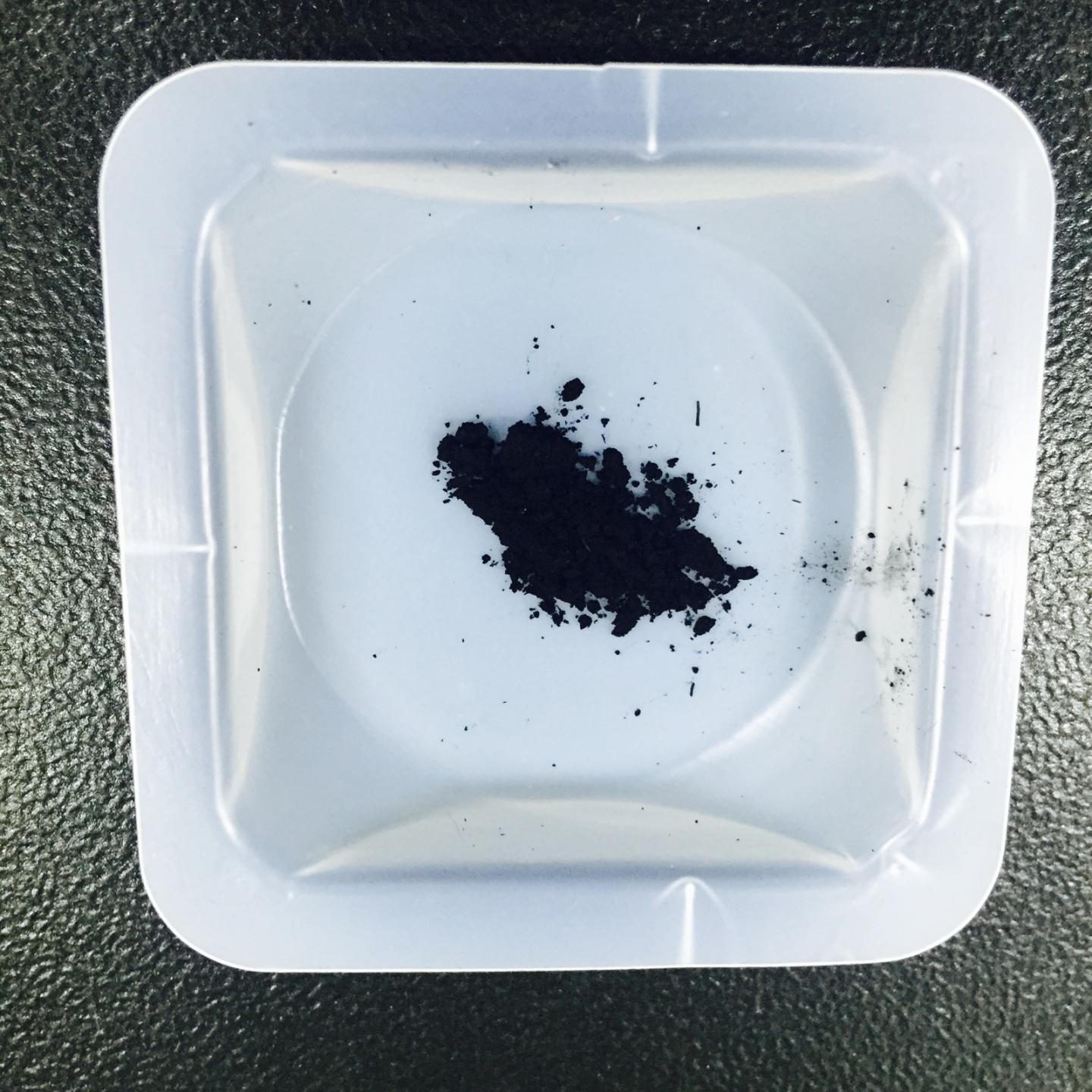
Credit: Korea Institue of Science and Technology(KIST)
An algal bloom refers to a phenomenon in which phytoplankton including blue-green algae rapidly proliferate in summer marked by high levels of solar irradiation and water temperature. It has lately been raising concerns due increased frequency of occurrence resulting from abnormally high temperatures and decreases in precipitation caused by climate change. There is a reason to be perturbed as certain species of blue-green algae produce substances that have an earthy or moldy taste and odor as well as toxic substances. Since these substances cannot be easily removed by a general water purification process, additional treatment using advanced water purification facilities and such is essential.
The Korea Institute of Science and Technology (KIST) revealed that a research team working under Dr. Kyung-Guen Song of the Water Cycle Research Center developed a purification process for effective treatment of taste- and odor-causing substances and toxic substances produced by blue-green algae even in the existing conventional drinking water treatment plants (DWTPs) without installing any additional advanced water treatment facilities.
In order to deal with algal blooms, large-scale DWTPs contain advanced water treatment facilities that use ozone and granular activated carbon, but in the case of conventional DWTPs without such advanced water treatment facilities, powdered activated carbon is added to adsorb algal micropollutants and chlorine treatment is reinforced as a way to increase the oxidizing strength. However, in the case of conventional powdered activated carbon, it is difficult to ensure sufficient contact time due to the slow adsorption of the algal micropollutants, thus requiring an injection of large amounts of powdered activated carbon to get the job done.
Dr. Song’s team developed powdered activated carbon with an improved adsorption rate to better control algal blooms in the conventional DWTPs. The research team first pulverized powdered activated carbon to decrease the particle size. The powdered activated carbon with a reduced particle size was found to have a large number of fine pores on the surface, resulting in a larger area for adsorption of algal micropollutants. It was confirmed that the taste- and odor-causing substances and toxic substances produced by algae were adsorbed considerably faster (20% to 150% increase depending on the substance) compared to the conventional powdered activated carbon.
Dr. Song from KIST said, “Not only can the new powdered activated carbon be manufactured using quite a simple method, but it also has a fast adsorption rate, so it seems it will be possible to control algal blooms without the need to install high-cost facilities in existing conventional drinking water treatment plants where it is difficult to ensure sufficient contact time. Once this water treatment technology is disseminated widely, it will greatly help alleviate people’s anxiety about drinking tap water.”
###
This study was carried out with a grant from the Ministry of Science and ICT (MSIT), as part of the National Research Foundation of Korea’s Technology Development Program to Solve Social Issues and Young Researcher Program, and the National Research Council of Science and Technology’s Creative Convergence Research Program. The findings were published in the latest edition of Water Research (Top 0.532% in the field of JCR), a leading international journal in the field of water resources.
Media Contact
Do-Hyun Kim
[email protected]
Related Journal Article
http://dx.