• HOME
  • NEWS
  • EXPLORE
    • CAREER
      • Companies
      • Jobs
    • EVENTS
    • iGEM
      • News
      • Team
    • PHOTOS
    • VIDEO
    • WIKI
  • BLOG
  • COMMUNITY
    • FACEBOOK
    • INSTAGRAM
    • TWITTER
Monday, August 10, 2026
BIOENGINEER.ORG
No Result
View All Result
  • Login
  • HOME
  • NEWS
  • EXPLORE
    • CAREER
      • Companies
      • Jobs
        • Lecturer
        • PhD Studentship
        • Postdoc
        • Research Assistant
    • EVENTS
    • iGEM
      • News
      • Team
    • PHOTOS
    • VIDEO
    • WIKI
  • BLOG
  • COMMUNITY
    • FACEBOOK
    • INSTAGRAM
    • TWITTER
  • HOME
  • NEWS
  • EXPLORE
    • CAREER
      • Companies
      • Jobs
        • Lecturer
        • PhD Studentship
        • Postdoc
        • Research Assistant
    • EVENTS
    • iGEM
      • News
      • Team
    • PHOTOS
    • VIDEO
    • WIKI
  • BLOG
  • COMMUNITY
    • FACEBOOK
    • INSTAGRAM
    • TWITTER
No Result
View All Result
Bioengineer.org
No Result
View All Result
Home NEWS Science News Chemistry

How speech propels pathogens

Bioengineer by Bioengineer
October 2, 2020
in Chemistry
Reading Time: 2 mins read
0
IMAGE
Share on FacebookShare on TwitterShare on LinkedinShare on RedditShare on Telegram

IMAGE

Credit: M. Abkarian and H.A. Stone

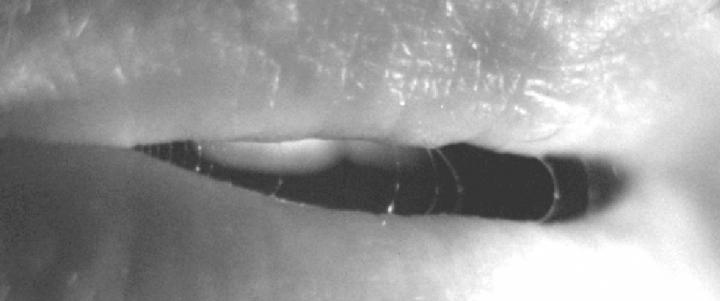
Speech and singing spread saliva droplets, a phenomenon that has attracted much attention in the current context of the Covid-19 pandemic. Scientists from the CNRS, l’université de Montpellier, and Princeton University* sought to shed light on what takes place during conversations. A first study published in PNAS revealed that the direction and distance of airflow generated when speaking depend on the sounds produced. For example, the accumulation of plosive consonants, such as the “P” in “PaPa,” produces a conical airflow that can travel up to 2 metres in 30 seconds. These results also emphasize that the time of exposure during a conversation influences the risk of contamination as much as distance does. A second study published on 2 October in the journal Physical Review Fluids describes the mechanism that produces microscopic droplets during speech: saliva filaments form on the lips for the consonants P and B, for example, and are then extended and fragmented in the form of droplets. This research is being continued with the Metropolitan Opera Orchestra (“MET Orchestra”) in New York, as part of a project to identify the safest conditions for continuing this prestigious orchestra’s activity.

###

*The French scientists work at the Centre for Structural Biology (CNRS/Université de Montpellier/Inserm) and the Alexander Grothendieck Institute of Montpellier (CNRS/Université de Montpellier).

Media Contact
Clara Barrau
[email protected]

Original Source

http://www.cnrs.fr/en/how-speech-propels-pathogens

Related Journal Article

http://dx.doi.org/10.1073/pnas.2012156117

Tags: Chemistry/Physics/Materials SciencesLanguage/Linguistics/Speech
Share12Tweet8Share2ShareShareShare2

Related Posts

Boston College Chemist Alexis Grimaud Wins NSF CAREER Award

Boston College Chemist Alexis Grimaud Wins NSF CAREER Award

August 10, 2026
Tuning Chiral Asymmetry Opens New Dimension for Lithium–Sulfur Battery Catalysts

Tuning Chiral Asymmetry Opens New Dimension for Lithium–Sulfur Battery Catalysts

August 10, 2026

Far-apart time crystals synchronize their oscillations

August 10, 2026

Scientists observe antiferromagnetic skyrmions interacting in real time

August 10, 2026
Please login to join discussion

POPULAR NEWS

  • Computing Professor Wins $584K NSF CAREER Award for Smart-City Research

    29 shares
    Share 12 Tweet 7
  • AI Reveals NDRG1-Linked DNA Repair and Synthetic Lethality in Colorectal Cancer

    29 shares
    Share 12 Tweet 7
  • Boston College Chemist Alexis Grimaud Wins NSF CAREER Award

    29 shares
    Share 12 Tweet 7
  • Researchers uncover new insights into immune cell activity in sarcoidosis

    29 shares
    Share 12 Tweet 7

About

We bring you the latest biotechnology news from best research centers and universities around the world. Check our website.

Follow us

Recent News

Computing Professor Wins $584K NSF CAREER Award for Smart-City Research

AI Reveals NDRG1-Linked DNA Repair and Synthetic Lethality in Colorectal Cancer

Boston College Chemist Alexis Grimaud Wins NSF CAREER Award

Subscribe to Blog via Email

Enter your email address to subscribe to this blog and receive notifications of new posts by email.

Join 86 other subscribers
  • Contact Us

Bioengineer.org © Copyright 2023 All Rights Reserved.

Welcome Back!

Login to your account below

Forgotten Password?

Retrieve your password

Please enter your username or email address to reset your password.

Log In
No Result
View All Result
  • Homepages
    • Home Page 1
    • Home Page 2
  • News
  • National
  • Business
  • Health
  • Lifestyle
  • Science

Bioengineer.org © Copyright 2023 All Rights Reserved.