• HOME
  • NEWS
  • EXPLORE
    • CAREER
      • Companies
      • Jobs
    • EVENTS
    • iGEM
      • News
      • Team
    • PHOTOS
    • VIDEO
    • WIKI
  • BLOG
  • COMMUNITY
    • FACEBOOK
    • INSTAGRAM
    • TWITTER
Saturday, February 7, 2026
BIOENGINEER.ORG
No Result
View All Result
  • Login
  • HOME
  • NEWS
  • EXPLORE
    • CAREER
      • Companies
      • Jobs
        • Lecturer
        • PhD Studentship
        • Postdoc
        • Research Assistant
    • EVENTS
    • iGEM
      • News
      • Team
    • PHOTOS
    • VIDEO
    • WIKI
  • BLOG
  • COMMUNITY
    • FACEBOOK
    • INSTAGRAM
    • TWITTER
  • HOME
  • NEWS
  • EXPLORE
    • CAREER
      • Companies
      • Jobs
        • Lecturer
        • PhD Studentship
        • Postdoc
        • Research Assistant
    • EVENTS
    • iGEM
      • News
      • Team
    • PHOTOS
    • VIDEO
    • WIKI
  • BLOG
  • COMMUNITY
    • FACEBOOK
    • INSTAGRAM
    • TWITTER
No Result
View All Result
Bioengineer.org
No Result
View All Result
Home NEWS Science News

Innovative approaches to stabilizing bridges, highway slopes

Bioengineer by Bioengineer
September 14, 2020
in Science News
Reading Time: 2 mins read
0
IMAGE
Share on FacebookShare on TwitterShare on LinkedinShare on RedditShare on Telegram

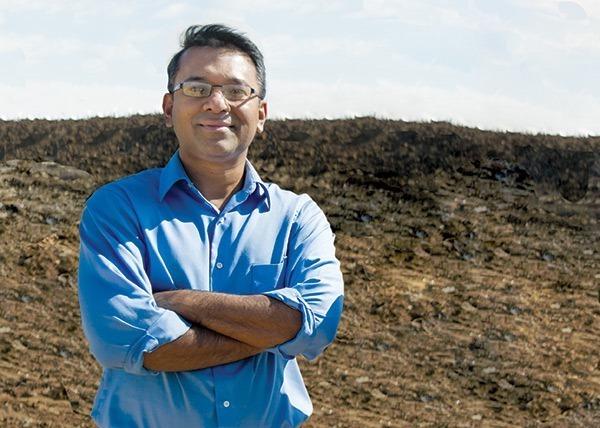
UTA civil engineer using recycled plastic pins to stabilize bridges and highway slopes
IMAGE

Credit: UT Arlington

A civil engineering professor at The University of Texas at Arlington has received a two-year, $987,140 contract from the Texas Department of Transportation (TxDOT) to investigate the use of recycled plastic pins to repair deep-seated failures on embankments and the areas around highway bridges.

The pins are about 8-10 feet long and are driven into the slopes to provide stabilization, reducing costs by more than 50% when compared to conventional methods. In addition, the project, led by Sahadat Hossain, who also is director of the Solid Waste Institute for Sustainability, will test the feasibility of stabilizing slopes using just a moisture barrier and no other mechanical support.

Hossain has used recycled plastic pins extensively to repair shallow slopes in TxDOT’s Dallas district. Several other states, including Ohio, Maryland, Georgia, Iowa, North Carolina, South Carolina, Louisiana, Mississippi and Alabama, are considering doing the same in their highway slope repair following UTA’s successful implementation in Texas.

Some highways, however, experience slope failures deeper below the surface than the pins can reach. To repair these, Hossain is implementing a new technique where crews remove the soil about halfway to the location of the failure, insert rows of pins, then cover the area and insert more rows of pins to provide stabilization all the way to the surface.

Hossain is also testing whether a moisture barrier alone could effectively stabilize slopes. He currently includes a moisture barrier along with the pins to successfully prevent water erosion. TxDOT engineers want to know whether he can achieve the same results with only modified moisture barriers.

“We’ve had great success in using recycled plastic pins to shore up highway embankments in North Texas, and several other states are exploring the option now because we’ve proven that it works,” Hossain said. “As TxDOT has used our method more extensively, they’ve found that failures that are deep in the soil are harder, more expensive and time-consuming to repair. We’ve developed a different design and construction method to address that issue.”

Hossain’s research into using recycled materials for road construction and repairs includes a recent project to determine if recycled plastic can be incorporated into asphalt used in highway construction. These innovative approaches have established him as a leader in the field, says Ali Abolmaali, chair of UTA’s Civil Engineering Department.

“Dr. Hossain’s interest in using recycled materials is helping TxDOT and other departments of transportation across the U.S. to save money and be environmentally conscious,” Abolmaali said. “His innovative use of recycled plastic is making infrastructure sustainable.”

###

– Written by Jeremy Agor, College of Engineering

Media Contact
Herb Booth
[email protected]

Original Source

https://www.uta.edu/news/news-releases/2020/09/11/hossain-plastic-pins

Tags: Civil EngineeringTechnology/Engineering/Computer ScienceTransportation/Travel
Share12Tweet8Share2ShareShareShare2

Related Posts

Personalized Guide to Understanding and Reducing Chemicals

February 7, 2026

Inflammasome Protein ASC Drives Pancreatic Cancer Metabolism

February 7, 2026

Phage-Antibiotic Combo Beats Resistant Peritoneal Infection

February 7, 2026

Boosting Remote Healthcare: Stepped-Wedge Trial Insights

February 7, 2026
Please login to join discussion

POPULAR NEWS

  • Robotic Ureteral Reconstruction: A Novel Approach

    Robotic Ureteral Reconstruction: A Novel Approach

    82 shares
    Share 33 Tweet 21
  • Digital Privacy: Health Data Control in Incarceration

    63 shares
    Share 25 Tweet 16
  • Study Reveals Lipid Accumulation in ME/CFS Cells

    57 shares
    Share 23 Tweet 14
  • Breakthrough in RNA Research Accelerates Medical Innovations Timeline

    53 shares
    Share 21 Tweet 13

About

We bring you the latest biotechnology news from best research centers and universities around the world. Check our website.

Follow us

Recent News

Personalized Guide to Understanding and Reducing Chemicals

Inflammasome Protein ASC Drives Pancreatic Cancer Metabolism

Phage-Antibiotic Combo Beats Resistant Peritoneal Infection

Subscribe to Blog via Email

Enter your email address to subscribe to this blog and receive notifications of new posts by email.

Join 73 other subscribers
  • Contact Us

Bioengineer.org © Copyright 2023 All Rights Reserved.

Welcome Back!

Login to your account below

Forgotten Password?

Retrieve your password

Please enter your username or email address to reset your password.

Log In
No Result
View All Result
  • Homepages
    • Home Page 1
    • Home Page 2
  • News
  • National
  • Business
  • Health
  • Lifestyle
  • Science

Bioengineer.org © Copyright 2023 All Rights Reserved.