• HOME
  • NEWS
  • EXPLORE
    • CAREER
      • Companies
      • Jobs
    • EVENTS
    • iGEM
      • News
      • Team
    • PHOTOS
    • VIDEO
    • WIKI
  • BLOG
  • COMMUNITY
    • FACEBOOK
    • INSTAGRAM
    • TWITTER
Monday, January 12, 2026
BIOENGINEER.ORG
No Result
View All Result
  • Login
  • HOME
  • NEWS
  • EXPLORE
    • CAREER
      • Companies
      • Jobs
        • Lecturer
        • PhD Studentship
        • Postdoc
        • Research Assistant
    • EVENTS
    • iGEM
      • News
      • Team
    • PHOTOS
    • VIDEO
    • WIKI
  • BLOG
  • COMMUNITY
    • FACEBOOK
    • INSTAGRAM
    • TWITTER
  • HOME
  • NEWS
  • EXPLORE
    • CAREER
      • Companies
      • Jobs
        • Lecturer
        • PhD Studentship
        • Postdoc
        • Research Assistant
    • EVENTS
    • iGEM
      • News
      • Team
    • PHOTOS
    • VIDEO
    • WIKI
  • BLOG
  • COMMUNITY
    • FACEBOOK
    • INSTAGRAM
    • TWITTER
No Result
View All Result
Bioengineer.org
No Result
View All Result
Home NEWS Science News Biology

What did the katydids do when picking up bat sounds?

Bioengineer by Bioengineer
August 28, 2020
in Biology
Reading Time: 2 mins read
0
IMAGE
Share on FacebookShare on TwitterShare on LinkedinShare on RedditShare on Telegram

When predator and non-predator cues are similar in the same habitat
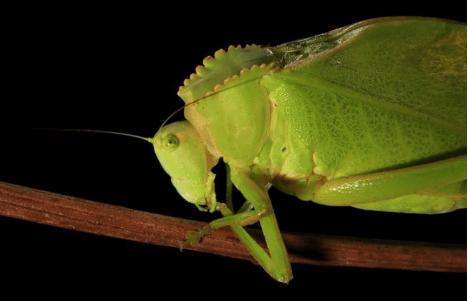
IMAGE

Credit: Laurel Symes

Ithaca, N.Y.–Ecosystems can be incredibly complex, with many interacting species. In many habitats, predators shape they behavior of prey and prey shape the behavior of predators. This paper provides a detailed look at the predator-prey relationship between bats and katydids, a group of insects related to crickets and grasshoppers.

Some species of bats hunt katydids by eavesdropping on their mating calls. However, katydids aren’t defenseless. Many species of katydids have ears that can hear the ultrasonic echolocation calls of bats. In some habitats, katydids stop calling when they hear the echolocation calls of bats. We studied katydids in Neotropical forests and predicted that they would stop calling when they heard the echolocation calls of approaching bats. What we found was a surprise – most of the katydid species continued calling even when hearing the echolocation calls of predatory eavesdropping bats.

In Neotropical forests, there are many species of bats. Some of these bats eat fruit and others catch flying insects. Most of these bat species are no risk to a perched, singing katydid. However, all of these bats produce echolocation, so while the forest is full of echolocation calls, less than 4% of those calls come from bats that might eavesdrop on katydid calls. For a katydid, this means that calling is very risky, but because there are so many bats producing echolocation calls, if katydids stop singing when they hear echolocation, they would have few opportunities to attract a mate.

By measuring the neural activity from their ears, we know that katydids are capable of hearing bats, but most of the species that we studied sing at the same rate, regardless of whether they are hearing bats. Most of the species that we studied have a more proactive strategy, using very short, very rare calls. Many species produce very little sound…less than two seconds per insect per night!

This is a cool example of how the evolution of predator-prey relationships is affected by other species in the environment, underscoring the complex and interconnected dynamics of natural ecosystems.

###

Symes LB, SJ Martinson, CE Kernan, and HM ter Hofstede. Sheep in wolves’ clothing: prey rely on proactive defences when predator and non-predator cues are similar. Proceedings of the Royal Society B: Biological Sciences
https://doi.org/10.1098/rspb.2020.1212

Media Contact
Pat Leonard
[email protected]

Related Journal Article

http://dx.doi.org/10.1098/rspb.2020.1212

Tags: BiologyEntomology
Share12Tweet8Share2ShareShareShare2

Related Posts

Diving Deep: Sindiplozoon Coreius Mitochondrial Genome Unveiled

January 12, 2026
blank

PET Microplastics Harm Pig Pancreas Through Lipotoxicity

January 11, 2026

Stem Cell-Derived Vesicles Combat UVB-Induced Skin Aging

January 11, 2026

Retroelement Expansions Drive Stingless Bee Genome Evolution

January 11, 2026
Please login to join discussion

POPULAR NEWS

  • Enhancing Spiritual Care Education in Nursing Programs

    154 shares
    Share 62 Tweet 39
  • PTSD, Depression, Anxiety in Childhood Cancer Survivors, Parents

    146 shares
    Share 58 Tweet 37
  • Robotic Ureteral Reconstruction: A Novel Approach

    68 shares
    Share 27 Tweet 17
  • Impact of Vegan Diet and Resistance Exercise on Muscle Volume

    47 shares
    Share 19 Tweet 12

About

We bring you the latest biotechnology news from best research centers and universities around the world. Check our website.

Follow us

Recent News

Diving Deep: Sindiplozoon Coreius Mitochondrial Genome Unveiled

Deep Learning Revolutionizes Personalized Entrepreneurship Education

Senior Nursing Students Encounter End-of-Life Experiences

Subscribe to Blog via Email

Enter your email address to subscribe to this blog and receive notifications of new posts by email.

Join 71 other subscribers
  • Contact Us

Bioengineer.org © Copyright 2023 All Rights Reserved.

Welcome Back!

Login to your account below

Forgotten Password?

Retrieve your password

Please enter your username or email address to reset your password.

Log In
No Result
View All Result
  • Homepages
    • Home Page 1
    • Home Page 2
  • News
  • National
  • Business
  • Health
  • Lifestyle
  • Science

Bioengineer.org © Copyright 2023 All Rights Reserved.