• HOME
  • NEWS
  • EXPLORE
    • CAREER
      • Companies
      • Jobs
    • EVENTS
    • iGEM
      • News
      • Team
    • PHOTOS
    • VIDEO
    • WIKI
  • BLOG
  • COMMUNITY
    • FACEBOOK
    • INSTAGRAM
    • TWITTER
Wednesday, September 23, 2026
BIOENGINEER.ORG
No Result
View All Result
  • Login
  • HOME
  • NEWS
  • EXPLORE
    • CAREER
      • Companies
      • Jobs
        • Lecturer
        • PhD Studentship
        • Postdoc
        • Research Assistant
    • EVENTS
    • iGEM
      • News
      • Team
    • PHOTOS
    • VIDEO
    • WIKI
  • BLOG
  • COMMUNITY
    • FACEBOOK
    • INSTAGRAM
    • TWITTER
  • HOME
  • NEWS
  • EXPLORE
    • CAREER
      • Companies
      • Jobs
        • Lecturer
        • PhD Studentship
        • Postdoc
        • Research Assistant
    • EVENTS
    • iGEM
      • News
      • Team
    • PHOTOS
    • VIDEO
    • WIKI
  • BLOG
  • COMMUNITY
    • FACEBOOK
    • INSTAGRAM
    • TWITTER
No Result
View All Result
Bioengineer.org
No Result
View All Result
Home NEWS Science News Health

Women with higher neuroticism are less physically active

Bioengineer by Bioengineer
August 28, 2020
in Health
Reading Time: 3 mins read
0
IMAGE
Share on FacebookShare on TwitterShare on LinkedinShare on RedditShare on Telegram

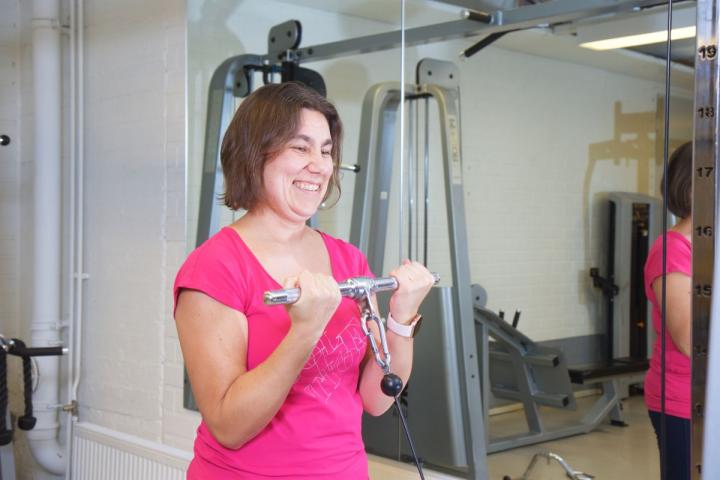
Personality traits help to understand why some people are physically active and others are not
IMAGE

Credit: University of Jyväskylä

Personality traits help to understand why some people are physically active and others are not. A new study from the Gerontology Research Center and the Faculty of Sport and Health Sciences at the University of Jyväskylä, Finland, shows that the role of personality may vary depending on how physical activity is measured.

Personality traits reflect people’s characteristic patterns of thinking, feeling and behaving. A study at the University of Jyväskylä focused on two traits: extraversion and neuroticism. Individuals who score high in extraversion are typically social, active and talkative. High scores in neuroticism indicate a tendency to have negative feelings, such as anxiety and self-pity.

The results showed that high extraversion and low neuroticism were linked to higher leisure time physical activity in middle-aged women. Women who scored high in extraversion reported more physical activity, but this was not seen in the physical activity measured by an activity monitor. Women who scored high in neuroticism reported less physical activity and had less physical activity captured by activity monitors.

“Even though both methods assess the frequency, duration and intensity of physical activity, they measure partly different aspects of physical activity,” explains postdoctoral researcher Tiia Kekäläinen from the Gerontology Research Center. “Activity monitors are better at capturing all daily stepping activities whereas self-reporting better accounts for all types of physical activities. Therefore, it is natural that results are partly different between different physical activity measures. It is important to use both ways to assess physical activity behavior.”

Personality traits may explain individual tendencies to estimate one’s own physical activity level

Personality may explain the way individuals assess their own level of physical activity. The results showed that older adults scoring high in neuroticism reported less physical activity than what was measured by accelerometers.

“Neuroticism describes a predisposition to experience negative feelings,” Kekäläinen says. “In addition to lower willingness to participate in physical activities, this kind of tendency seems to be related to underreporting physical activity behavior. The information about the role of personality could be used to help identify risk groups for inactivity and in physical activity promotion work.”

Two larger research projects conducted at the Gerontology Research Center and Faculty of Sport and Health Sciences provided data for the study: from a total of 314 older men and women aged 70 to 85 years who participated in the PASSWORD study, and from 1,098 middle-aged women aged 47 to 55 years who participated in the ERMA study.

###

The research was part of the PATHWAY project funded by the Ministry of Education and Culture of Finland. The research was conducted in collaboration with researchers from the University of Jyväskylä, LIKES Research Centre for Physical Activity and Health, and Florida State University.

Media Contact
Tiia Kekäläinen
[email protected]

Original Source

https://www.jyu.fi/en/current/archive/2020/09/women-with-higher-neuroticism-are-less-physically-active

Related Journal Article

http://dx.doi.org/10.1186/s12877-020-01669-7

Tags: BehaviorExercisePublic HealthSocial/Behavioral ScienceSports/Recreation
Share12Tweet8Share2ShareShareShare2

Related Posts

Protein Axis That Shields the Cornea Offers New Hope Against Dry Eye Pain

September 23, 2026

Steroid Ointment Beats Tacrolimus at Clearing Early Skin Lymphoma, but Relapses Loom

September 23, 2026

Hospital Safety Culture Shapes How Theatre Nurses Protect Patients and Themselves

September 23, 2026

Wealth Predicts Who Gets Hospital Care at Home, Barcelona Study Finds

September 23, 2026
Please login to join discussion

POPULAR NEWS

  • Peatland Rewetting Reshapes Mosquito Communities in Unexpected Ways, Study Finds

    29 shares
    Share 12 Tweet 7
  • NOAA Bets $100 Million on Mississippi State for New Gulf Research Powerhouse

    29 shares
    Share 12 Tweet 7
  • Scientists Discover the Gene Switch That Makes Alfalfa Flower Early

    29 shares
    Share 12 Tweet 7
  • AI Imaging Meets Flow Cytometry in Race to Detect Liver Cancer Cells in Blood

    29 shares
    Share 12 Tweet 7

About

We bring you the latest biotechnology news from best research centers and universities around the world. Check our website.

Follow us

Recent News

Peatland Rewetting Reshapes Mosquito Communities in Unexpected Ways, Study Finds

NOAA Bets $100 Million on Mississippi State for New Gulf Research Powerhouse

Scientists Discover the Gene Switch That Makes Alfalfa Flower Early

Subscribe to Blog via Email

Enter your email address to subscribe to this blog and receive notifications of new posts by email.

Join 85 other subscribers
  • Contact Us

Bioengineer.org © Copyright 2023 All Rights Reserved.

Welcome Back!

Login to your account below

Forgotten Password?

Retrieve your password

Please enter your username or email address to reset your password.

Log In
No Result
View All Result
  • Homepages
    • Home Page 1
    • Home Page 2
  • News
  • National
  • Business
  • Health
  • Lifestyle
  • Science

Bioengineer.org © Copyright 2023 All Rights Reserved.