• HOME
  • NEWS
  • EXPLORE
    • CAREER
      • Companies
      • Jobs
    • EVENTS
    • iGEM
      • News
      • Team
    • PHOTOS
    • VIDEO
    • WIKI
  • BLOG
  • COMMUNITY
    • FACEBOOK
    • INSTAGRAM
    • TWITTER
Saturday, February 7, 2026
BIOENGINEER.ORG
No Result
View All Result
  • Login
  • HOME
  • NEWS
  • EXPLORE
    • CAREER
      • Companies
      • Jobs
        • Lecturer
        • PhD Studentship
        • Postdoc
        • Research Assistant
    • EVENTS
    • iGEM
      • News
      • Team
    • PHOTOS
    • VIDEO
    • WIKI
  • BLOG
  • COMMUNITY
    • FACEBOOK
    • INSTAGRAM
    • TWITTER
  • HOME
  • NEWS
  • EXPLORE
    • CAREER
      • Companies
      • Jobs
        • Lecturer
        • PhD Studentship
        • Postdoc
        • Research Assistant
    • EVENTS
    • iGEM
      • News
      • Team
    • PHOTOS
    • VIDEO
    • WIKI
  • BLOG
  • COMMUNITY
    • FACEBOOK
    • INSTAGRAM
    • TWITTER
No Result
View All Result
Bioengineer.org
No Result
View All Result
Home NEWS Science News

Researchers develop flat lens a thousand times thinner than a human hair

Bioengineer by Bioengineer
August 24, 2020
in Science News
Reading Time: 3 mins read
0
IMAGE
Share on FacebookShare on TwitterShare on LinkedinShare on RedditShare on Telegram

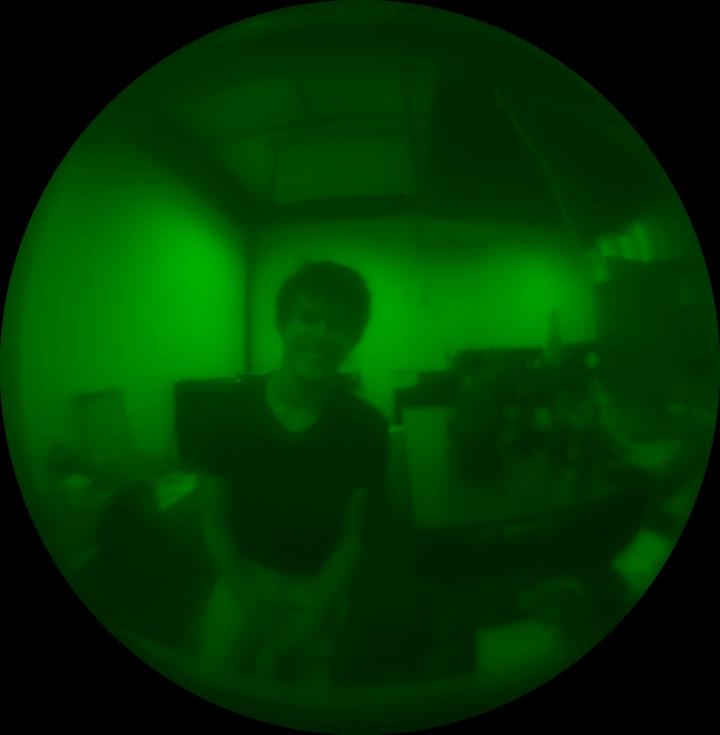
The lens can be used to produce high-resolution images with a wide field of view. It can serve as a camera lens in smartphones and can be used in other devices that depend on sensors (high resolution wide angle selfie obtained using metalens
IMAGE

Credit: Augusto Martins/USP

By José Tadeu Arantes | Agência FAPESP – A lens that is a thousand times thinner than a human hair has been developed in Brazil by researchers at the University of São Paulo’s São Carlos School of Engineering (EESC-USP). It can serve as a camera lens in smartphones or be used in other devices that depend on sensors.

“In the present technological context, its applications are almost unlimited,” Emiliano Rezende Martins, a professor in EESC-USP’s Department of Electrical Engineering and Computing and last author of a published paper on the invention, told Agência FAPESP.

The paper is entitled “On Metalenses with Arbitrarily Wide Field of View” and is published in ACS Photonics. The study was supported by FAPESP via a scholarship for a research internship abroad awarded to Augusto Martins, PhD candidate and lead author of the paper.

The lens consists of a single nanometric layer of silicon on arrays of nanoposts that interact with light. The structure is printed by photolithography, a well-known technique used to fabricate transistors.

This kind of lens is known as a metalens. Metalenses were first developed ten years ago and achieve the highest resolution that is physically feasible, using an ultrathin array of tiny waveguides called a metasurface that bends light as it passes through the lens.

According to Rezende Martins, metalenses have long faced the problem that the angle of view is extremely small (less than 1°). “One way to solve the problem is to combine metalenses, forming complex structures,” he said.

Based on the realization that in a conventional lens an increase in refraction index increases the field of view in proportion to the flatness of the lens, the authors designed a metalens to mimic a totally flat lens with an infinite refraction index, which could not be obtained with a conventional lens.

“Our lens has an arbitrary field of view, which ideally can reach 180° without image distortion,” Rezende Martins said. “We’ve tested its effectiveness for an angle of 110°. With wider angles of view, light energy decreases owing to the shadow effect, but this can be corrected by post-processing.”

Combining metalenses prevents super-resolution, but the resolution obtained is sufficient for all conventional applications. Martins tested the metalens with a 3D printed camera and obtained high-resolution images with a wide field of view. “So far we’ve only succeeded in photographing in green, but in the months ahead we’ll upgrade the lens so that all colors are feasible,” he said.

The article “On metalenses with arbitrarily wide field of view” can be retrieved from: pubs.acs.org/doi/10.1021/acsphotonics.0c00479.

Media Contact
Joao Carlos Silva
[email protected]

Original Source

http://agencia.fapesp.br/33956/

Related Journal Article

http://dx.doi.org/10.1021/acsphotonics.0c00479

Tags: Electrical Engineering/ElectronicsTechnology/Engineering/Computer ScienceTelecommunications
Share12Tweet8Share2ShareShareShare2

Related Posts

Boosting Remote Healthcare: Stepped-Wedge Trial Insights

February 7, 2026

Barriers and Boosters of Seniors’ Physical Activity in Karachi

February 7, 2026

Evaluating Pediatric Emergency Care Quality in Ethiopia

February 7, 2026

TPMT Expression Predictions Linked to Azathioprine Side Effects

February 7, 2026
Please login to join discussion

POPULAR NEWS

  • Robotic Ureteral Reconstruction: A Novel Approach

    Robotic Ureteral Reconstruction: A Novel Approach

    82 shares
    Share 33 Tweet 21
  • Digital Privacy: Health Data Control in Incarceration

    63 shares
    Share 25 Tweet 16
  • Study Reveals Lipid Accumulation in ME/CFS Cells

    57 shares
    Share 23 Tweet 14
  • Breakthrough in RNA Research Accelerates Medical Innovations Timeline

    53 shares
    Share 21 Tweet 13

About

We bring you the latest biotechnology news from best research centers and universities around the world. Check our website.

Follow us

Recent News

Boosting Remote Healthcare: Stepped-Wedge Trial Insights

Barriers and Boosters of Seniors’ Physical Activity in Karachi

Evaluating Pediatric Emergency Care Quality in Ethiopia

Subscribe to Blog via Email

Enter your email address to subscribe to this blog and receive notifications of new posts by email.

Join 73 other subscribers
  • Contact Us

Bioengineer.org © Copyright 2023 All Rights Reserved.

Welcome Back!

Login to your account below

Forgotten Password?

Retrieve your password

Please enter your username or email address to reset your password.

Log In
No Result
View All Result
  • Homepages
    • Home Page 1
    • Home Page 2
  • News
  • National
  • Business
  • Health
  • Lifestyle
  • Science

Bioengineer.org © Copyright 2023 All Rights Reserved.