• HOME
  • NEWS
  • EXPLORE
    • CAREER
      • Companies
      • Jobs
    • EVENTS
    • iGEM
      • News
      • Team
    • PHOTOS
    • VIDEO
    • WIKI
  • BLOG
  • COMMUNITY
    • FACEBOOK
    • INSTAGRAM
    • TWITTER
Friday, March 27, 2026
BIOENGINEER.ORG
No Result
View All Result
  • Login
  • HOME
  • NEWS
  • EXPLORE
    • CAREER
      • Companies
      • Jobs
        • Lecturer
        • PhD Studentship
        • Postdoc
        • Research Assistant
    • EVENTS
    • iGEM
      • News
      • Team
    • PHOTOS
    • VIDEO
    • WIKI
  • BLOG
  • COMMUNITY
    • FACEBOOK
    • INSTAGRAM
    • TWITTER
  • HOME
  • NEWS
  • EXPLORE
    • CAREER
      • Companies
      • Jobs
        • Lecturer
        • PhD Studentship
        • Postdoc
        • Research Assistant
    • EVENTS
    • iGEM
      • News
      • Team
    • PHOTOS
    • VIDEO
    • WIKI
  • BLOG
  • COMMUNITY
    • FACEBOOK
    • INSTAGRAM
    • TWITTER
No Result
View All Result
Bioengineer.org
No Result
View All Result
Home NEWS Science News

WVU researchers earn $1.5 million DOE grant to develop technology to decrease natural gas emissions

Bioengineer by Bioengineer
August 19, 2020
in Science News
Reading Time: 2 mins read
0
IMAGE
Share on FacebookShare on TwitterShare on LinkedinShare on RedditShare on Telegram

IMAGE

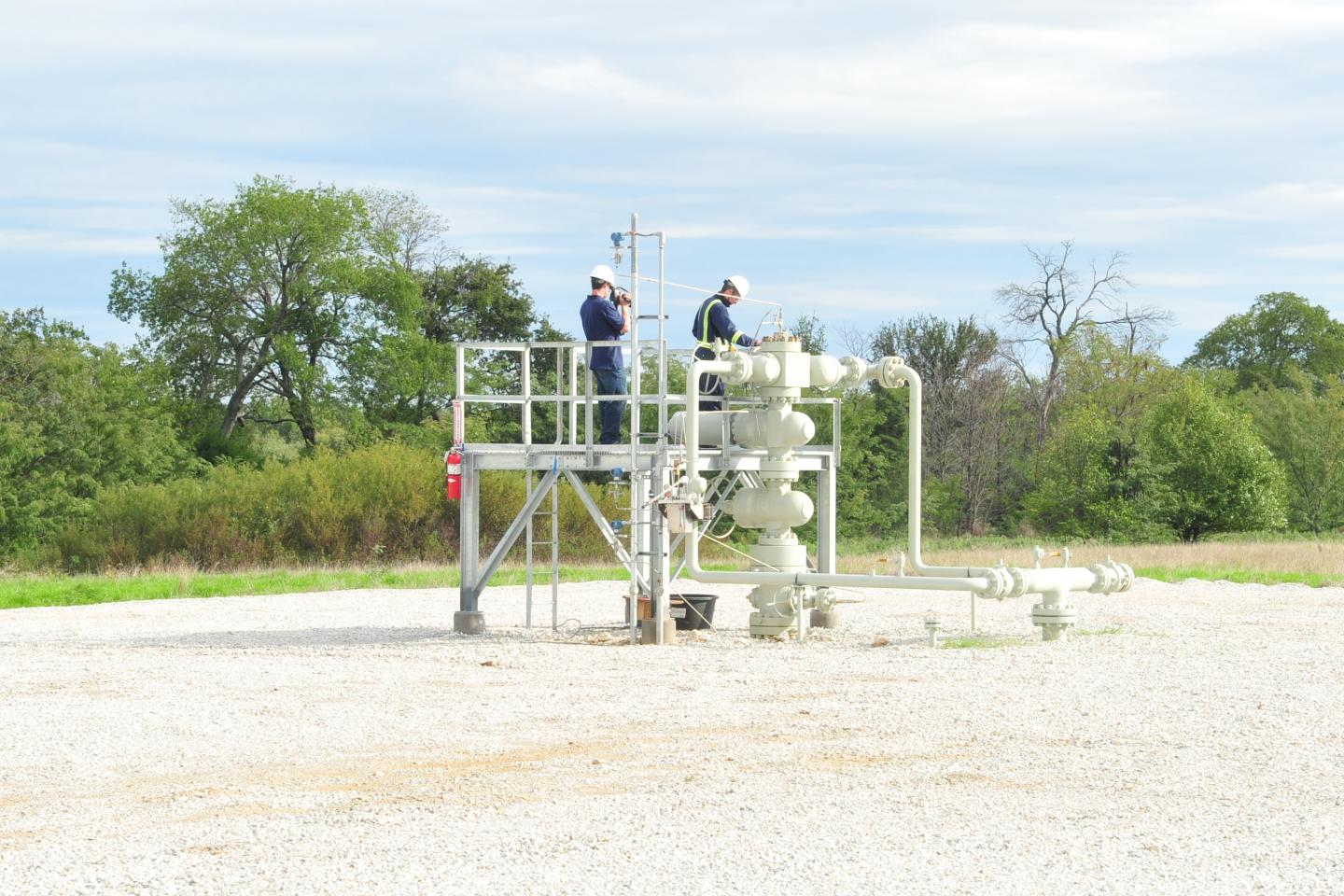
Credit: Nigel Clark/West Virginia University

With the target of reducing greenhouse gas emissions from natural gas production sites, engineers at West Virginia University are developing new technology that will not only harness the gas but improve gas consumption.

Thanks to a $1.5 million grant from the United States Department of Energy, Derek Johnson, associate professor of mechanical and aerospace engineering at the Benjamin M. Statler College of Engineering and Mineral Resources, will be leading a three-year project as principal investigator alongside Nigel Clark, George B. Berry chair emeritus of engineering and research professor, and Andrew Nix, associate professor of mechanical and aerospace engineering.

According to Johnson, natural gas production in the U.S. is over 33 trillion cubic feet per year and recent studies have estimated that up to 2.3 percent of produced gas is lost to the atmosphere across the supply chain.

“Harnessing even a fraction of this lost gas represents a substantial reduction in greenhouse gas emissions, offers economic benefit and improves overall system efficiency,” Johnson said.

The goal of this research project is to develop and demonstrate an economical methane mitigator system, which aims to reduce methane and other emissions across the natural gas supply chain while improving fuel consumption for prime-mover engines.

“This project is important because the technology will reduce fugitive methane emissions from natural gas well sites,” Johnson said. “This decreases environmental impact and ensures that well sites remain compliant with emerging emissions restrictions.”

The researchers will be collaborating with Caterpillar Inc. and Southwestern Energy to complete the project.

“We are excited that this new project will enable us to build on our industry collaborations and to develop a reliable technology that will help industry decrease methane emissions,” Johnson said.

David Montgomery, manager of natural gas and alternative fuels at Caterpillar Inc., reflected on the project collaboration made possible by the hard work of the researchers and opportunities of the grant.

“Caterpillar is proud to be part of this opportunity to help reduce GHG emissions from natural gas infrastructure,” Montgomery said. “We are excited to initiate a relationship with WVU researchers.”

###

Media Contact
Paige Nesbit
[email protected]

Original Source

https://wvutoday.wvu.edu/stories/2020/08/19/wvu-researchers-receive-1-5-million-doe-grant-to-develop-technology-aimed-at-decreasing-natural-gas-emissions

Tags: Atmospheric ScienceMechanical EngineeringPollution/Remediation
Share12Tweet8Share2ShareShareShare2

Related Posts

Microtubules Found to Actively Ensure Accurate Chromosome Distribution During Cell Division

March 25, 2026

Aversive Learning Hijacks Brain Sugar Sensor

March 25, 2026

Isolated H2-Reduced Clusters Boost CO2-to-Methanol Catalysis

March 25, 2026

In-Sensor Cryptography Links Physical Process to Digital Identity

March 25, 2026
Please login to join discussion

POPULAR NEWS

  • blank

    Revolutionary AI Model Enhances Precision in Detecting Food Contamination

    96 shares
    Share 38 Tweet 24
  • Imagine a Social Media Feed That Challenges Your Views Instead of Reinforcing Them

    1003 shares
    Share 397 Tweet 248
  • Uncovering Functions of Cavernous Malformation Proteins in Organoids

    54 shares
    Share 22 Tweet 14
  • Promising Outcomes from First Clinical Trials of Gene Regulation in Epilepsy

    51 shares
    Share 20 Tweet 13

About

We bring you the latest biotechnology news from best research centers and universities around the world. Check our website.

Follow us

Recent News

In-Sensor Cryptography Links Physical Process to Digital Identity

Can Psychosocial Factors Influence Cancer Risk?

Depression Factors in Elderly: Pre vs. Post-COVID Analysis

Subscribe to Blog via Email

Success! An email was just sent to confirm your subscription. Please find the email now and click 'Confirm' to start subscribing.

Join 78 other subscribers
  • Contact Us

Bioengineer.org © Copyright 2023 All Rights Reserved.

Welcome Back!

Login to your account below

Forgotten Password?

Retrieve your password

Please enter your username or email address to reset your password.

Log In
No Result
View All Result
  • Homepages
    • Home Page 1
    • Home Page 2
  • News
  • National
  • Business
  • Health
  • Lifestyle
  • Science

Bioengineer.org © Copyright 2023 All Rights Reserved.