• HOME
  • NEWS
  • EXPLORE
    • CAREER
      • Companies
      • Jobs
    • EVENTS
    • iGEM
      • News
      • Team
    • PHOTOS
    • VIDEO
    • WIKI
  • BLOG
  • COMMUNITY
    • FACEBOOK
    • INSTAGRAM
    • TWITTER
Saturday, February 7, 2026
BIOENGINEER.ORG
No Result
View All Result
  • Login
  • HOME
  • NEWS
  • EXPLORE
    • CAREER
      • Companies
      • Jobs
        • Lecturer
        • PhD Studentship
        • Postdoc
        • Research Assistant
    • EVENTS
    • iGEM
      • News
      • Team
    • PHOTOS
    • VIDEO
    • WIKI
  • BLOG
  • COMMUNITY
    • FACEBOOK
    • INSTAGRAM
    • TWITTER
  • HOME
  • NEWS
  • EXPLORE
    • CAREER
      • Companies
      • Jobs
        • Lecturer
        • PhD Studentship
        • Postdoc
        • Research Assistant
    • EVENTS
    • iGEM
      • News
      • Team
    • PHOTOS
    • VIDEO
    • WIKI
  • BLOG
  • COMMUNITY
    • FACEBOOK
    • INSTAGRAM
    • TWITTER
No Result
View All Result
Bioengineer.org
No Result
View All Result
Home NEWS Science News Health

Study shows inbreeding reduces cooperation in banded mongooses

Bioengineer by Bioengineer
August 11, 2020
in Health
Reading Time: 2 mins read
0
IMAGE
Share on FacebookShare on TwitterShare on LinkedinShare on RedditShare on Telegram

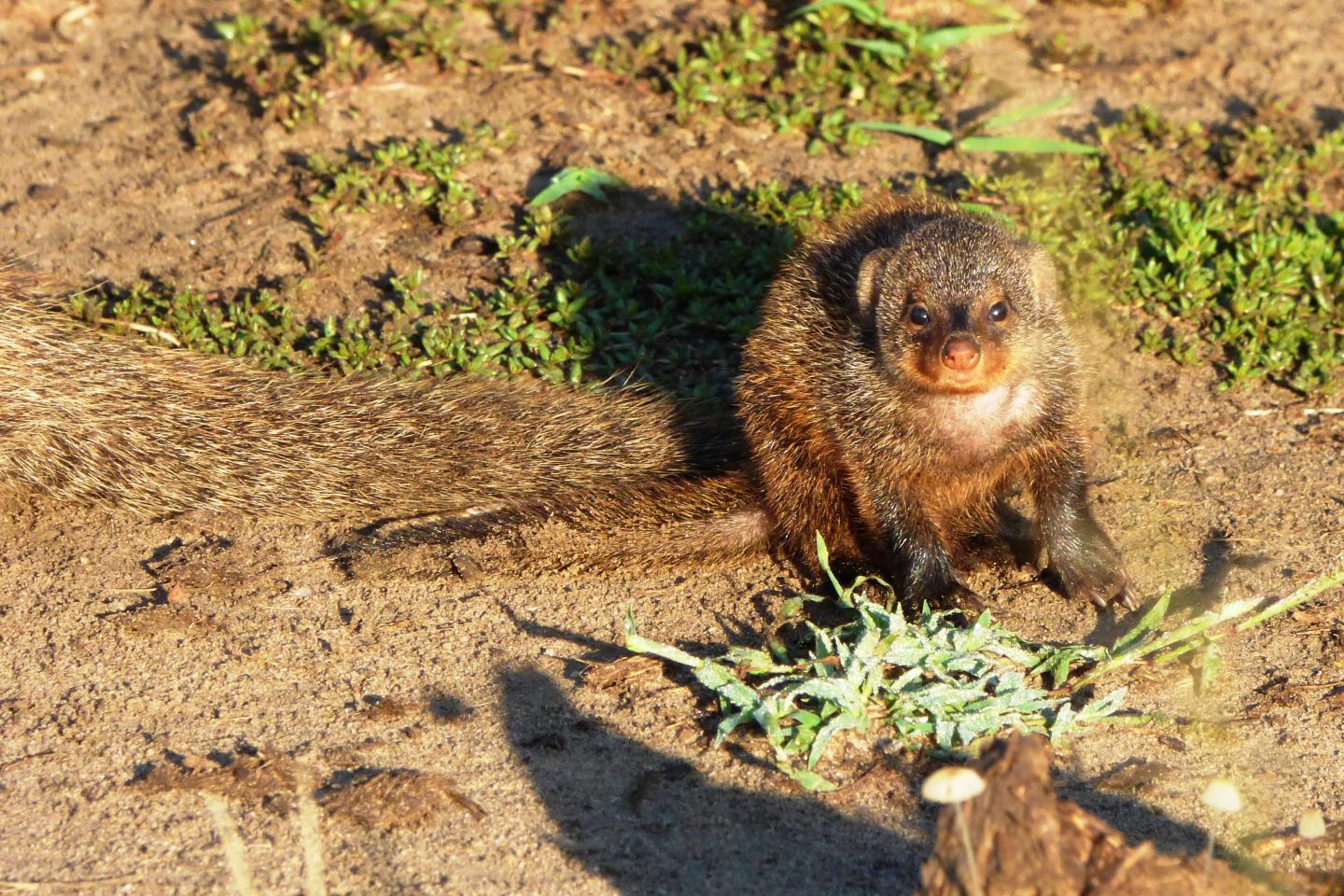
Inbreeding can reduce cooperation in banded mongooses according to a recent study by researchers
IMAGE

Credit: Dr Hazel Nichols

Inbreeding can reduce cooperation in banded mongooses according to a recent study by researchers.

A team from Swansea University, University of Bielefeld and University of Exeter studied inbreeding and cooperative care in banded mongooses – an African mammal which lives in colonies with a complex social structure.

In the 1930s it was proposed that for mammals to evolve complex cooperative societies similar to those seen In bees and wasps, they would have to become highly inbred so that all colony members were genetically related.

This would mean that when they helped other members of their colonies to reproduce, they would be passing down copies of their own genes. However, this kind of society seems to be very rare in nature, and most cooperative mammals go to some effort to avoiding inbreeding.

In banded mongooses that live wild in Uganda, nearly one in 10 pups are the product of brother-sister or father-daughter mating. The team of researchers found that this species may be able to tolerate this high level of inbreeding because the adults in the group provide pups with a lot of one-to-one care that reduces the effects of inbreeding depression.

Inbred pups that get a lot of care in their first three months of life have the same survival chances as outbred pups, while inbred pups that don’t receive much care usually die young.

However, in an interesting twist, inbreeding depression eventually catches up with them. The inbred pups that survive because they get a lot of care become bad carers when they are older. This means that the next generation gets a reduced level of care when the adults in the group are inbred.

This may explain why banded mongooses often try not to inbreed, with some individuals risking getting into potentially fatal fights with rival groups in order to breed with unrelated mates.

Dr Hazel Nichols, senior lecturer in biosciences at Swansea University and co-author of the study said: “The complex social lives of banded mongooses never cease to amaze me. They have showed us that, instead of promoting cooperation, inbreeding can, in fact, hinder it.”

###

Media Contact
Ben Donovan
[email protected]

Related Journal Article

http://dx.doi.org/10.1111/ele.13578

Tags: BiodiversityBiologyDevelopmental/Reproductive BiologyEvolutionGeneticsPets/EthologyZoology/Veterinary Science
Share12Tweet8Share2ShareShareShare2

Related Posts

Evaluating Pediatric Emergency Care Quality in Ethiopia

February 7, 2026

TPMT Expression Predictions Linked to Azathioprine Side Effects

February 7, 2026

Improving Dementia Care with Enhanced Activity Kits

February 7, 2026

Decoding Prostate Cancer Origins via snFLARE-seq, mxFRIZNGRND

February 7, 2026
Please login to join discussion

POPULAR NEWS

  • Robotic Ureteral Reconstruction: A Novel Approach

    Robotic Ureteral Reconstruction: A Novel Approach

    82 shares
    Share 33 Tweet 21
  • Digital Privacy: Health Data Control in Incarceration

    63 shares
    Share 25 Tweet 16
  • Study Reveals Lipid Accumulation in ME/CFS Cells

    57 shares
    Share 23 Tweet 14
  • Breakthrough in RNA Research Accelerates Medical Innovations Timeline

    53 shares
    Share 21 Tweet 13

About

We bring you the latest biotechnology news from best research centers and universities around the world. Check our website.

Follow us

Recent News

Evaluating Pediatric Emergency Care Quality in Ethiopia

TPMT Expression Predictions Linked to Azathioprine Side Effects

Improving Dementia Care with Enhanced Activity Kits

Subscribe to Blog via Email

Success! An email was just sent to confirm your subscription. Please find the email now and click 'Confirm' to start subscribing.

Join 73 other subscribers
  • Contact Us

Bioengineer.org © Copyright 2023 All Rights Reserved.

Welcome Back!

Login to your account below

Forgotten Password?

Retrieve your password

Please enter your username or email address to reset your password.

Log In
No Result
View All Result
  • Homepages
    • Home Page 1
    • Home Page 2
  • News
  • National
  • Business
  • Health
  • Lifestyle
  • Science

Bioengineer.org © Copyright 2023 All Rights Reserved.