• HOME
  • NEWS
  • EXPLORE
    • CAREER
      • Companies
      • Jobs
    • EVENTS
    • iGEM
      • News
      • Team
    • PHOTOS
    • VIDEO
    • WIKI
  • BLOG
  • COMMUNITY
    • FACEBOOK
    • INSTAGRAM
    • TWITTER
Tuesday, January 20, 2026
BIOENGINEER.ORG
No Result
View All Result
  • Login
  • HOME
  • NEWS
  • EXPLORE
    • CAREER
      • Companies
      • Jobs
        • Lecturer
        • PhD Studentship
        • Postdoc
        • Research Assistant
    • EVENTS
    • iGEM
      • News
      • Team
    • PHOTOS
    • VIDEO
    • WIKI
  • BLOG
  • COMMUNITY
    • FACEBOOK
    • INSTAGRAM
    • TWITTER
  • HOME
  • NEWS
  • EXPLORE
    • CAREER
      • Companies
      • Jobs
        • Lecturer
        • PhD Studentship
        • Postdoc
        • Research Assistant
    • EVENTS
    • iGEM
      • News
      • Team
    • PHOTOS
    • VIDEO
    • WIKI
  • BLOG
  • COMMUNITY
    • FACEBOOK
    • INSTAGRAM
    • TWITTER
No Result
View All Result
Bioengineer.org
No Result
View All Result
Home NEWS Science News Chemistry

Oil-soluble transition metal-based catalysts tested for in-situ oil upgrading

Bioengineer by Bioengineer
August 11, 2020
in Chemistry
Reading Time: 2 mins read
0
IMAGE
Share on FacebookShare on TwitterShare on LinkedinShare on RedditShare on Telegram

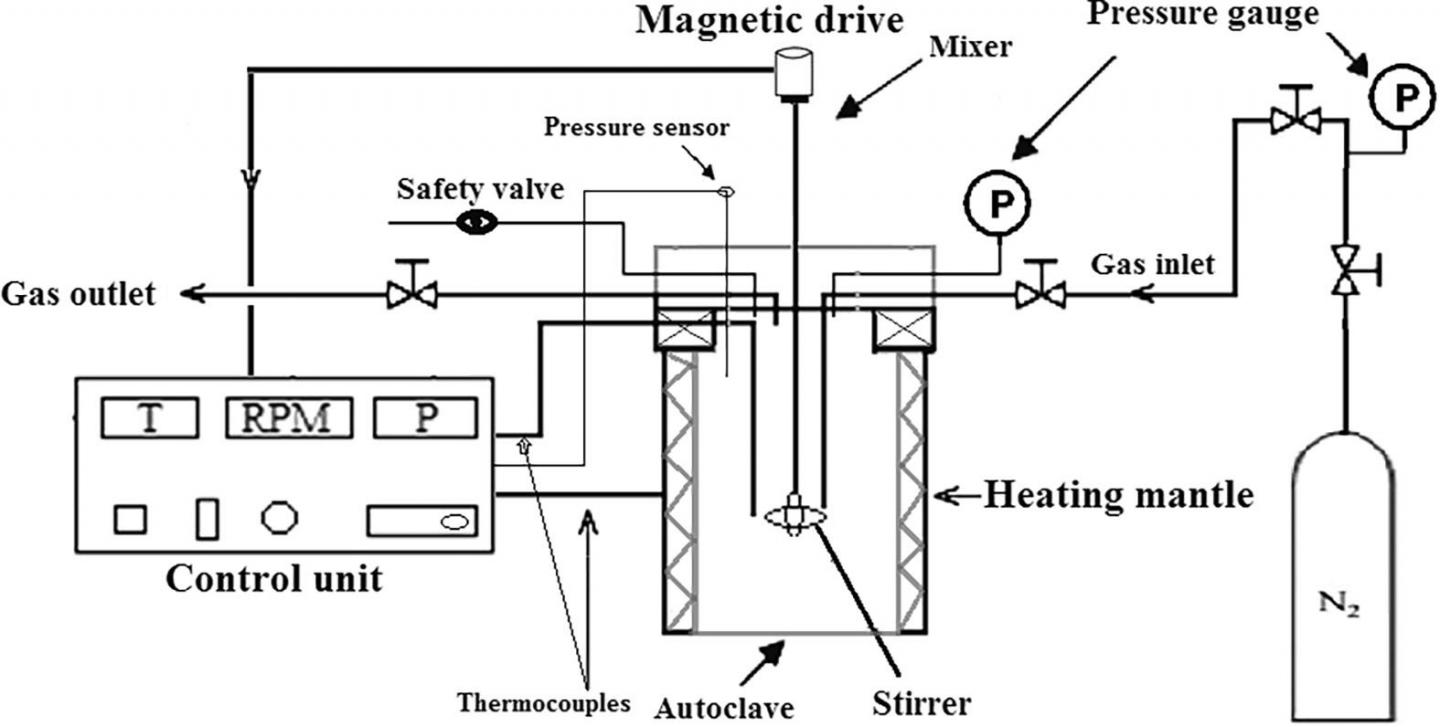
A paper by Kazan Federal University appeared in early access in Fuel
IMAGE

Credit: Kazan Federal University

Reducing the viscosity of heavy oils for extraction is one of the most important research foci in contemporary petroleum science. KFU has long been concentrated on exactly this topic, more specifically, thermal treatment methods. The latest publication tackles the use of Fe, Co, Ni-based catalysts for this purpose.

“The catalysts showed good results under 300 degrees C in reducing viscosity, decreasing the ratio tars and asphaltenes, eliminating sulfur and nitrogen, reducing polyaromatic compounds, etc.,” says Junior Research Associate Suweid Munir Abdo Mohammed.

“The catalysts are oil-soluble transition metal reagents with different ligands. Oil-soluble organic ligands can improve the lipophilicity of catalysts, which contributes to the fact that metal ions change their catalytic activity,” adds Senior Research Associate, co-author of the paper Chengdong Yuan. “In this study, we looked at stearic acid in terms of its long alkyl chain, which can be useful for interacting with the long side chains of heavy oil components.”

The results of the study showed that the good catalytic properties of the new transition metal catalysts, as well as their low cost and easy accessibility, make them a potential solution in the aquathermolysis reaction and heavy oil recovery.

The publication is currently available online and is scheduled to see light in print on 1st December 2020.

###

Media Contact
Yury Nurmeev
[email protected]

Original Source

https://kpfu.ru/eng/news-eng/oil-soluble-transition-metal-based-catalysts.html

Related Journal Article

http://dx.doi.org/10.1016/j.fuel.2020.118753

Tags: Chemistry/Physics/Materials SciencesPolymer Chemistry
Share12Tweet8Share2ShareShareShare2

Related Posts

Creating Synthetic Protein-Binding DNA Systems in Cells

January 17, 2026
blank

Chiral Catalysis Powers Rotary Molecular Motors

January 16, 2026

Selective GlcNAc to GalNAc Epimerization via Kinetic Control

January 15, 2026

Thermal [2+2] Cycloaddition Builds Gem-Difluoro Bicycloalkanes

January 13, 2026
Please login to join discussion

POPULAR NEWS

  • Enhancing Spiritual Care Education in Nursing Programs

    155 shares
    Share 62 Tweet 39
  • PTSD, Depression, Anxiety in Childhood Cancer Survivors, Parents

    148 shares
    Share 59 Tweet 37
  • Robotic Ureteral Reconstruction: A Novel Approach

    78 shares
    Share 31 Tweet 20
  • Study Reveals Lipid Accumulation in ME/CFS Cells

    55 shares
    Share 22 Tweet 14

About

We bring you the latest biotechnology news from best research centers and universities around the world. Check our website.

Follow us

Recent News

A Decade of Evolving Human Behavior and Physiology

Telehealth Addiction Services Transform Rural Hospital Care

Modeling Fatigue and Damage in Annulus Fibrosus

Subscribe to Blog via Email

Enter your email address to subscribe to this blog and receive notifications of new posts by email.

Join 71 other subscribers
  • Contact Us

Bioengineer.org © Copyright 2023 All Rights Reserved.

Welcome Back!

Login to your account below

Forgotten Password?

Retrieve your password

Please enter your username or email address to reset your password.

Log In
No Result
View All Result
  • Homepages
    • Home Page 1
    • Home Page 2
  • News
  • National
  • Business
  • Health
  • Lifestyle
  • Science

Bioengineer.org © Copyright 2023 All Rights Reserved.