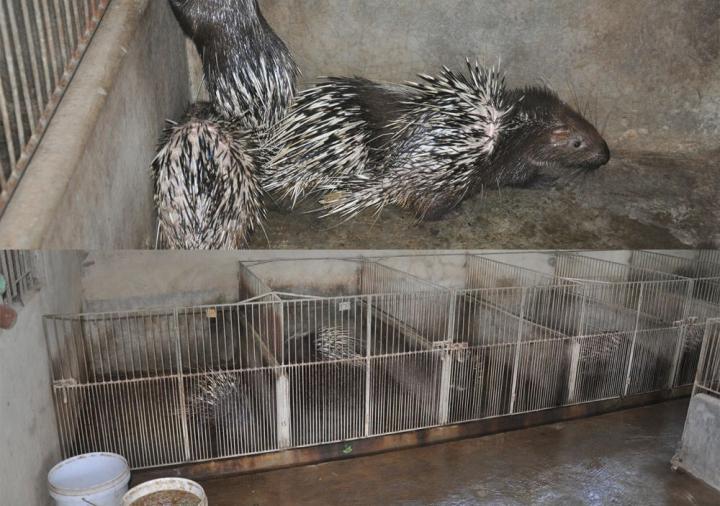
Credit: Huong et al, 2020 (PLOS ONE, CC BY)
Coronaviruses were detected in a high proportion of bats and rodents in Viet Nam from 2013 to 2014, with an increasing proportion of positive samples found along the wildlife supply chain from traders to large markets to restaurants, according to a study published August 10 in the open-access journal PLOS ONE by Amanda Fine of the Wildlife Conservation Society and colleagues. As noted by the authors, the amplification of coronaviruses along the wildlife supply chain suggests maximal risk for end consumers and likely explains the coronavirus spillover to people.
Outbreaks of emerging coronaviruses in the past two decades and the current pandemic of severe acute respiratory syndrome coronavirus 2 (SARS-CoV-2) highlight the importance of this viral family as a public health threat. Human-wildlife contact with a bat or an intermediate host species in China almost certainly triggered a coronavirus spillover event that may have involved wildlife markets and led to the pandemic spread of SARS-CoV-2, according to the latest scientific evidence. Beyond China, commercial wildlife farming in Viet Nam is part of the expanded international wildlife trade that is thought to contribute to global epidemics, such as SARS and now coronavirus disease 2019 (COVID-19), which is caused by SARS-CoV-2.
To better understand the natural hosts of coronaviruses and the risk for these wildlife-human interfaces to facilitate spillover into humans, Fine and her collaborators investigated presence of viruses in the coronavirus family and diversity in wildlife at wildlife-human interfaces in Viet Nam from 2013 to 2014 (years prior to the emergence of SARS-CoV-2).
They observed high proportions of positive samples of coronaviruses among field rats (34.0%, 239/702) destined for human consumption and bats in guano farms (74.8%, 234/313) adjacent to human dwellings. The odds of coronavirus detection increased along the supply chain, from field rats sold by traders (20.7%, 39/188), to field rats sold in large markets (32.0%, 116/363), and field rats served in restaurants (55.6%, 84/151). Coronaviruses were also detected in rodents on most wildlife farms sampled (60.7%, 17/28), affecting Malayan porcupines (6.0%, 20/331) and bamboo rats (6.3%, 6/96) raised for human consumption. To minimize the public health risks of viral disease emergence, the authors recommend improving coronavirus surveillance in wildlife and implementing targeted wildlife trade reform.
The authors add: “This study shows the wildlife supply chain generates a one-two punch when it comes to spillover risk. It is known to increase contact rates between wildlife and people and here we show how it greatly amplifies the number of infected animals along the way.”
###
Citation: Huong NQ, Nga NTT, Long NV, Luu BD, Latinne A, Pruvot M, et al. (2020) Coronavirus testing indicates transmission risk increases along wildlife supply chains for human consumption in Viet Nam, 2013-2014. PLoS ONE 15(8): e0237129. https:/
Funding: This study was made possible by the generous support of the American people through the United States Agency for International Development (USAID) Emerging Pandemic Threats PREDICT project (cooperative agreement numbers GHN-A-OO-09-00010-00 [J.A.K.M., C.K.J., T.G., D.O.J.] and AID-OAA-A-14-00102 [J.A.K.M, C.K.J., T.G., A.E.F, S.H.O.]). The funders had no role in study design, data collection and analysis, decision to publish, or preparation of the manuscript. The URL to the USAID Emerging Pandemic Threats Program (EPT-1 and 2) is https:/
Competing Interests: The authors have declared that no competing interests exist.
In your coverage please use this URL to provide access to the freely available article in PLOS ONE: https:/
Media Contact
Sarah H. Olson
[email protected]
Related Journal Article
http://dx.