• HOME
  • NEWS
  • EXPLORE
    • CAREER
      • Companies
      • Jobs
    • EVENTS
    • iGEM
      • News
      • Team
    • PHOTOS
    • VIDEO
    • WIKI
  • BLOG
  • COMMUNITY
    • FACEBOOK
    • INSTAGRAM
    • TWITTER
Monday, October 5, 2026
BIOENGINEER.ORG
No Result
View All Result
  • Login
  • HOME
  • NEWS
  • EXPLORE
    • CAREER
      • Companies
      • Jobs
        • Lecturer
        • PhD Studentship
        • Postdoc
        • Research Assistant
    • EVENTS
    • iGEM
      • News
      • Team
    • PHOTOS
    • VIDEO
    • WIKI
  • BLOG
  • COMMUNITY
    • FACEBOOK
    • INSTAGRAM
    • TWITTER
No Result
View All Result
Bioengineer.org
No Result
View All Result
Home NEWS Science News Health

Training algorithms to identify COVID-19 in CT scans

Bioengineer by Bioengineer
July 30, 2020
in Health
Reading Time: 3 mins read
0
IMAGE
Share on FacebookShare on TwitterShare on LinkedinShare on RedditShare on Telegram

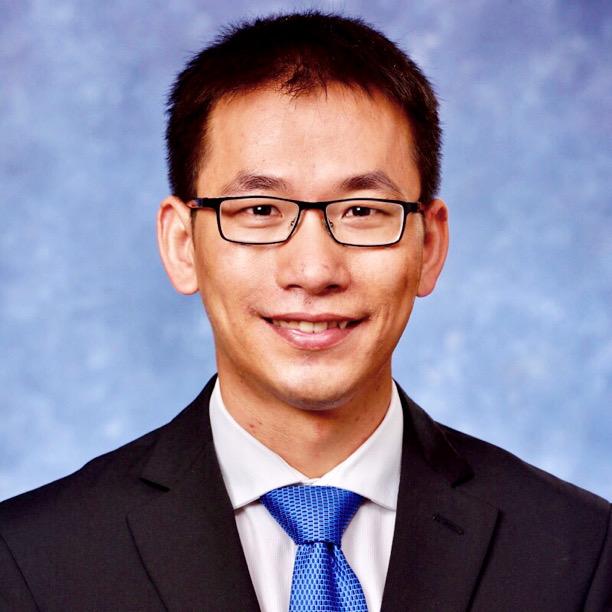
Pitt’s Jingtong Hu will use an NSF award to develop deep neural networks that can identify pneumonia caused by COVID-19 on CT scans
IMAGE

Credit: Jingtong Hu

PITTSBURGH (July 29, 2020) … As COVID-19 cases in the United States continue to surge, there is an ongoing search for quick and reliable testing. Though there are conflicting opinions on using chest computerized tomography (CT) scans as a method of screening in the United States, the technology has been successfully used to identify the disease in other parts of the world.

The University of Pittsburgh’s Jingtong Hu received funding from the National Science Foundation (award no. 2027546) to improve CT scan screening by training a computer to analyze images and do the diagnostic heavy lifting.

“Several works have recently demonstrated the potential of deep neural networks in identifying typical signs or partial signs of COVID-19 pneumonia,” said Hu, assistant professor of electrical and computer engineering at Pitt’s Swanson School of Engineering. “Our goal is to train an algorithm to be able to tell the difference between regular pneumonia and the type of pneumonia caused by COVID-19.”

Deep neural networks are sets of algorithms, inspired by the human brain, that recognize patterns and learn to complete a task by training on sample data — in this scenario, CT scans with confirmed pneumonia caused by COVID-19.

This approach has the potential to drastically speed up the screening process and reduce the burden on radiologists, who are challenged to accurately screen the volume of incoming images. Hu will collaborate with Yiyu Shi, associate professor of computer science and engineering at the University of Notre Dame, to address some of the current limitations with this technology.

“Though deep neural networks work well on 2D images, they are not well equipped to handle the amount of data associated with 3D images,” said Hu. “We will explore various hardware and software solutions that will allow the technology to adapt to these larger files.”

Since deep neural networks require significant processing power, the research group will use a field-programmable gate array (FPGA), which is a high performance integrated circuit that is designed to be reconfigured by the user. This type of device also provides the flexibility needed to handle the evolving structure of neural networks.

“The first step of this project is to create the algorithm and allow it to learn from the current data,” Hu explained. “We will use FPGAs to make the computation faster and more energy efficient. The ultimate goal of this work is to develop a mobile scanning device that can screen for signs of COVID-19 in highly populated places, like an airport or university.”

The diagnostic standard in the U.S. is the RT-PCR test kits, which are not widely available and can take days to deliver results, many of which are inaccurate. Hu and his team hope that the results of this project can help effectively address some of the issues associated with testing in the U.S.

This work will be made open source so that the developed techniques can be applied beyond COVID-19 where neural networks need to handle large volumetric data.

###

Media Contact
Leah Russell
[email protected]

Original Source

https://www.engineering.pitt.edu/News/2020/DNN-CT-Scans/

Tags: Computer ScienceDiagnosticsElectrical Engineering/ElectronicsHardwarePulmonary/Respiratory MedicineSoftware EngineeringTechnology/Engineering/Computer Science
Share12Tweet8Share2ShareShareShare2

Related Posts

AI Reveals That What Predicts Death From Fatty Liver Disease Differs Sharply Between Women and Men

AI Reveals That What Predicts Death From Fatty Liver Disease Differs Sharply Between Women and Men

October 5, 2026
Seven Silent Years: When Bronchiectasis Foreshadows a Deadly Autoimmune Disease

Seven Silent Years: When Bronchiectasis Foreshadows a Deadly Autoimmune Disease

October 5, 2026

When Guidelines Collide, Doctors Must Choose: Prioritisation Is a Treatment in Its Own Right

October 5, 2026

Half of Medicaid Patients Abandon Weight-Loss Drugs Within Months, Landmark Study Finds

October 5, 2026
Please login to join discussion

POPULAR NEWS

  • Alloys That Shrink Their Own Grains: New PIX Mechanism Refines Metals With Heat Alone

    Alloys That Shrink Their Own Grains: New PIX Mechanism Refines Metals With Heat Alone

    29 shares
    Share 12 Tweet 7
  • Endurance Exercise Reshapes the Liver in Males and Females Through Distinct Molecular Routes

    29 shares
    Share 12 Tweet 7
  • Single Transcription Factor PU.1 Rapidly Converts Fibroblasts into Macrophage-Lineage Cells

    29 shares
    Share 12 Tweet 7
  • New Scale Measures How Ready Nurse Educators Really Are for the AI Era

    29 shares
    Share 12 Tweet 7

About

We bring you the latest biotechnology news from best research centers and universities around the world. Check our website.

Follow us

Recent News

Alloys That Shrink Their Own Grains: New PIX Mechanism Refines Metals With Heat Alone

Endurance Exercise Reshapes the Liver in Males and Females Through Distinct Molecular Routes

Single Transcription Factor PU.1 Rapidly Converts Fibroblasts into Macrophage-Lineage Cells

Subscribe to Blog via Email

Success! An email was just sent to confirm your subscription. Please find the email now and click 'Confirm' to start subscribing.

Join 85 other subscribers
  • Contact Us

Bioengineer.org © Copyright 2023 All Rights Reserved.

Welcome Back!

Login to your account below

Forgotten Password?

Retrieve your password

Please enter your username or email address to reset your password.

Log In
No Result
View All Result
  • Homepages
    • Home Page 1
    • Home Page 2
  • News
  • National
  • Business
  • Health
  • Lifestyle
  • Science

Bioengineer.org © Copyright 2023 All Rights Reserved.