Credit: Virginia Tech
To accelerate complex glycomaterials research in the U.S., the National Science Foundation (NSF) has committed $23 million to a new multiuniversity partnership, led by Virginia Tech.
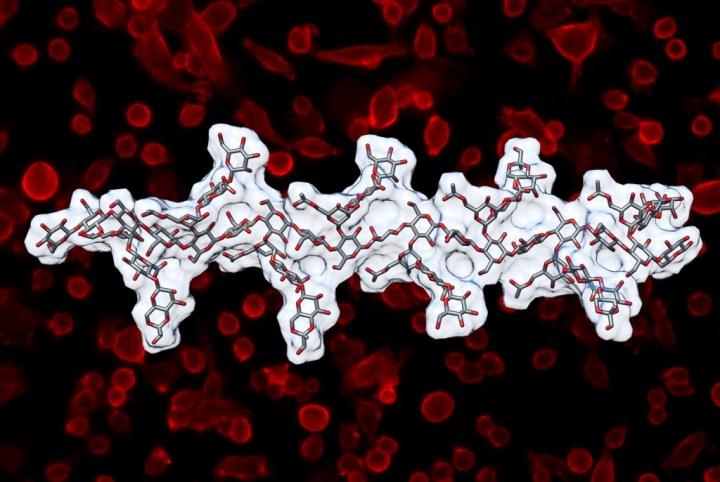
Glycomaterials are produced by every living organism. They contain chains of sugars, called glycans, that have critical roles in health and disease. Of the four building blocks of life — glycans, proteins, lipids, and nucleic acids — glycans are the most complex and are the most challenging to understand. The tool set for understanding these glycans, so crucial to life itself, lags far behind those available for understanding DNA, RNA, and proteins.
The partnership will bring together leading scientists and engineers from Virginia Tech, the University of Georgia, Brandeis University, Rensselaer Polytechnic Institute, and the University of North Carolina at Chapel Hill to establish an NSF Materials Innovation Platform called GlycoMIP focused on “Automating the Synthesis of Rationally Designed Glycomaterials.”
GlycoMIP will be one of only four NSF Materials Innovation Platforms — a special type of NSF facility, funded to stimulate scientific innovation in materials research and further the vision of the federal Materials Genome Initiative to “discover, manufacture, and deploy advanced materials twice as fast, at a fraction of the cost.”
GlycoMIP will address nationwide bottlenecks in glycomaterials synthesis, computer modeling, material characterization, and knowledge sharing through groundbreaking research and a unique national user facility that will provide critical tools and services to the scientific community.
“GlycoMIP will be the first national user facility to house automated glycan synthesizers,” explained Maren Roman, director of GlycoMIP and associate professor of sustainable biomaterials in Virginia Tech’s College of Natural Resources and Environment. “These instruments will enable researchers across the country to synthesize and order specific glycan molecules for their research.”
The user facility will be operated jointly by Virginia Tech and the University of Georgia’s Complex Carbohydrate Research Center. “By combining our analytical capabilities, we will have the nation’s most advanced analytical tools for glycomaterials characterization,” Roman said.
GlycoMIP will support computer-aided design and modeling of glycomaterials through a first-in-the-nation virtual user facility that will employ the unparalleled computer modeling capabilities of the Complex Carbohydrate Research Center.
“The computational tools that we have developed are uniquely suited to simulate the movements of shape-changing molecules that contain glycans, including hybrid molecules that contain other entities, such as proteins, lipids, RNA, or even synthetic polymers,” said Robert Woods, associate director of GlycoMIP and professor of biochemistry, molecular biology, and chemistry at the University of Georgia.
GlycoMIP researchers will harness the power of artificial intelligence and machine learning to make glycomaterial synthesis, modeling, and data analysis more accessible to the scientific community and provide urgently needed resources to advance data science.
GlycoMIP’s computational research efforts require cutting-edge, high-performance computing resources and are synergistic to the NSF-funded Molecular Sciences Software Institute, another multi-institutional organization led by Virginia Tech, which serves the global community of computational molecular scientists.
“A specific goal of the GlycoMIP project is to have predictive capabilities to inform the design of new synthetic materials with specific properties,” explained T. Daniel Crawford, director of the Molecular Sciences Software Institute and University Distinguished Professor of chemistry in Virginia Tech’s College of Science. “My role in this project is to provide robust and highly accurate computational predictions of a number of qualities pertaining to sugar and glycan molecules.”
Users of the new GlycoMIP facility will also have access to existing user facilities at Virginia Tech and the University of Georgia housing state-of-the-art equipment, which will be particularly beneficial to researchers at smaller universities and in industry.
The NSF award will support research by graduate students and postdoctoral associates, helping prepare them for careers in glycomaterials research and development. It will also support outreach activities, including continuing education and the introduction of glycomaterials science to elementary and secondary school students and the general public. Annual meetings of stakeholders will support scientific exchange and networking within the glycomaterials community.
“GlycoMIP will investigate an important class of biological materials that has been less studied,” said Linda Sapochak, director of NSF Division of Materials Research. “NSF is excited to support this Materials Innovation Platform that embraces the vision of the Materials Genome Initiative and combines scalable synthesis, high-throughput characterization, and advanced modeling to produce and explore novel glycomaterials from the molecular level to the mesoscopic scale.”
Charles Ying, NSF program director who oversees GlycoMIP and other MIPs, added, “GlycoMIP will provide unique tools and databases to users nationwide as well as to researchers at the participating institutions in several disciplines including materials, biology, and chemistry.”
GlycoMIP is funded by the NSF Division of Materials Research in the Directorate for Mathematical and Physical Sciences as well as by the Division of Molecular and Cellular Biosciences in the Directorate for Biological Sciences.
The interdisciplinary GlycoMIP project team at Virginia Tech includes faculty members from the colleges of Natural Resources and Environment, Science, Engineering, and Agriculture and Life Sciences.
“This prestigious award is a testament to our leadership in materials discovery and innovation and our strength in successfully coordinating multi-institutional team efforts,” said Don Taylor, Virginia Tech interim vice president for research and innovation. “The GlycoMIP user facility at Virginia Tech will be co-located with our facilities for DNA and protein analysis in the Fralin Life Sciences Institute, making Virginia Tech one of the premier destinations for studying biological materials.”
Roman added, “The GlycoMIP project is very timely given the current COVID-19 pandemic. Understanding the role of glycans in the ability of the coronavirus to reach and enter the cells in the lungs could hold the key to developing effective vaccines and protective materials.”
###
Media Contact
Krista Timney
[email protected]
Original Source
https:/