• HOME
  • NEWS
  • EXPLORE
    • CAREER
      • Companies
      • Jobs
    • EVENTS
    • iGEM
      • News
      • Team
    • PHOTOS
    • VIDEO
    • WIKI
  • BLOG
  • COMMUNITY
    • FACEBOOK
    • INSTAGRAM
    • TWITTER
Monday, January 12, 2026
BIOENGINEER.ORG
No Result
View All Result
  • Login
  • HOME
  • NEWS
  • EXPLORE
    • CAREER
      • Companies
      • Jobs
        • Lecturer
        • PhD Studentship
        • Postdoc
        • Research Assistant
    • EVENTS
    • iGEM
      • News
      • Team
    • PHOTOS
    • VIDEO
    • WIKI
  • BLOG
  • COMMUNITY
    • FACEBOOK
    • INSTAGRAM
    • TWITTER
  • HOME
  • NEWS
  • EXPLORE
    • CAREER
      • Companies
      • Jobs
        • Lecturer
        • PhD Studentship
        • Postdoc
        • Research Assistant
    • EVENTS
    • iGEM
      • News
      • Team
    • PHOTOS
    • VIDEO
    • WIKI
  • BLOG
  • COMMUNITY
    • FACEBOOK
    • INSTAGRAM
    • TWITTER
No Result
View All Result
Bioengineer.org
No Result
View All Result
Home NEWS Science News Biology

Wild bees depend on the landscape structure

Bioengineer by Bioengineer
June 30, 2020
in Biology
Reading Time: 3 mins read
0
IMAGE
Share on FacebookShare on TwitterShare on LinkedinShare on RedditShare on Telegram

Research team led by University of Göttingen investigates flower strips, organic farming and small crop fields
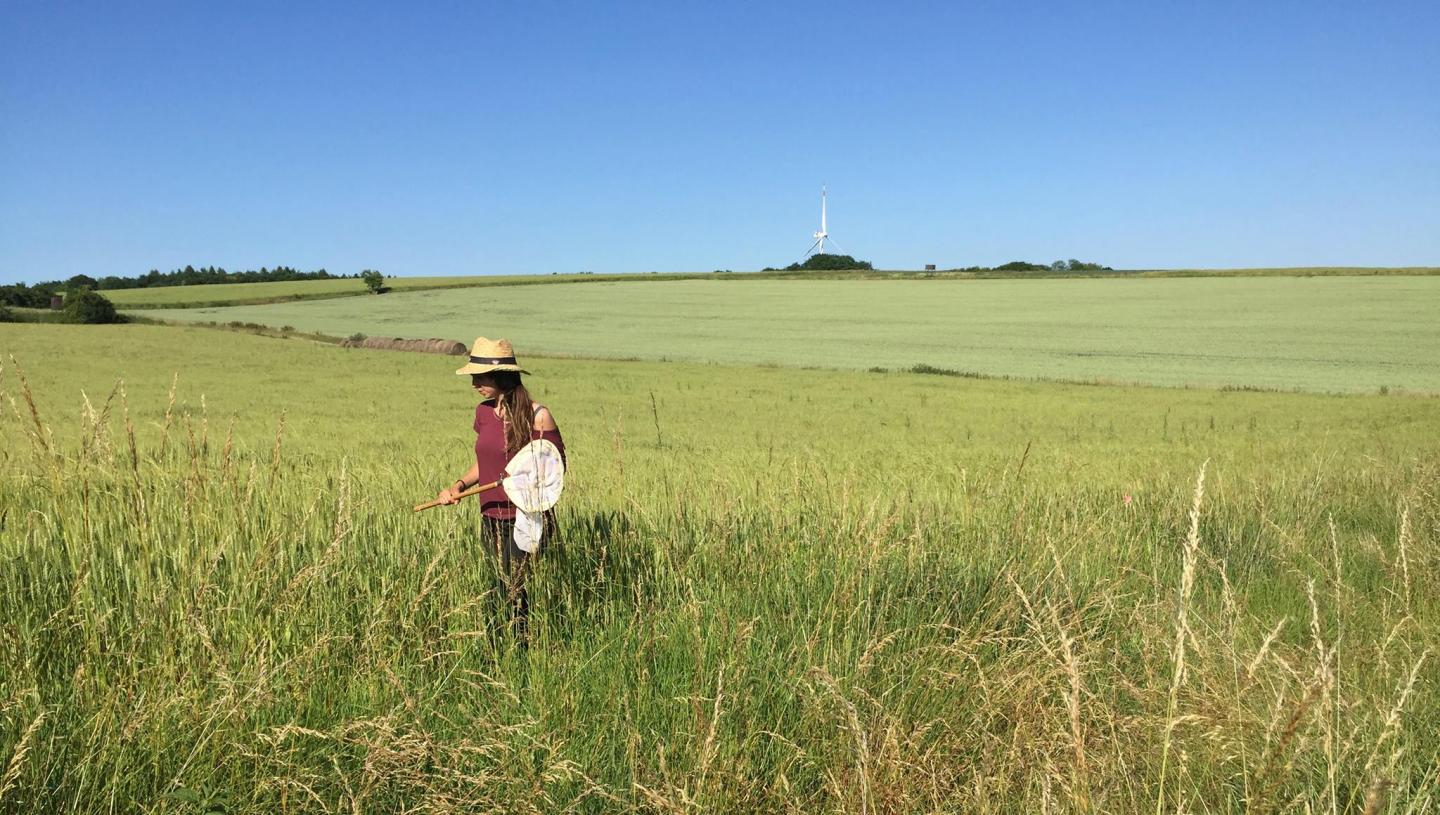
IMAGE

Credit: Bettina Donkó

Sowing strips of wildflowers along conventional cereal fields and the increased density of flowers in organic farming encourage bumblebees as well as solitary wild bees and hoverflies. Bumblebee colonies benefit from flower strips along small fields, but in organic farming, they benefit from large fields. This research was carried out by agroecologists from the University of Göttingen in a comparison of different farming systems and landscape types. The results of the study have been published in the Journal of Applied Ecology.

Organic farming and flower strips are financially supported by the European Union in order to enhance populations of wild bees and hoverflies, which are major pollinators of most crops and wild plants. The research team selected nine landscapes in the vicinity of Göttingen along a gradient of increasing field size and then analysed the wild bees and hoverflies in each landscape at the edge of an organic wheat field, in a flower strip along conventional wheat, and at the edge of a conventional wheat field without flower strips. The result: most pollinators were found in the flower strips, but organic fields, characterized by more flowering wild plants than conventional fields, were also beneficial. Bumblebee colonies established on the margins of fields as part of the project produced more queens in flower strips when located in landscapes with small conventional fields. In contrast, large areas were particularly advantageous when it came to flower-rich organic fields. Flower strips offer a high local density of pollen and nectar, but organic areas compensate for this by their increased area.

“The results show that action at both local and landscape level is important to promote wild bees,” emphasises Costanza Geppert, first author of the study. The investigations were part of her Master’s thesis in the Agroecology Group in the Department of Crop Sciences at the University of Göttingen. “Wild bees and other insects cannot survive in a field simply by making improvements to that field, they depend on the structure of the surrounding landscape,” adds Head of Department Professor Teja Tscharntke. “Therefore, future agri-environmental schemes should take more account of the overall landscape structure,” adds Dr Péter Batáry who initiated the study.

###

Original publication: Costanza Geppert et al. (2020): Agri-environment schemes enhance pollinator abundance and richness, but bumblebee reproduction depends on field size. Journal of Applied Ecology: DOI: 10.1111/1365-2664.13682

Alternative link: https://besjournals.onlinelibrary.wiley.com/DoI/10.1111/1365-2664.13682

Professor Teja Tscharntke

University of Göttingen

Faculty of Agricultural Sciences – Agroecology Group

Grisebachstraße 6, 37077 Göttingen, Germany

Tel: +49 (0)551 39-9209

Email: [email protected]
http://www.uni-goettingen.de/en/74726.html

Costanza Geppert

University of Padua

Email: [email protected]

Media Contact
Melissa Sollich
[email protected]

Original Source

https://www.uni-goettingen.de/en/3240.html?id=5920

Related Journal Article

http://dx.doi.org/10.1111/1365-2664.13682

Tags: AgricultureBiologyEcology/EnvironmentEntomology
Share12Tweet8Share2ShareShareShare2

Related Posts

Diving Deep: Sindiplozoon Coreius Mitochondrial Genome Unveiled

Diving Deep: Sindiplozoon Coreius Mitochondrial Genome Unveiled

January 12, 2026
blank

PET Microplastics Harm Pig Pancreas Through Lipotoxicity

January 11, 2026

Stem Cell-Derived Vesicles Combat UVB-Induced Skin Aging

January 11, 2026

Retroelement Expansions Drive Stingless Bee Genome Evolution

January 11, 2026
Please login to join discussion

POPULAR NEWS

  • Enhancing Spiritual Care Education in Nursing Programs

    154 shares
    Share 62 Tweet 39
  • PTSD, Depression, Anxiety in Childhood Cancer Survivors, Parents

    146 shares
    Share 58 Tweet 37
  • Robotic Ureteral Reconstruction: A Novel Approach

    68 shares
    Share 27 Tweet 17
  • Impact of Vegan Diet and Resistance Exercise on Muscle Volume

    47 shares
    Share 19 Tweet 12

About

We bring you the latest biotechnology news from best research centers and universities around the world. Check our website.

Follow us

Recent News

Forensic Age Estimation via Elbow MRI in Chinese

The Science Behind Honoring the Human Corpse

Exploring Health Literacy Gaps in Postoperative Breast Cancer Care

Subscribe to Blog via Email

Enter your email address to subscribe to this blog and receive notifications of new posts by email.

Join 71 other subscribers
  • Contact Us

Bioengineer.org © Copyright 2023 All Rights Reserved.

Welcome Back!

Login to your account below

Forgotten Password?

Retrieve your password

Please enter your username or email address to reset your password.

Log In
No Result
View All Result
  • Homepages
    • Home Page 1
    • Home Page 2
  • News
  • National
  • Business
  • Health
  • Lifestyle
  • Science

Bioengineer.org © Copyright 2023 All Rights Reserved.