• HOME
  • NEWS
  • EXPLORE
    • CAREER
      • Companies
      • Jobs
    • EVENTS
    • iGEM
      • News
      • Team
    • PHOTOS
    • VIDEO
    • WIKI
  • BLOG
  • COMMUNITY
    • FACEBOOK
    • INSTAGRAM
    • TWITTER
Saturday, February 7, 2026
BIOENGINEER.ORG
No Result
View All Result
  • Login
  • HOME
  • NEWS
  • EXPLORE
    • CAREER
      • Companies
      • Jobs
        • Lecturer
        • PhD Studentship
        • Postdoc
        • Research Assistant
    • EVENTS
    • iGEM
      • News
      • Team
    • PHOTOS
    • VIDEO
    • WIKI
  • BLOG
  • COMMUNITY
    • FACEBOOK
    • INSTAGRAM
    • TWITTER
  • HOME
  • NEWS
  • EXPLORE
    • CAREER
      • Companies
      • Jobs
        • Lecturer
        • PhD Studentship
        • Postdoc
        • Research Assistant
    • EVENTS
    • iGEM
      • News
      • Team
    • PHOTOS
    • VIDEO
    • WIKI
  • BLOG
  • COMMUNITY
    • FACEBOOK
    • INSTAGRAM
    • TWITTER
No Result
View All Result
Bioengineer.org
No Result
View All Result
Home NEWS Science News Biology

Uncovering the genetic basis of hermaphroditism in grapes, the trait that allowed domestication

Bioengineer by Bioengineer
June 18, 2020
in Biology
Reading Time: 2 mins read
0
IMAGE
Share on FacebookShare on TwitterShare on LinkedinShare on RedditShare on Telegram

IMAGE

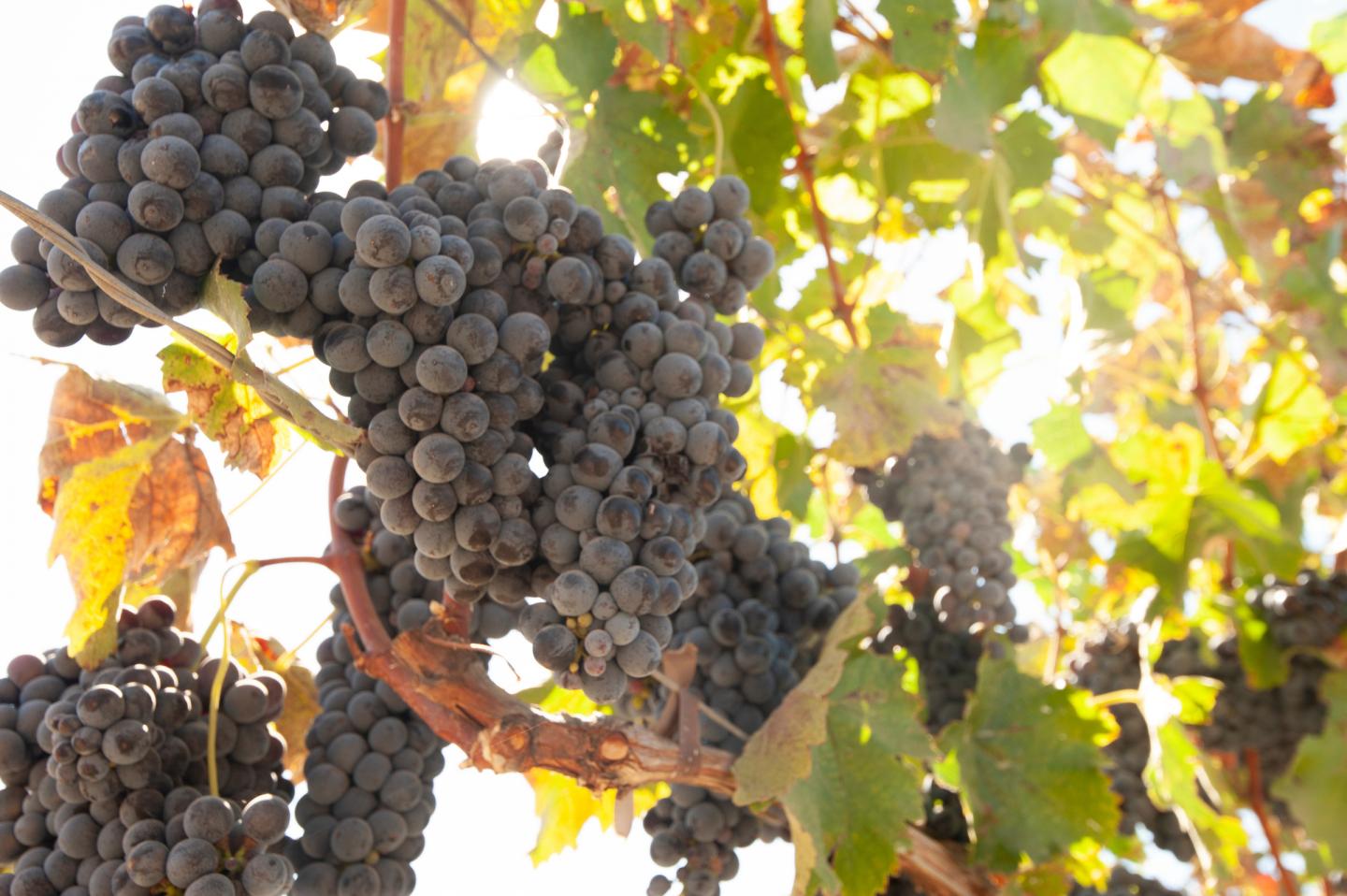
Credit: Gregory Urquiaga/UC Davis

Plant experts at UC Davis have defined the genetic basis of sex determination in grapevines, one of the oldest and most valuable crops worldwide.

In new research published in the journal Nature Communications, viticulture and enology professor Dario Cantu and Mélanie Massonnet, lead author and postdoctoral researcher in Cantu’s lab, propose a novel model of sex evolution before and during grapevine domestication nearly 8,000 years ago. Their work could have broad application in breeding grapes and other plant species.

All wild species of grapes (genus Vitus) are dioecious, which means that male and female flowers are located on separate plants. Male individuals bear flowers with reduced pistils and female vines have flowers with reflexed anthers and stamens that produce sterile pollen grains.

Just one Vitis species, the cultivated grapevine Vitis vinifera ssp. vinifera, has reverted to hermaphroditism, leading to the advent of vines bearing perfect flowers with both functional pistils and stamens.

“It has always been a major challenge to identify the genes and mutations that lead to plant sexual differentiation,” Cantu noted. “We show how the pivotal domestication trait of hermaphroditic flowers in grapevine is likely determined by the action of two separate genes contained within a sex-linked locus.”

Comparing sex determination genes in wild and domestic grapes

To unveil the molecular mechanisms associated with sex determination, researchers constructed the genomes of two female and three male wild grapes, and five hermaphroditic domesticated accessions, including the chromosome-scale genome of Cabernet Sauvignon (the most widely planted wine grape cultivar in the world). They compared the structure of the sex determination locus, its sequence and genes between male, female and hermaphrodite individuals.

“The unprecedented amount of data generated here supports a model for sex determination in which recessive male- and dominant female-sterility mutations in ancestral hermaphrodite individuals gave rise to dioecious extant wild species, and a rare recombination event during domestication that led to hermaphroditism in cultivated grapevines,” Cantu said. “From our findings, we propose that female individuals arise from a recessive deletion in a gene necessary for pollen germination, while male vines emerge from a dominant mutation in a second gene, resulting in female sterility.”

The findings and the methods applied are particularly valuable for grape breeding efforts and to advance the understanding of sex determination in grapes and other plant species.

###

The Cantu lab team worked in collaboration with UC Irvine Professor Brandon Gaut and his team. The project was funded by the National Science Foundation, the E.&J. Gallo Winery, J. Lohr Vineyards and Wines, the Chilean Economic Development Agency, Viña San Pedro, Viña Concha y Toro and the Louis P. Martini Endowment in Viticulture.

Media Contact
Andy Fell
[email protected]

Original Source

https://egghead.ucdavis.edu/2020/06/18/uncovering-the-genetic-basis-of-hermaphroditism-in-grapes-the-trait-that-allowed-domestication/

Related Journal Article

http://dx.doi.org/10.1038/s41467-020-16700-z

Tags: BiologyGeneticsPlant Sciences
Share12Tweet8Share2ShareShareShare2

Related Posts

Florida Cane Toad: Complex Spread and Selective Evolution

Florida Cane Toad: Complex Spread and Selective Evolution

February 7, 2026
New Study Uncovers Mechanism Behind Burn Pit Particulate Matter–Induced Lung Inflammation

New Study Uncovers Mechanism Behind Burn Pit Particulate Matter–Induced Lung Inflammation

February 6, 2026

DeepBlastoid: Advancing Automated and Efficient Evaluation of Human Blastoids with Deep Learning

February 6, 2026

Navigating the Gut: The Role of Formic Acid in the Microbiome

February 6, 2026
Please login to join discussion

POPULAR NEWS

  • Robotic Ureteral Reconstruction: A Novel Approach

    Robotic Ureteral Reconstruction: A Novel Approach

    82 shares
    Share 33 Tweet 21
  • Digital Privacy: Health Data Control in Incarceration

    63 shares
    Share 25 Tweet 16
  • Study Reveals Lipid Accumulation in ME/CFS Cells

    57 shares
    Share 23 Tweet 14
  • Breakthrough in RNA Research Accelerates Medical Innovations Timeline

    53 shares
    Share 21 Tweet 13

About

We bring you the latest biotechnology news from best research centers and universities around the world. Check our website.

Follow us

Recent News

Evaluating Pediatric Emergency Care Quality in Ethiopia

TPMT Expression Predictions Linked to Azathioprine Side Effects

Improving Dementia Care with Enhanced Activity Kits

Subscribe to Blog via Email

Success! An email was just sent to confirm your subscription. Please find the email now and click 'Confirm' to start subscribing.

Join 73 other subscribers
  • Contact Us

Bioengineer.org © Copyright 2023 All Rights Reserved.

Welcome Back!

Login to your account below

Forgotten Password?

Retrieve your password

Please enter your username or email address to reset your password.

Log In
No Result
View All Result
  • Homepages
    • Home Page 1
    • Home Page 2
  • News
  • National
  • Business
  • Health
  • Lifestyle
  • Science

Bioengineer.org © Copyright 2023 All Rights Reserved.