• HOME
  • NEWS
  • EXPLORE
    • CAREER
      • Companies
      • Jobs
    • EVENTS
    • iGEM
      • News
      • Team
    • PHOTOS
    • VIDEO
    • WIKI
  • BLOG
  • COMMUNITY
    • FACEBOOK
    • INSTAGRAM
    • TWITTER
Saturday, February 7, 2026
BIOENGINEER.ORG
No Result
View All Result
  • Login
  • HOME
  • NEWS
  • EXPLORE
    • CAREER
      • Companies
      • Jobs
        • Lecturer
        • PhD Studentship
        • Postdoc
        • Research Assistant
    • EVENTS
    • iGEM
      • News
      • Team
    • PHOTOS
    • VIDEO
    • WIKI
  • BLOG
  • COMMUNITY
    • FACEBOOK
    • INSTAGRAM
    • TWITTER
  • HOME
  • NEWS
  • EXPLORE
    • CAREER
      • Companies
      • Jobs
        • Lecturer
        • PhD Studentship
        • Postdoc
        • Research Assistant
    • EVENTS
    • iGEM
      • News
      • Team
    • PHOTOS
    • VIDEO
    • WIKI
  • BLOG
  • COMMUNITY
    • FACEBOOK
    • INSTAGRAM
    • TWITTER
No Result
View All Result
Bioengineer.org
No Result
View All Result
Home NEWS Science News Biology

An excessive amount of propionic acid (PPA) in food preservatives may hinder brain development

Bioengineer by Bioengineer
June 18, 2020
in Biology
Reading Time: 3 mins read
0
IMAGE
Share on FacebookShare on TwitterShare on LinkedinShare on RedditShare on Telegram

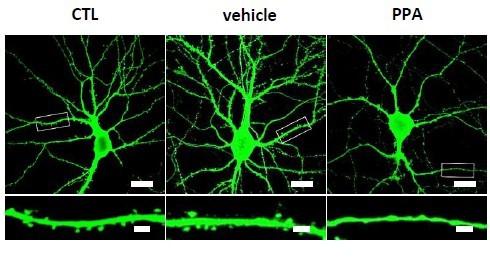
The team led by Dr. Mun Ji-young of KBRI publishes its research results in an international academic journal.
IMAGE

Credit: @ Korea Brain Research Institute

Korea Brain Research Institute (KBRI, headed by Suh Pann-ghill) announced on the 11th that the research team led by Dr. Mun Ji-young revealed the mechanism of autism induced by an imbalance of human gut microorganisms.

The findings were published in the June issue of the international scientific journal Molecular Brain. The title of the paper and its authors are as below.

* Title: Propionic acid induces dendritic spine loss by MAPK/ERK signaling and dysregulation of autophagic flux

* Authors: Hyosun Choi (first author), In Sik Kim, Ji Young Mun* (corresponding author*)

The human gut is often called “the second brain”. As the “gut-brain axis”, the concept that substances absorbed into the gut travel to and affect the brain through blood vessels, has continued to garner much attention, a series of related studies have been conducted over the past several years.

It was hypothesized that autism may be related to human gut microorganisms, as autistic children often experience gastric disorders such as irritable bowel syndrome. However, the precise relationship between autism and the human gut microbiome has yet to be identified.

Recently, research results that mice administered with propionic acid (PPA) demonstrate behaviors similar to autistic symptoms have been reported. PPA is a food additive used to extend the shelf life of processed foods and is even found in dairy products, canned foods, etc.

The research team administered PPA into cultured neurons of mice and observed the forms of hippocampal neurons and protein expression. It was discovered that the number of dendritic spine decreased due to the disruption of autophagy.

Autophagy is the natural cell mechanism that removes unnecessary proteins and organelles. The administration of PPA obstructs the process through which the autophagosome fuses with the lysosome*, thereby accumulating cellular waste, reducing the amount of dendritic spines* essential for the formation of synapses, and ultimately hindering child brain development.

* Lysosome: A cell organelle that contains digestive enzymes

* Dendritic spine: A small membranous protrusion from a neuron’s dendrite

The study also found that the extracellular signal regulated kinase* (ERK) pathway was excessively activated in cells administered with PPA. It was confirmed that the number of dendritic spines recovered when an ERK-damaging enzyme was added.

* Kinase: A phosphorylating enzyme that transfers the terminal phosphate group of ATP to other molecules

This study is significant in that it identified the effect of human gut bacterial metabolites on neurons by discovering that an excessive use of PPA, which is one of the most frequently used food additives, may induce autism.

Principal Researcher Mun Ji-young said, “This study uncovered one of many effects of the human gut microbiome on the human brain. We plan to continue to study the mechanism by which PPA induces brain disorders and apply the findings to the treatment of related diseases in the future.”

###

Media Contact
Dr. Mun Ji-young
[email protected]

Original Source

https://molecularbrain.biomedcentral.com/articles/10.1186/s13041-020-00626-0

Related Journal Article

http://dx.doi.org/10.1186/s13041-020-00626-0

Tags: BiochemistryBiologyCell Biology
Share12Tweet8Share2ShareShareShare2

Related Posts

Florida Cane Toad: Complex Spread and Selective Evolution

Florida Cane Toad: Complex Spread and Selective Evolution

February 7, 2026
New Study Uncovers Mechanism Behind Burn Pit Particulate Matter–Induced Lung Inflammation

New Study Uncovers Mechanism Behind Burn Pit Particulate Matter–Induced Lung Inflammation

February 6, 2026

DeepBlastoid: Advancing Automated and Efficient Evaluation of Human Blastoids with Deep Learning

February 6, 2026

Navigating the Gut: The Role of Formic Acid in the Microbiome

February 6, 2026
Please login to join discussion

POPULAR NEWS

  • Robotic Ureteral Reconstruction: A Novel Approach

    Robotic Ureteral Reconstruction: A Novel Approach

    82 shares
    Share 33 Tweet 21
  • Digital Privacy: Health Data Control in Incarceration

    63 shares
    Share 25 Tweet 16
  • Study Reveals Lipid Accumulation in ME/CFS Cells

    57 shares
    Share 23 Tweet 14
  • Breakthrough in RNA Research Accelerates Medical Innovations Timeline

    53 shares
    Share 21 Tweet 13

About

We bring you the latest biotechnology news from best research centers and universities around the world. Check our website.

Follow us

Recent News

3D Gut-Brain-Vascular Model Reveals Disease Links

Low-Inflammation in Elderly UTIs: Risks and Resistance

Urinary Clusterin: Tracking Kidney Disease and Treatment Response

Subscribe to Blog via Email

Enter your email address to subscribe to this blog and receive notifications of new posts by email.

Join 73 other subscribers
  • Contact Us

Bioengineer.org © Copyright 2023 All Rights Reserved.

Welcome Back!

Login to your account below

Forgotten Password?

Retrieve your password

Please enter your username or email address to reset your password.

Log In
No Result
View All Result
  • Homepages
    • Home Page 1
    • Home Page 2
  • News
  • National
  • Business
  • Health
  • Lifestyle
  • Science

Bioengineer.org © Copyright 2023 All Rights Reserved.