• HOME
  • NEWS
  • EXPLORE
    • CAREER
      • Companies
      • Jobs
    • EVENTS
    • iGEM
      • News
      • Team
    • PHOTOS
    • VIDEO
    • WIKI
  • BLOG
  • COMMUNITY
    • FACEBOOK
    • INSTAGRAM
    • TWITTER
Wednesday, July 1, 2026
BIOENGINEER.ORG
No Result
View All Result
  • Login
  • HOME
  • NEWS
  • EXPLORE
    • CAREER
      • Companies
      • Jobs
        • Lecturer
        • PhD Studentship
        • Postdoc
        • Research Assistant
    • EVENTS
    • iGEM
      • News
      • Team
    • PHOTOS
    • VIDEO
    • WIKI
  • BLOG
  • COMMUNITY
    • FACEBOOK
    • INSTAGRAM
    • TWITTER
  • HOME
  • NEWS
  • EXPLORE
    • CAREER
      • Companies
      • Jobs
        • Lecturer
        • PhD Studentship
        • Postdoc
        • Research Assistant
    • EVENTS
    • iGEM
      • News
      • Team
    • PHOTOS
    • VIDEO
    • WIKI
  • BLOG
  • COMMUNITY
    • FACEBOOK
    • INSTAGRAM
    • TWITTER
No Result
View All Result
Bioengineer.org
No Result
View All Result
Home NEWS Science News Biology

Twitter fight: Birds use social networks to pick opponents wisely

Bioengineer by Bioengineer
June 9, 2020
in Biology
Reading Time: 3 mins read
0
IMAGE
Share on FacebookShare on TwitterShare on LinkedinShare on RedditShare on Telegram

UC biologists are studying dominance hierarchies in monk parakeets
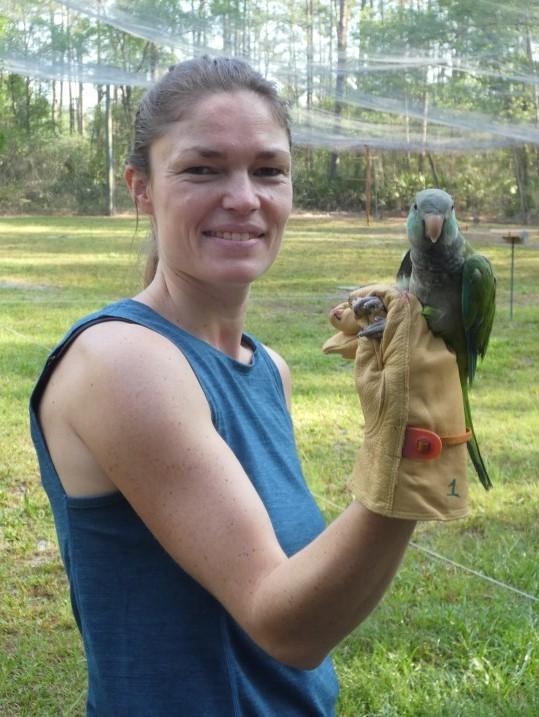
IMAGE

Credit: UC

Knowing when to fight and when to flee is a big part of many animal societies, including our own.

University of Cincinnati biologist Elizabeth Hobson says some animals make the call based on a sophisticated understanding of social standing and their place in it.

“We have a phrase: Choose your battles wisely. Animals do that. People do that,” said Hobson, an assistant professor in UC’s College of Arts and Sciences.

In a new article published in the journal Current Opinion in Psychology, Hobson says animals such as monk parakeets seem to understand where they fit in a dominance hierarchy and pick their fights accordingly. This high-level social information helps animals improve or maintain their status.

Dominance hierarchies are common social organizations in nature. They’re found in everything from hermit crabs to human society, Hobson said.

“Understanding how information is perceived, processed and used by individuals in hierarchical systems is critical to understanding how animals make aggression decisions because different types of information can underlie different kinds of aggression strategies,” she said in the article.

The most basic understanding comes from firsthand experience. 

“The low-information case is when animals only perceive and remember things that happened to them. A good example of this is if you are beaten in a fight. You remember that you lost but not to whom you lost,” she said.

Biologists say these battles can have a lasting impact on the combatants called winner effects and loser effects. Winners are more likely to be aggressive in future conflicts while losers are less likely to meet aggression with aggression or pick a new fight.

“With a strong loser effect, if you got beaten, you’re less likely to fight again in the future,” Hobson said.

Other animals might remember losing to a particular foe and be less inclined to challenge that foe in the future.

“What if you don’t just remember the outcome but you remember who beat you? You can build on that,” she said. “Going forward, you’ll be less aggressive with the individual who beat you. It’s a different social dynamic.”

But some animals can make judgments not just through their own direct interactions but by observing other animals and making inferences about where those would-be opponents stand in the hierarchy. 

This ability, known as transitive inference, goes like this: If animal A beats animal B and animal B beats animal C, you know animal A can beat animal C. It’s a logical conclusion some animals seem to understand, Hobson said.

“Maybe they never have to fight C or they’ll know they can beat C,” she said.

Hobson is putting her ideas to the test with captive parakeets.

“This paper is setting up a perspective I want to push in my research program. It will be an exciting time,” Hobson said.

###

Media Contact
Michael Miller
[email protected]

Original Source

https://www.uc.edu/news/articles/2020/06/n20922241.html

Related Journal Article

http://dx.doi.org/10.1016/j.copsyc.2019.09.010

Tags: BiologyEcology/EnvironmentEvolutionNature
Share12Tweet8Share2ShareShareShare2

Related Posts

New Study Uncovers 3D Genome Organization During Germ Cell Formation Across Evolutionary Time — Biology

New Study Uncovers 3D Genome Organization During Germ Cell Formation Across Evolutionary Time

July 1, 2026
Promising New HIV Vaccine Shows Remarkable Success in Primate Trials — Biology

Promising New HIV Vaccine Shows Remarkable Success in Primate Trials

July 1, 2026

UMaine Researchers Discover Woodcocks Charge Deer to Protect Their Nests

June 30, 2026

Early Asian Mammals Prioritized Strength Over Bite Power, Tooth Fossil Analysis Reveals

June 30, 2026
Please login to join discussion

POPULAR NEWS

  • Detection of EDCs in Breast Milk and Infant Urine Up to Six Months Highlights Early Exposure Risks

    77 shares
    Share 31 Tweet 19
  • Saying Goodbye to PGY-6: Pediatric Fellowship Realities

    103 shares
    Share 41 Tweet 26
  • New Drug Candidate Developed at McMaster Shows Potential for Treating Brain Cancer

    58 shares
    Share 23 Tweet 15
  • KTU Researchers Explore Ultrasound’s Role in Enhancing Blood Flow Beyond Diagnostics

    53 shares
    Share 21 Tweet 13

About

We bring you the latest biotechnology news from best research centers and universities around the world. Check our website.

Follow us

Recent News

New Review Confirms: Approved mRNA Vaccines Are Safe, Effective, and Hold Promise for Future Disease Prevention and Treatment

New Study Suggests Melatonin Could Alleviate Chronic Pain

New Study Uncovers 3D Genome Organization During Germ Cell Formation Across Evolutionary Time

Subscribe to Blog via Email

Enter your email address to subscribe to this blog and receive notifications of new posts by email.

Join 82 other subscribers
  • Contact Us

Bioengineer.org © Copyright 2023 All Rights Reserved.

Welcome Back!

Login to your account below

Forgotten Password?

Retrieve your password

Please enter your username or email address to reset your password.

Log In
No Result
View All Result
  • Homepages
    • Home Page 1
    • Home Page 2
  • News
  • National
  • Business
  • Health
  • Lifestyle
  • Science

Bioengineer.org © Copyright 2023 All Rights Reserved.