Credit: US Army photo
ABERDEEN PROVING GROUND, Md. (June 4, 2020) — As the U.S. Army revamps its small arms training and raises rifle qualification standards, researchers are studying alternative training and tools to help improve Soldier performance.
The U.S. Army Combat Capabilities Development Command’s Army Research Laboratory, Army Medical Department Field Element, located at Fort Sam Houston, Texas, recently conducted a series of examinations of neurocognitive temporal training and Soldier performance.
“Recent armed conflicts require close quarter warfare tactics, re-emphasizing the need of military marksmanship in combat ground operations,” said Dr. Valerie Rice, a licensed occupational therapist, and human factors engineer at the laboratory. “We conducted a series of examinations of neurocognitive temporal training and Soldier performance.”
The first studies found positive associations between neurocognitive temporal assessment scores and service members’ academic scores, Army physical fitness test scores, musculoskeletal injuries and consequent lost duty days and symptoms of attention deficits during advanced individual training, researchers said.
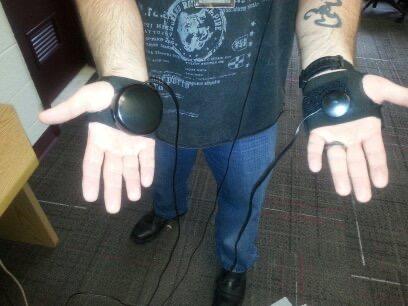
“Recently, a consequent study examined the training for improving basic rifle marksmanship,” Rice said. “In all studies, the interactive metronome, or IM, was used to measure temporal abilities and to administer the neurocognitive temporal training. This is the first use of the IM device for examining and training military essential skills.”
Rice said the device was originally developed for use with children experiencing learning and attention difficulties, however its successful use has expanded to other patient and non-patient populations.
“The IM provides visual and auditory stimuli and feedback — paired with physical exercises involving coordinated same-side and opposite-side movements of the upper and lower extremities,” she said. “These activities purportedly strengthen neural pathways and signal transmission in the human brain, subsequently improving timing and rhythm capabilities–its use has been shown to improve cognition, attention, focus, memory, executive functioning, perceptual motor skills and sports performance.”
Daily life activities involve fundamental physiological functions of voluntary and involuntary timing and rhythmic sequencing. For example, walking, reading, washing dishes and sports depend on a persons’ timing and rhythm abilities.
“Similarly, there are fundamental rhythmic principles to rifle marksmanship,” Rice said. “These principles include eye-to-sight-to-target alignment, breath and muscle control, eye-hand coordination and decision making. Taken together, the research and conception of timing and rhythm underlying movement patterns, suggests the training with the device could be beneficial to improving marksmanship performance among Soldiers, especially those who may experience attention or coordination difficulties.”
Researchers measured marksmanship pre- and post-training with the engagement skills trainer, or EST 2000, using stationary and moving targets at two distances using measures of accuracy and measures of precision.
EST 2000 is a visual weapons simulator computer system designed to enable service members to carry out cost-effective marksmanship training and other weapon exercises in numerous environments without ammunition restrictions.
“Results revealed reduced variability and improved precision for self-paced firing at closer range, stationary targets for the training group, but not for the control group,” Rice said. “No other significant differences were found.”
A new marksmanship measure called total path length, or TPL, was also introduced during this study.
“TPL is a unique measure quantifying shot-to-shot variability, loosely based on a measure of balance known as center of pressure path length,” said Leah Enders, researcher and one of the authors on the research paper. “This measure gave researchers a closer look at how the neurocognitive temporal training impacted shot-to-shot realignment.”
Researchers said the results of this study suggest neurocognitive timing and rhythm training can improve marksmanship precision and that TPL is a sensitive and useful marksmanship performance measure.
“The research concept and series were conceived by Dr. Rice, who used the IM device during her military career and achieved positive results with individual patients,” said Gary Boykin, researcher and coauthor on the research paper. “She recognized its potential use with non-patient populations.”
The Effects of Neurocognitive Temporal Training on Weapon Firing Performance study is published in the journal Perceptual and Motor Skills.
###
CCDC Army Research Laboratory is an element of the U.S. Army Combat Capabilities Development Command. As the Army’s corporate research laboratory, ARL discovers, innovates and transitions science and technology to ensure dominant strategic land power. Through collaboration across the command’s core technical competencies, CCDC leads in the discovery, development and delivery of the technology-based capabilities required to make Soldiers more lethal to win the nation’s wars and come home safely. CCDC is a major subordinate command of the U.S. Army Futures Command.
Media Contact
Joyce M. Conant
[email protected]
Original Source
https:/
Related Journal Article
http://dx.